



-
Heavy metal pollution is a major global environmental and public health issue[1]. Human activities such as mining and industrial production release large amounts of metals into the environment. These substances primarily enter the human body via the respiratory tract and accumulate in the lungs, causing tissue damage. Extensive epidemiological evidence has confirmed that exposure to metals such as Cd and Mn is associated with a decline in lung function[2]. Previous studies have largely focused on the effects of a single heavy metal in the general population, and there remains a lack of evidence regarding the respiratory health effects of mixed metal exposure in high-risk occupational groups, such as coal miners[3]. This cross-sectional study aimed to investigate the association between metal mixtures in the urine of coal miners and impaired lung function in a mining area in northern Shaanxi, China.
This study collected data from 1,600 coal miners in the northern Shaanxi mining region. After excluding individuals who did not meet the criteria or whose information was incomplete, data from 1,200 coal miners were ultimately included in this study. Lung function parameters were measured using a standard spirometer in accordance with ATS guidelines. First-morning urine samples were collected, and metal concentrations were analyzed using inductively coupled plasma mass spectrometry (ICP-MS). The concentrations were corrected for dilution using urinary creatinine. Strict quality control was applied, with acceptable accuracy, precision, recovery, and low LOQ throughout metal analysis (Supplementary Tables S1 and S2).
A descriptive approach was used to summarize the demographic characteristics and metal exposure levels of the study participants. Continuous variables are presented as mean ± standard deviation (SD), while categorical variables are presented as frequency and percentage. Due to the skewed distribution, metal concentrations are represented by the median [M (P25, P75)], and log transformation was applied to reduce right skewness. Spearman's rank correlation analysis was used to assess the correlations among the metals. Multivariate linear regression, the quantile G-computation (QG-C) model, and Bayesian kernel machine regression (BKMR) models were used to evaluate the association between metal exposure and lung function parameters. All statistical analyses were performed using SPSS 27.0.1.0 and R 4.5.1 software.
A total of 1,120 subjects were included in this study. The mean age was 39.64 ± 6.82 years, and the mean body mass index (BMI) was 25.38 ± 3.43 kg/m2. The mean duration of employment was 16.07 ± 6.18 years (Supplementary Table S3). The detection rate of all six metals in urine was 100% among the participants (Supplementary Table S4). The median urinary concentrations of Al, Sr, Cd, Mn, Zn, and Ni were 37.45, 961.90, 2.60, 0.55, 2,199.81, and 5.28 µg/g, respectively. Compared with data from the general population, the urinary concentrations of Sr, Cd, Mn, Zn, and Ni in coal miners were 3–100 times higher, highlighting a substantial occupational metal exposure burden[4,5]. Spearman’s correlation analysis indicated weak to moderate positive correlations between the metals (r range: 0.11–0.33; Supplementary Figure S1).
In single-metal models adjusted for covariates, Sr showed a significant negative association with forced vital capacity (FVC) and forced expiratory volume in the first second (FEV1)/FVC ratio. Al, Cd, Mn, Zn, and Ni showed significant negative correlations with FEV1/FVC. In the multivariate linear regression model incorporating all the metals, Sr remained significantly negatively correlated with FVC, and both Sr and Mn showed negative correlations with FEV1/FVC (Table 1).
FEV1 FEV1% FVC FVC% FEV1/FVC β (95% CI) P value β (95% CI) P value β (95% CI) P value β (95% CI) P value β (95% CI) P value Covariate-adjusted single-metal models Al −0.017 (−0.068,
0.034)0.509 0.001 (−0.010,
0.011)0.903 −0.026 (−0.082,
0.030)0.358 −0.003 (−0.015,
0.009)0.626 −0.016 (−0.023,
−0.010)<0.001* Sr −0.071 (−0.141,
−0.002)0.045* −0.001 (−0.016,
0.013)0.879 −0.104 (−0.181,
−0.027)0.008* −0.011 (−0.028,
0.005)0.187 −0.060 (−0.068,
−0.051)<0.001* Cd −0.044 (−0.112,
0.025)0.209 −0.011 (−0.025,
0.003)0.121 −0.039 (−0.115,
0.036)0.304 −0.010 (−0.026,
0.006)0.215 −0.013 (−0.023,
−0.004)0.005* Mn −0.021 (−0.050,
0.008)0.154 −0.002 (−0.008,
0.004)0.598 −0.027 (−0.059,
0.005)0.096 −0.003 (−0.010,
0.003)0.323 −0.027 (−0.031,
−0.024)<0.001* Zn −0.032 (−0.109,
0.045)0.415 −0.008 (−0.204,
0.008)0.307 −0.037 (−0.122,
0.048)0.389 −0.012 (−0.030,
0.007)0.209 −0.023 (−0.034,
−0.013)<0.001* Ni −0.018 (−0.052,
0.016)0.286 −0.001 (−0.008,
0.006)0.798 −0.030 (−0.067,
0.008)0.120 −0.005 (−0.013,
0.003)0.219 −0.011 (−0.016,
−0.007)<0.001* Covariate-adjusted multiple-metal models Al −0.003 (−0.056,
0.050)0.903 0.002 (−0.009,
0.013)0.664 −0.010 (−0.069,
0.049)0.737 −0.001 (−0.013,
0.012)0.937 −0.001 (−0.008,
0.005)0.675 Sr −0.056 (−0.133,
0.020)0.148 0.003 (−0.013,
0.019)0.710 −0.088 (−0.172,
−0.003)0.041* −0.006 (−0.024,
0.012)0.528 −0.005 (−0.059,
−0.041)<0.001* Cd −0.021 (−0.098,
0.056)0.591 −0.010 (−0.026,
0.006)0.200 −0.003 (−0.088,
0.082)0.943 −0.004 (−0.023,
0.014)0.636 0.011 (0.002,
0.020)0.014* Mn −0.015 (−0.045,
0.016)0.344 −0.002 (−0.008,
0.005)0.619 −0.018 (−0.051,
0.016)0.306 −0.002 (−0.010,
0.005)0.534 −0.024 (−0.028,
−0.020)<0.001* Zn 0.003 (−0.085,
0.091)0.943 −0.005 (−0.024,
0.013)0.563 0.008 (−0.089,
0.105)0.875 −0.006 (−0.027,
0.015)0.596 −0.008 (−0.018,
0.003)0.140 Ni −0.006 (−0.043,
0.031)0.747 0.001 (−0.007,
0.009)0.802 −0.016 (−0.056,
0.025)0.451 −0.003 (−0.011,
0.006)0.560 −0.001 (−0.005,
0.004)0.759 Note. Single-metal models were adjusted for age, BMI, smoking, drinking, occupational dust, years of work, education, and exercise. The multi-metal models were further adjusted for all other metals, except for the metals of interest, based on the single-metal model. FEV1, forced expiratory volume in the first second; FVC, forced vital capacity; CI, confidence interval; BMI, body mass index. *P < 0.05. Table 1. Multiple linear regression models were used to estimate the associations between urinary metals concentrations and lung function parameters
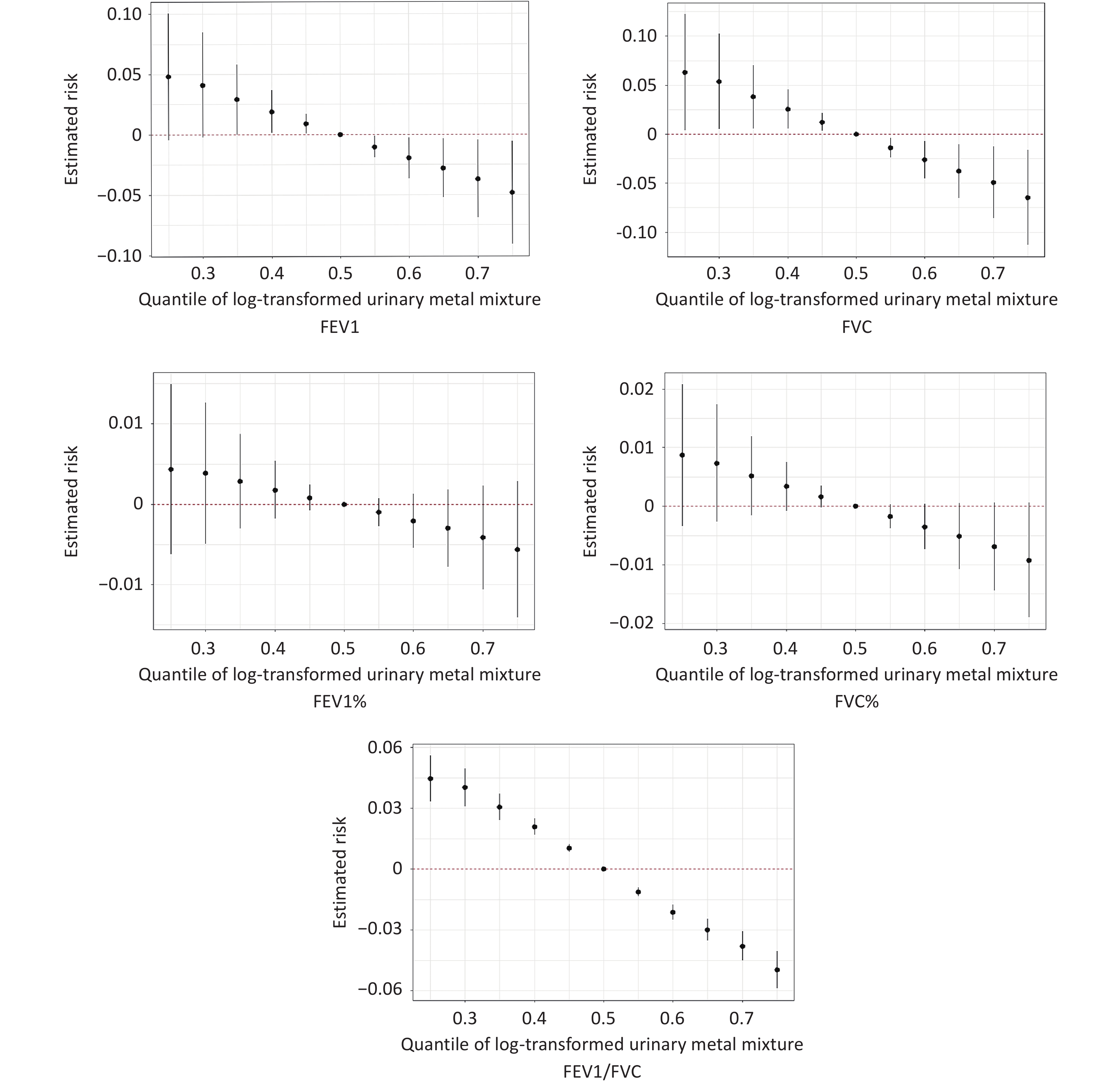
We used BKMR to examine the combined and independent effects of metals on pulmonary function indicators. As shown in Figure 1, the combined effect of the metal mixture was estimated by comparing all the metals fixed at their median values against the reference (95% CI). An overall adverse effect of metal exposure on pulmonary function was observed. Notably, there was a significant negative correlation between metal exposure and both FVC and FEV1/FVC ratios. BKMR analysis further indicated that Sr exhibited the highest PIP for FVC, whereas Sr and Mn showed the greatest PIPs for FEV1/FVC (Supplementary Table S5). After adjusting for covariates, the independent effects of the individual metals were further assessed. The univariate exposure-response curves for each metal, with all other metals set to their median levels, are shown in Supplementary Figure S2. Sr levels showed a nonlinear negative correlation with FVC. In addition, both Sr and Mn exhibited nonlinear negative correlations with FEV1/FVC. The independent effects of the six metals on lung function, with other metals fixed at the 25th, 50th, and 75th percentiles, are depicted in Supplementary Figure S3. A marginal negative correlation was observed between Sr exposure levels (from the 25th to 75th percentile) and FVC. Sr and Mn showed significant negative correlations with FEV1/FVC, which was consistent with the findings of the multiple linear regression models. Exposure-response functions for each metal with all others fixed at the 50th percentile are displayed in Supplementary Figure S4, revealing no interaction between Sr and Mn.
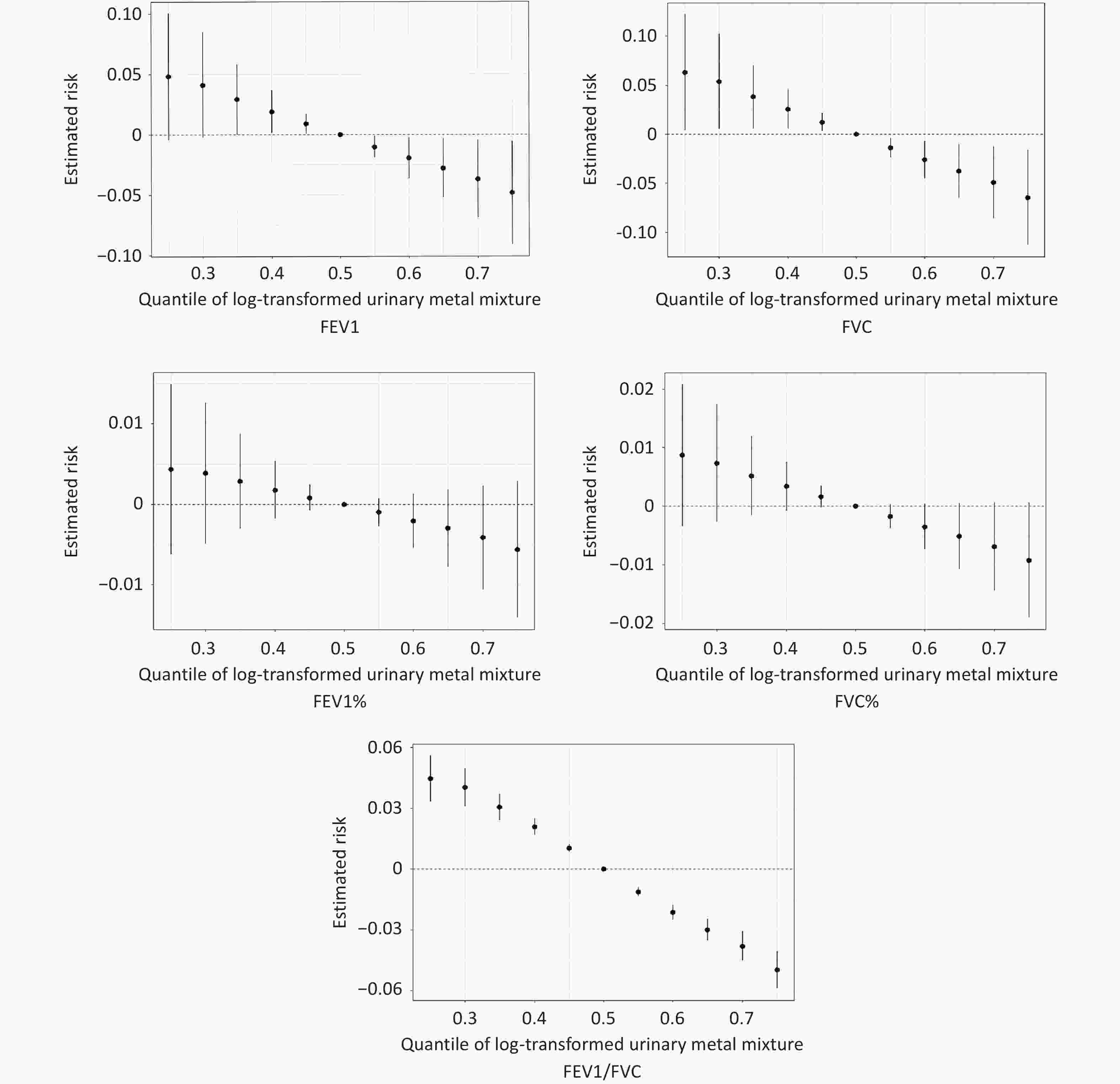
Figure 1. BKMR assesses the overall association between metal-mixture exposure and lung function indicators. The figure shows the estimated total effects of combined exposure to six metals at specific percentiles on lung function indicators and their 95% confidence intervals. The model was adjusted for age, BMI, smoking, drinking, occupational dust, years of work, education, and exercise. FEV1, forced expiratory volume in the first second; FEV1%, percentage of predicted forced expiratory volume in the first second; FVC, forced vital capacity; FVC%, percentage of predicted forced vital capacity; FEV1/FVC, ratio of forced expiratory volume in the first second to forced vital capacity; BMI, body mass index.
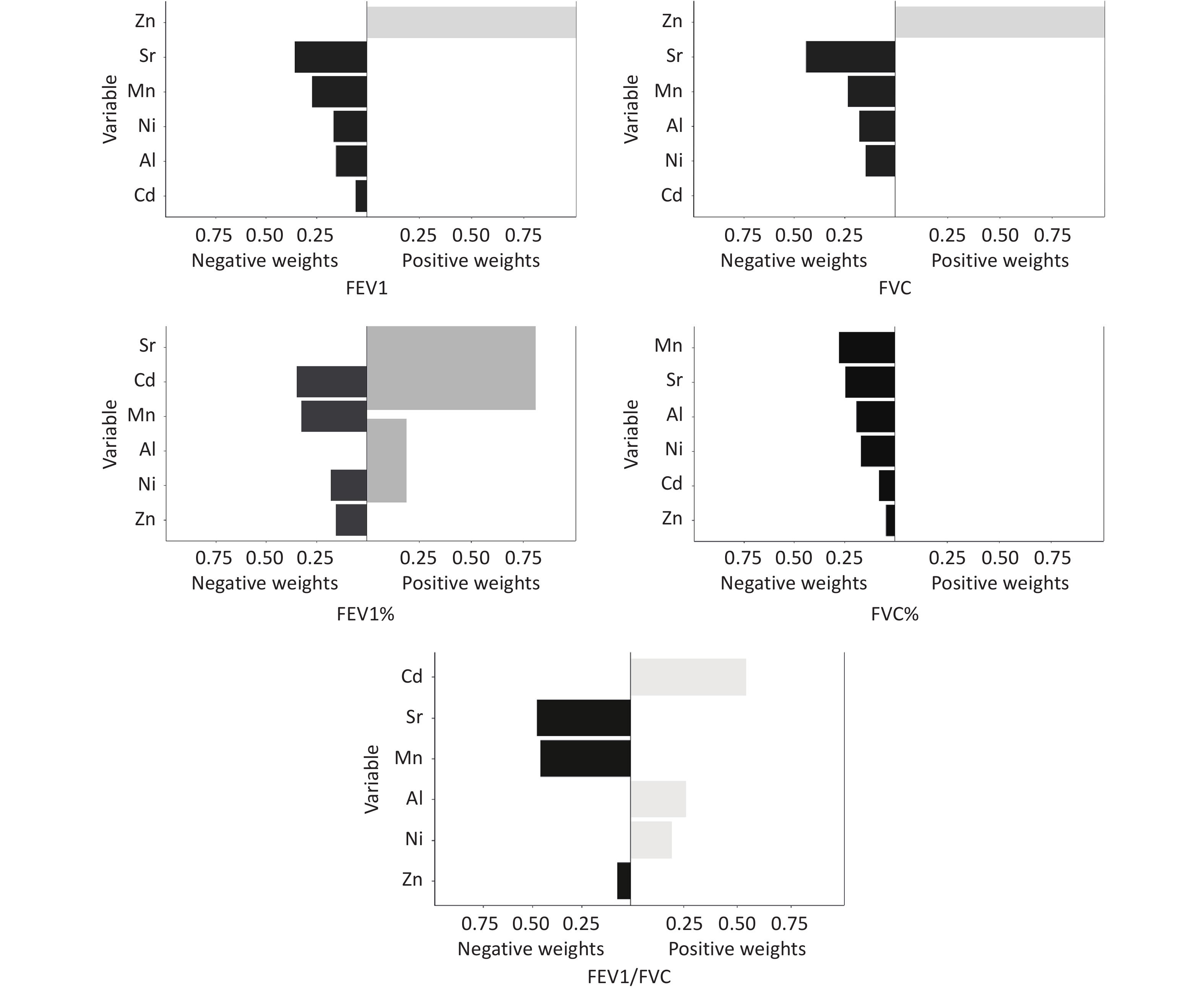
Qg-C analysis further confirmed that metal exposure was significantly negatively correlated with both FVC (β = −0.088; 95% CI: −0.162, −0.015) and FEV1/FVC (β = −0.056; 95% CI: −0.065, −0.047) (Supplementary Table S4). In contrast, no significant correlations were detected between metal exposure and FEV1, FEV1%, or FVC%. The proportional contributions of the positive and negative partial effects derived from the QG-C model indicated that Sr contributed the largest negative weight to both FVC and FEV1/FVC, followed by Mn (Figure 2). The results from the three different statistical models consistently indicated that under mixed exposure conditions among coal miners, Sr and Mn were the primary metal elements responsible for the decline in lung function, particularly restrictive ventilatory dysfunction, which manifested as reduced FVC and FEV1/FVC ratios.
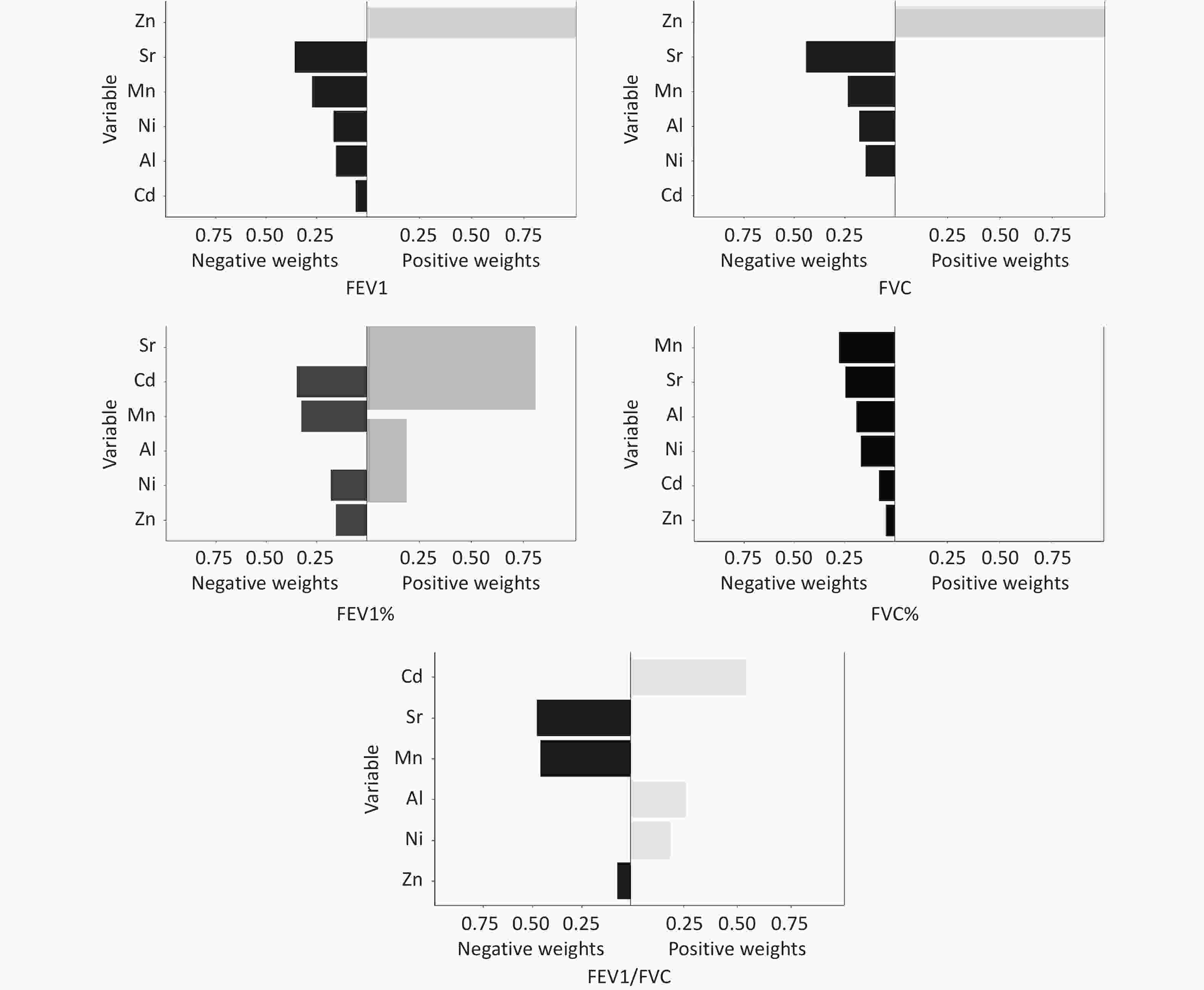
Figure 2. In the quantile-based g-computation model for metal-mixture exposure, the six metals are assigned weights in both the positive and negative directions. Negative weights indicate a negative association with the lung-function indicator, whereas positive weights indicate a positive association with the lung-function indicator. The side with the darker color indicates the dominant overall effect. The model was adjusted for age, BMI, smoking, drinking, occupational dust, years of work, education, and exercise. FEV1, forced expiratory volume in the first second; FEV1%, percentage of predicted forced expiratory volume in the first second; FVC, forced vital capacity; FVC%, percentage of predicted forced vital capacity; FEV1/FVC, ratio of forced expiratory volume in the first second to forced vital capacity; BMI, body mass index.
From the perspective of biological mechanisms, Sr can interfere with normal pulmonary physiological functions through multiple pathways. For example, Sr2+, by virtue of its ionic properties similar to Ca2+, competitively interferes with calcium signaling pathways, thereby affecting respiratory muscle contraction, airway tone, and pulmonary surfactant, leading to airway hyperresponsiveness, small airway collapse, and reduced gas exchange efficiency. Further analysis from a cytotoxicity perspective showed that Sr exposure induced oxidative stress in pulmonary cells. Excessive Sr2+ entering alveolar epithelial cells promotes reactive oxygen species (ROS) production, disrupting the equilibrium between the intracellular oxidation and antioxidant systems. The accumulation of ROS attacks membrane lipids, triggering lipid peroxidation, which compromises membrane integrity and fluidity[6-8]. Moreover, as an essential trace element, excessive manganese also mediates lung injury through potent oxidative stress mechanisms. Manganese can catalyze the production of ROS via the Fenton reaction and directly inhibit mitochondrial complexes, thereby impairing the electron transport chain function. This leads to reduced ATP synthesis and the opening of the mitochondrial permeability transition pore, ultimately inducing apoptosis in type II alveolar epithelial cells and disrupting the structural integrity of the alveoli and the function of gas exchange units[9]. Other metals (including Al, Cd, Zn, and Ni) also demonstrated significant associations with FEV1/FVC in single-metal model analyses. However, their individual effects were attenuated in the multi-metal model, suggesting that the contributions of certain metals may be obscured in complex exposure scenarios[10].
Nevertheless, our study had certain limitations. First, although metals in urine are commonly used as biomarkers of environmental exposure, they reflect recent exposure levels. Future studies should consider the use of blood or nail samples to measure these elements. Second, this study may be subject to the “healthy worker effect”. Coal mining is a physically demanding occupation, and employers often tend to select healthier individuals during recruitment (the healthy worker selection effect). Furthermore, workers with impaired respiratory function may be transferred to positions with lower dust exposure, retire early, or leave the industry entirely, whereas those remaining in the active workforce may exhibit greater tolerance to metal-induced decline in lung function (the healthy worker survivor effect). Future prospective cohort studies should include workers at different career stages and track their long-term health outcomes to eliminate this bias.
In summary, this study focused on miners in the mining area of northern Shaanxi and systematically evaluated the association between mixed urinary metal exposure and pulmonary function indicators by integrating three statistical models: multiple linear regression, BKMR, and Qg-comp. The results not only effectively captured the overall health effects of mixed metal exposure on lung function among coal miners but also identified Sr and Mn as important contributing factors to the decline in lung function, particularly in FVC and the FEV1/FVC ratio. This study provides new evidence for understanding the respiratory health risks associated with multi-metal mixed exposure in occupational settings.
HTML
Competing Interests The authors declare no potential conflicts of interest.
Ethics Ethical approval was obtained from the Medical Ethics Committee of the First Affiliated Hospital of the Anhui University of Science and Technology (approval no. 2023-KY-110-001).
Authors' Contributions Min Mu and Jia Wang contributed to the study conception and design. Material preparation, data collection and analysis were performed by Xiaomeng Zhou, Yuanjie Zou, and Yi Yang. The manuscript was written by Xiaomeng Zhou. The corresponding author confirms all listed authors meet authorship criteria and that no eligible author was omitted.
Data Sharing The supplementary materials will be available in www.besjournal.com.
Reference

 Quick Links
 DownLoad: