



-
Early adolescence is a critical developmental period marked by rapid biological, psychological, and social transitions. During this period, internalizing and externalizing problems often emerge and may affect later mental health and social functioning[1]. Childhood maltreatment (CM), including emotional abuse, physical abuse, sexual abuse, emotional neglect, and physical neglect, is among the strongest early-life risk factors for adolescent psychopathology[2]. Previous longitudinal studies have consistently linked CM with later internalizing and externalizing problems; however, the mechanisms underlying these associations remain incompletely understood, particularly among Chinese adolescents.
The Stress Process Model conceptualizes adverse childhood experiences as chronic stressors that increase vulnerability to psychopathology by disrupting stress regulation and depleting adaptive coping resources[3]. Within this framework, sleep quality and psychological resilience may be modifiable pathways through which early adversity affects adolescent development. Trauma-related stress responses, including persistent emotional arousal and heightened vigilance, may impair sleep regulation after maltreatment exposure[4]. Prolonged adversity may also weaken the psychological resources needed for adaptive coping, thereby reducing resilience[5]. However, whether these pathways independently contribute to adolescent internalizing and externalizing problems remains unclear.
Longitudinal evidence from Western populations has substantially advanced understanding of the developmental consequences of CM, but few prospective studies have examined these mechanisms among Chinese adolescents. Family relationships, parenting practices, and school environments may shape how CM affects adolescent adjustment. Validating maltreatment-related developmental pathways in Chinese cohorts is therefore important for extending existing theories and informing culturally appropriate prevention strategies.
Sleep quality and psychological resilience may represent complementary pathways linking CM with adolescent internalizing and externalizing problems. Although these factors may be interrelated during adolescent development, current evidence does not establish a clear temporal sequence between them. The Stress Process Model emphasizes multiple pathways through which stress exposure influences psychological outcomes. We therefore conceptualized sleep quality and resilience as parallel mediators and examined their independent contributions.
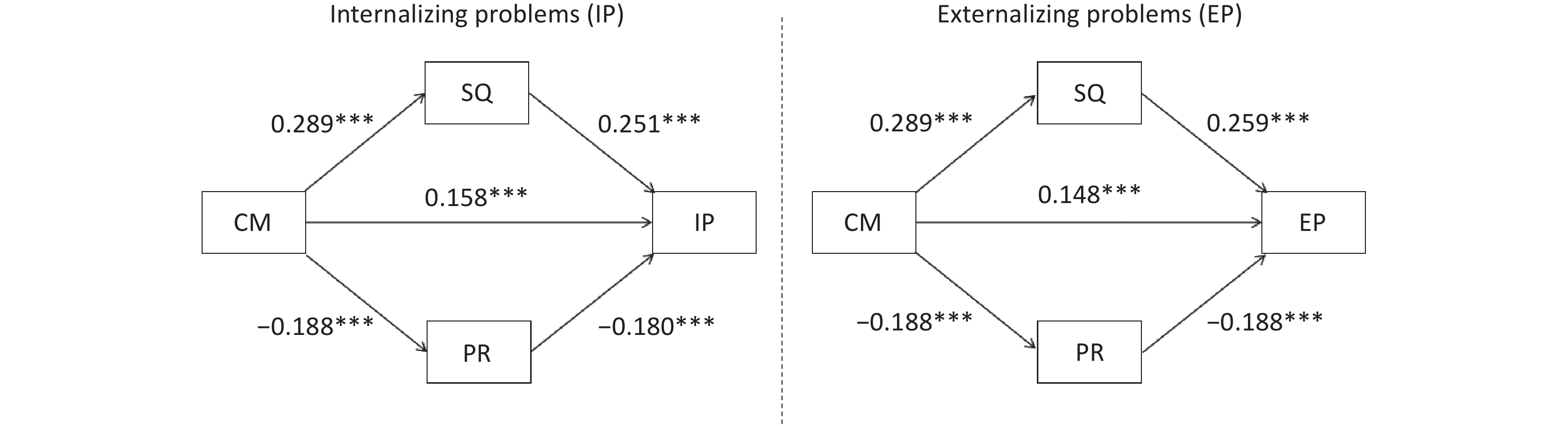
Using data from the Chinese Early Adolescent Cohort (CEAC), we investigated whether sleep quality and psychological resilience independently mediated the longitudinal associations between CM and adolescent internalizing and externalizing problems. As shown in Figure 1, we hypothesized that CM would be associated with greater emotional and behavioral difficulties and that sleep quality and resilience would serve as significant parallel mediating pathways. Because sleep and psychosocial development may differ by sex, we conducted exploratory sex-stratified analyses (Supplementary Figure S1).
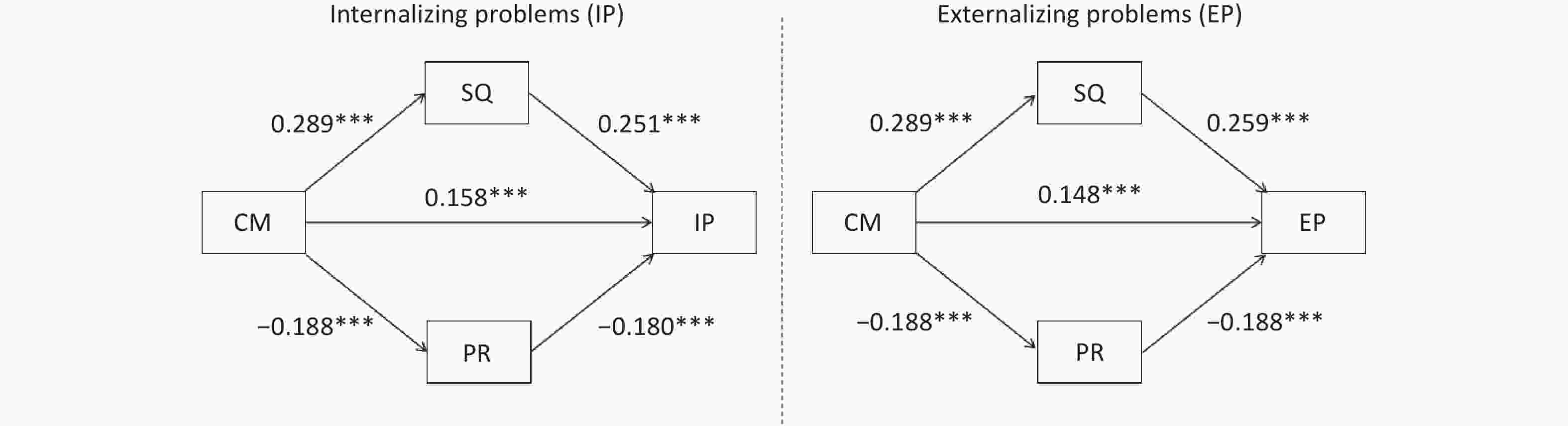
Figure 1. Parallel mediation analysis of sleep quality and psychological resilience between CM and internalizing problems/externalizing problems. CM, child maltreatment; SQ, sleep quality; PR, psychological resilience; IP, internalizing problems; EP, externalizing problems. All values are standardized path coefficients(β). ***P < 0.001.
The CEAC is a longitudinal cohort established in Huaibei City, Anhui Province, China. Participants were recruited from all seventh-grade students at one middle school. Baseline assessment was conducted in September 2019, followed by two annual follow-up assessments. CM and demographic characteristics were assessed at baseline (Wave 1), sleep quality and psychological resilience at Wave 2, and internalizing and externalizing problems at Wave 3. Of 1,814 distributed questionnaires, 1,784 valid baseline responses were obtained. After participants with incomplete mediator or outcome data were excluded, 1,605 adolescents were included in the final analysis. The main reasons for nonparticipation during follow-up were absence during assessment and withdrawal from school (Supplementary Figure S2). To evaluate potential selection bias due to attrition, baseline characteristics were compared between participants retained in the final analysis and those lost to follow-up. Age, sex, only-child status, parental relationships, number of friends, and Childhood Trauma Questionnaire-Short Form (CTQ-SF) scores did not differ significantly between groups, whereas family structure and self-rated family economic status differed significantly (Supplementary Table S1). Therefore, potential socioeconomic selection bias should be considered.
CM was assessed using the CTQ-SF, which evaluates emotional abuse, physical abuse, sexual abuse, emotional neglect, and physical neglect.6 The total CTQ-SF score was used to represent overall exposure to childhood adversity. Although CM was assessed using self-report measures, participants completed the questionnaires anonymously under standardized classroom conditions, and trained investigators provided consistent instructions to reduce potential reporting bias. Sleep quality was assessed using the Pittsburgh Sleep Quality Index (PSQI), with higher scores indicating poorer sleep quality[7]. Psychological resilience was measured using the Connor–Davidson Resilience Scale (CD-RISC), with higher scores indicating greater resilience[8].
Internalizing and externalizing problems were assessed using the Strengths and Difficulties Questionnaire (SDQ). Consistent with previous SDQ research, internalizing problems were calculated from emotional symptoms and peer relationship problems, whereas externalizing problems were calculated from conduct problems and hyperactivity/inattention symptoms[9]. This classification reflects the theoretical distinction between inward (emotional and social) difficulties and outward (behavioral) difficulties during adolescence.
Covariates included age, sex, only-child status, family structure, family economic status, parental relationships, and number of friends. Parallel mediation analyses were conducted using structural equation modeling (SEM) with 5,000 bootstrap samples. Indirect effects were considered statistically significant when their 95% confidence intervals (CIs) excluded zero. Difference tests between indirect effects were conducted to compare the relative contributions of sleep quality and psychological resilience. Multi-group SEM was also performed to explore potential sex differences.
To assess potential common method bias arising from questionnaire-based data collection, Harman’s single-factor test was conducted using unrotated exploratory factor analysis of all study variables. Eleven factors with eigenvalues greater than 1 were identified, and the first factor accounted for 25.01% of the total variance. This value was below the commonly used 40% threshold, suggesting that common method bias was unlikely to substantially influence the findings.
Among the 1,605 participants included in the final analysis (Supplementary Table S2), the mean age was (12.49 ± 0.48) years, and the mean CTQ-SF score was 27.63 ± 4.89. At Wave 2, the mean PSQI score was 4.70 ± 2.84, and the median CD-RISC score was 61.00 50.00, 72.00 . At Wave 3, the mean internalizing and externalizing problem scores were 4.67 ± 3.09 and 4.80 ± 3.09, respectively.
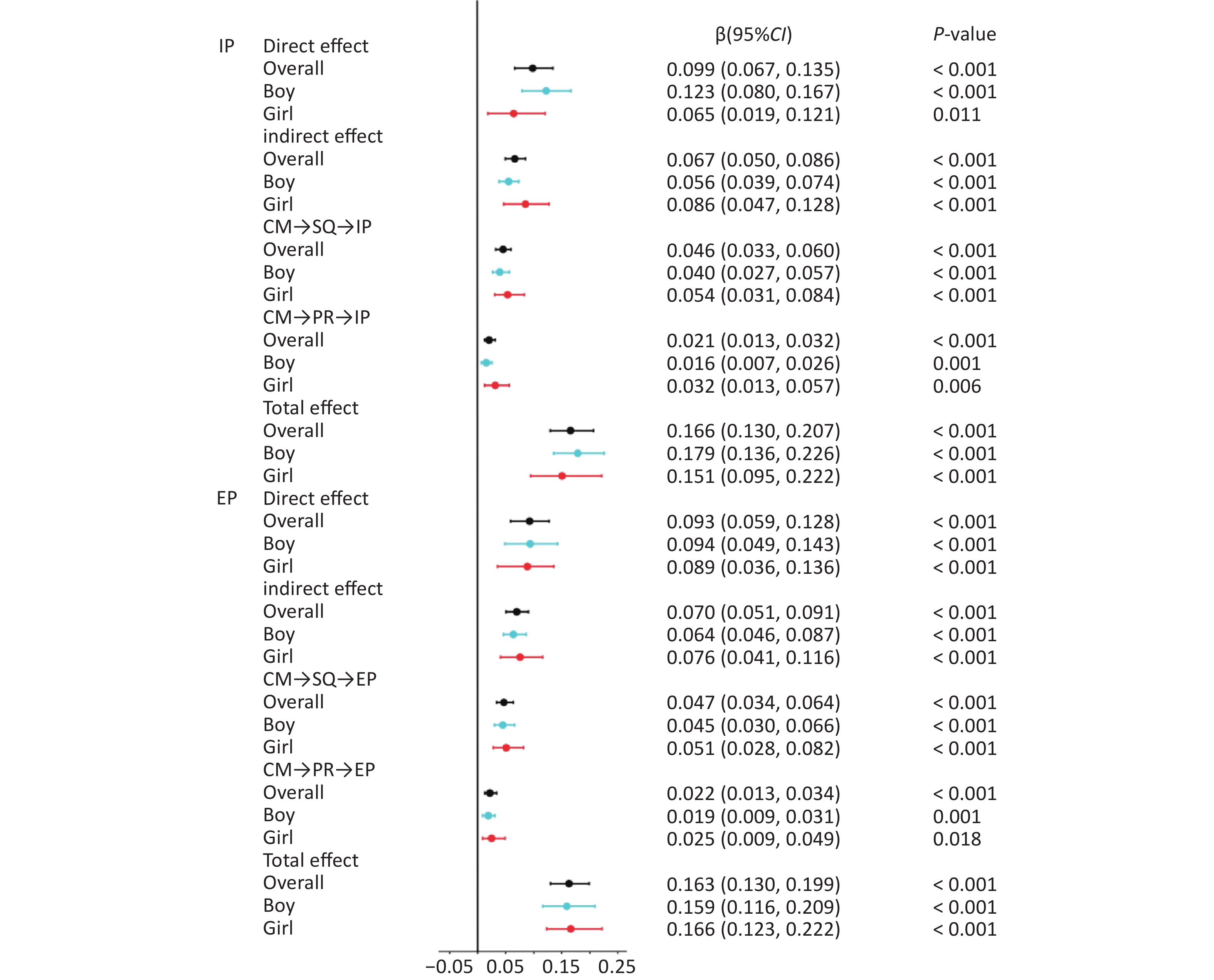
Correlation analyses showed that CM was positively associated with poorer sleep quality and higher internalizing and externalizing problem scores, whereas psychological resilience was negatively associated with these outcomes (Supplementary Table S3). Variance inflation factor values ranged from 1.007 to 1.616, indicating no problematic multicollinearity (Supplementary Table S4). As shown in Table 1 and Figure 2, CM was significantly associated with both internalizing and externalizing problems. For internalizing problems, the total effect of CM was β = 0.166 (95% CI: 0.130–0.207, P < 0.001), and the direct effect remained significant after the mediators were included (β = 0.099, 95% CI: 0.067–0.135, P < 0.001). Sleep quality significantly mediated the association between CM and internalizing problems (indirect effect: β = 0.046, 95% CI: 0.033–0.060), accounting for 27.71% of the total effect. Psychological resilience also showed a significant indirect pathway (β = 0.021, 95% CI: 0.013–0.032), accounting for 12.65% of the total effect.
Outcome Pathway Effect value S.E. 95%CI Mediated proportion(%) P value Internalizing problems Direct effect 0.099 0.017 (0.067–0.135) 59.64 < 0.001 Indirect effect 0.067 0.009 (0.050–0.086) < 0.001 CM→SQ→IP 0.046 0.007 (0.033–0.060) 27.71 < 0.001 CM→PR→IP 0.021 0.005 (0.013–0.032) 12.65 < 0.001 Total effect 0.166 0.019 (0.130–0.207) < 0.001 Difference bet-ween indirect effects (Sleep-Resilience) 0.024 0.008 (0.010–0.040) 0.002 Externalizing problems Direct effect 0.093 0.018 (0.059–0.128) 57.06 < 0.001 Indirect effect 0.07 0.01 (0.051–0.091) < 0.001 CM→SQ→EP 0.047 0.008 (0.034–0.064) 28.83 < 0.001 CM→PR→EP 0.022 0.005 (0.013–0.034) 13.50 < 0.001 Total effect 0.163 0.017 (0.130–0.199) < 0.001 Difference bet-ween indirect effects (Sleep-Resilience) 0.025 0.008 (0.010–0.042) 0.002 Note. CM, child maltreatment; SQ, sleep quality; PR, psychological resilience; IP, Internalizing problems; EP, Externalizing problems. Adjusted covariates include age, only-child status, family structure, family economic status, relationship with father, relationship with mother, number of friends, and gender. P values < 0.05 are shown in bold. Table 1. The direct, indirect, total effects and parallel mediation paths in the relationships between CM and internalizing (or externalizing) problems
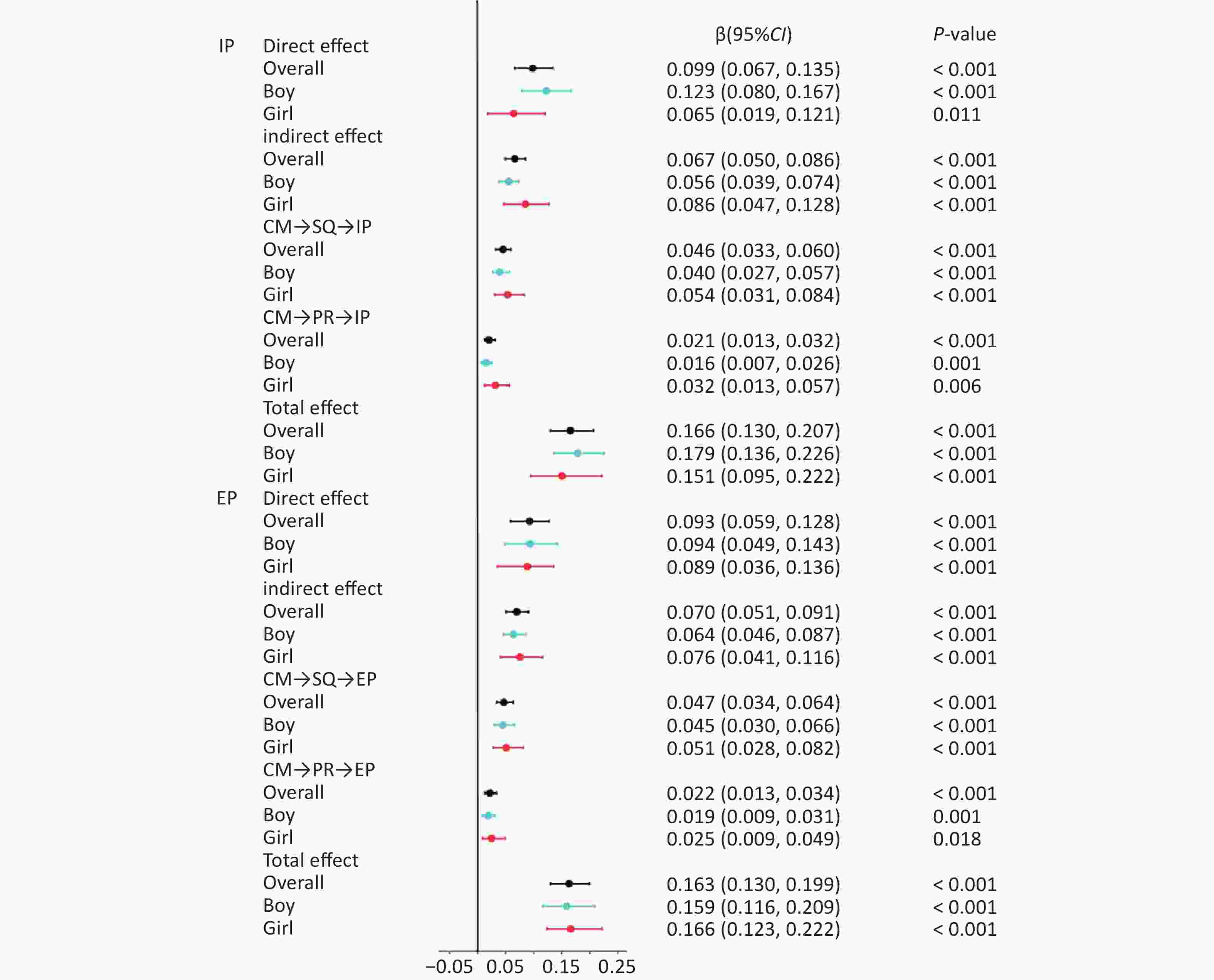
Figure 2. Forest plot for the direct, total indirect, and indirect pathway effects. CM, child maltreatment; SQ, sleep quality; PR, psychological resilience; IP, internalizing problems; EP, externalizing problems. Adjusted covariates include age, only-child status, family structure, family economic status, relationship with father, relationship with mother, number of friends, and gender (included in the overall model only).
Similar findings were observed for externalizing problems. CM was positively associated with externalizing problems (total effect: β = 0.163, 95% CI: 0.130–0.199, P < 0.001), and the direct effect remained significant after the mediators were included (β = 0.093, 95% CI: 0.059–0.128, P < 0.001). Sleep quality mediated 28.83% of the total effect (indirect effect: β = 0.047, 95% CI: 0.034–0.064), whereas psychological resilience mediated 13.50% (indirect effect: β = 0.022, 95% CI: 0.013–0.034).
Difference tests between indirect effects indicated that the mediating effect through sleep quality was significantly stronger than that through psychological resilience for both internalizing problems (difference: β = 0.024, 95% CI: 0.010–0.040, P = 0.002) and externalizing problems (difference: β = 0.025, 95% CI: 0.010–0.042, P = 0.002). These findings suggest that sleep disturbance may be a relatively proximal pathway through which childhood adversity affects adolescent mental health, although resilience remains an important psychological resource.
Sex-stratified analyses showed similar mediation patterns in boys and girls (Supplementary Table S5). Sleep quality and psychological resilience remained significant mediators in both groups. Although girls showed numerically higher resilience-mediated proportions, particularly for internalizing problems (21.19% compared with 8.94% in boys), these differences were not statistically significant. To formally examine whether the mediation pathways differed by sex, multi-group SEM was conducted. Model fit was compared between an unconstrained model, in which all structural paths varied freely by sex, and a constrained model in which those paths were held equal. Constraining the paths did not significantly worsen fit for internalizing problems (Δχ2 = 5.54, Δdf = 7, P = 0.595) or externalizing problems (Δχ2 = 7.34, Δdf = 7, P = 0.394). These findings indicate that the overall mediation pathways linking CM with adolescent internalizing and externalizing problems were statistically comparable between boys and girls. Therefore, the observed numerical differences should be interpreted as preliminary patterns requiring further investigation rather than evidence of distinct sex-specific mechanisms.
This study modeled sleep quality and psychological resilience as parallel mediators because both may represent independent pathways through which CM affects adolescent psychological development. Although sleep disturbance and resilience may influence each other over time, the three-wave design did not allow their temporal ordering to be determined. Future studies with repeated assessments of both sleep and resilience are needed to clarify their dynamic and reciprocal relationships.
Consistent with previous longitudinal studies and meta-analytic evidence, adolescents exposed to higher levels of CM had more internalizing and externalizing difficulties[1,2]. Within the Stress Process Model, CM may be regarded as an early chronic stressor that disrupts adolescent adaptation by increasing stress burden and reducing coping resources[3]. Early adversity may also affect emotion regulation systems and stress-responsive biological processes, including hypothalamic-pituitary-adrenal axis regulation. Because these biological mechanisms were not directly assessed, they should be interpreted as possible explanations rather than confirmed pathways.
Sleep quality was the stronger of the two mediating pathways[4]. CM may impair sleep through trauma-related hyperarousal, persistent threat perception, emotional distress, and altered stress regulation[10]. Adolescents exposed to maltreatment may remain in a state of heightened physiological and psychological activation, making it difficult to initiate or maintain restorative sleep. Poor sleep may then impair executive functioning, emotion regulation, impulse control, and cognitive flexibility, thereby increasing vulnerability to both internalizing and externalizing difficulties.
Importantly, the proportion mediated by sleep quality was approximately twice that mediated by resilience. This finding has practical implications because sleep is a relatively modifiable and proximal intervention target[4,10]. Although resilience enhancement remains valuable, resilience is a multidimensional developmental resource shaped by individual characteristics, family environments, and social support systems[5]. Resilience-focused interventions may therefore require sustained and comprehensive approaches, whereas sleep-focused interventions may yield more immediate benefits for adolescents exposed to adversity.
Psychological resilience also significantly mediated the associations between CM and adolescent problems, supporting the resource depletion perspective of adversity[5]. Adolescents exposed to maltreatment may have reduced confidence in their coping abilities, impaired emotion regulation, and fewer adaptive resources[3,5]. However, the smaller mediated proportion suggests that resilience is only one component of the complex developmental process linking CM with psychopathology. Other mechanisms, including emotion regulation, cognitive appraisal, interpersonal relationships, and social support, may explain additional pathways.
This study modeled sleep quality and resilience as parallel, rather than serial, mediators. Although sleep disturbance and resilience may influence each other, current evidence does not establish whether impaired sleep precedes reduced resilience or whether diminished resilience increases vulnerability to sleep problems. A serial mediation model would therefore require assumptions beyond the available temporal information. Future studies with repeated assessments of both sleep and resilience are needed to clarify their dynamic reciprocal relationships.
Regarding sex differences, numerical patterns suggested a relatively greater resilience-related pathway among girls and stronger sleep-related contributions among boys. However, multi-group SEM did not support statistically significant sex differences in the mediation model. These findings suggest that the overall mechanisms linking CM with adolescent internalizing and externalizing problems may operate similarly across sexes. Nevertheless, the numerical trends may reflect developmental differences in emotional processing, coping strategies, social experiences, or biological maturation. Future studies with larger samples and repeated assessments are needed to determine whether sex-specific intervention approaches provide additional benefits. Larger samples with repeated assessments are needed to establish whether sex-specific intervention approaches add benefit, whether resilience-oriented approaches are particularly helpful for adolescents with greater psychosocial vulnerability, and whether sleep-focused strategies benefit both sexes.
From a public health perspective, these findings support the integration of trauma-informed prevention strategies into adolescent health services in China[2]. Screening adolescents with CM exposure for sleep difficulties during routine physical examinations or school-based mental health assessments may help identify vulnerable students earlier[4]. For adolescents with persistent sleep problems, evidence-based interventions, including sleep hygiene education and cognitive behavioral therapy for insomnia, may be considered when professional resources are available. Resilience-building programs that focus on emotion regulation, stress management, and problem-solving skills could also be incorporated into school psychological education and homeroom teacher training[5]. A stepped-care model that combines universal prevention, targeted support for high-risk adolescents, and referral to professional services may be feasible within existing middle-school systems.
Five limitations qualify these findings. First, although the longitudinal design temporally separated CM, mediators, and outcomes, CM was assessed at baseline, mediators at the 12-month follow-up, and outcomes at the 24-month follow-up. This measurement schedule may underestimate short-term effects of CM on adolescent psychological difficulties and limit conclusions about developmental trajectories. Second, baseline internalizing and externalizing problems were not assessed; therefore, whether CM predicted new-onset problems or the persistence of pre-existing difficulties could not be determined. Third, CM was evaluated using the CTQ-SF total score, and potential differences among specific maltreatment types, including emotional abuse, physical abuse, and neglect, require further investigation. Fourth, participants were recruited from a single middle school in Huaibei City, limiting geographical generalizability. Fifth, all variables were assessed using self-report questionnaires. Although anonymous administration and standardized procedures were used to reduce reporting bias, common method bias cannot be completely excluded.
In conclusion, this longitudinal cohort study showed that sleep quality and psychological resilience independently mediated the associations between CM and adolescent internalizing and externalizing problems. Sleep-related pathways made stronger mediating contributions than resilience-related pathways, suggesting that improving sleep health may be an important early intervention target. These findings extend adversity-related developmental theories in the Chinese context and support the development of culturally appropriate, school-based, trauma-informed prevention strategies.
HTML
Declaration of Competing Interest The authors declare no competing interests.
Ethics This study was approved by the Biomedicine Ethics Committee of Anhui Medical University (approval no. 20180083). Written informed consent was obtained from all participants and their parents or legal guardians before participation. All procedures were conducted in accordance with the Declaration of Helsinki.
Authors’ Contributions Shuying Chen: Conceptualization, methodology, formal analysis, data curation, writing (original draft), and visualization; Han Ding: Methodology, data curation, and writing (review and editing); Yan Ji: Methodology, writing (review and editing), and data curation; Faliang Xie: Investigation and data curation; Xinhui Wang: Investigation, methodology, and data curation; Ting Tang: Investigation, methodology, and data curation; Gengfu Wang: Conceptualization, investigation, resources, supervision, project administration, and funding acquisition; Puyu Su: Conceptualization, investigation, resources, supervision, project administration, and funding acquisition.
Data Sharing The data are not publicly available because of privacy and ethical restrictions. The supplementary materials will be available at www.besjournal.com.
&These authors contributed equally to this work.
Reference

 Quick Links

 DownLoad: