



-
Heatwaves, also known as continuously hot days, are catastrophic weather events in which excessive temperatures can cause significant discomfort. The increasing frequency of heatwaves is a significant climatic feature of global warming. As a major global public health burden, heatwaves can significantly impact public health. Heatwave-related deaths in China have increased four-fold since 1990, reaching 26,800 in 2019, causing economic losses equivalent to an average annual income of 1.4 million Chinese citizens[1]. Notably, exposure to high ambient temperatures can increase the risk of developing respiratory diseases. However, existing studies have mostly focused on asthma and chronic obstructive pulmonary disease (COPD), with limited attention paid to other diseases. Moreover, many studies have adopted only a single definition of heatwaves, have not simultaneously examined the effects of heatwaves of different intensities, and have rarely compared the differences in response speeds of different respiratory diseases to heatwave exposure. Thus, vulnerable populations remain unclear.
This time-stratified case-crossover study collected 24,043 daily emergency admission records for respiratory diseases from the Beijing Municipal Health Commission Information Center from January 1, 2013, to December 31, 2017, in Beijing, China. According to the 10th Revision of the International Statistical Classification of Diseases, the following six specific causes of emergency admissions for respiratory diseases were extracted as outcomes: acute upper respiratory infection (AURI) (J00–J06, 1,556), pneumonia (J12–J18, 10,967), bronchitis (J20–J21, 2,257), COPD (J40–J44, 7,737), asthma (J45–J46, 974), and idiopathic lung diseases (ILD) (J84–J84·9, 552). Patients who had lived in Beijing for > 6 months were included in this study. Participants were stratified by age (< 65, 65–75, and > 75 years), sex, and region (urban: Dongcheng, Xicheng, Chaoyang, Haidian, Fengtai, and Shijingshan districts; suburban: the remaining 10 districts of Beijing) (Supplementary Table S1 and Figure S1).
Cases were assigned to the corresponding district based on the address information in the emergency visit records. The 5-year daily 24-h average temperature (Tmean) and relative humidity for each district were obtained from the National Climate Center (www.ncc-cma.net) and European Center for Medium-range Weather Forecasts (
https://cds.climate.copernicus.eu/ ). Air pollution data for all 35 monitoring sites in Beijing were obtained from the Beijing Municipal Environmental Monitoring Centre. The daily 24-h average ozone (O3) and fine particulate matter (PM2.5) concentrations were calculated from hourly values collected at the monitoring stations (Supplementary Table S2).The definitions of heatwave were based on the intensity and duration. Intensity: A Tmean reaching the 90th percentile of the district, but not the 98th percentile, during the study period was defined as a mild heatwave day, whereas that reaching the 98th percentile was defined as an extreme heatwave day. Duration: one day or more, or two days or more.
Each patient with respiratory disease was treated as a case on the day of emergency admission and a matched control before (or after) emergency admission. Control days were restricted to case days on the same day of the week, month, or year. We subsequently compared heatwave days with non-heatwave days between these cases and control days.
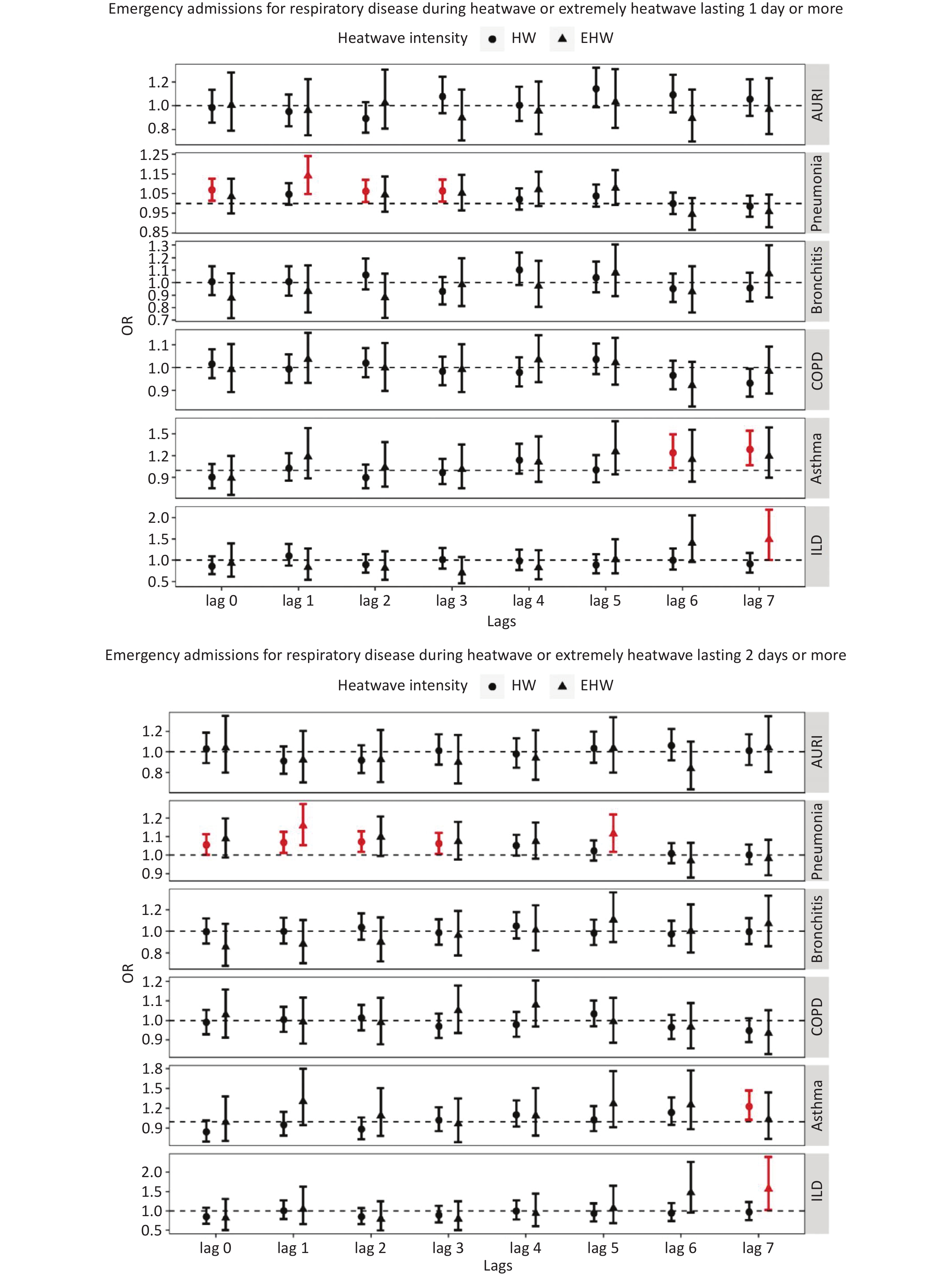
A conditional logistic regression model was used in this study. Cases and controls were assigned the values of 1 and 0, respectively. In the model, whether a day was a heatwave day was used as the independent variable for comparison. Daily relative humidity, PM2.5, and O3 were all controlled for as linear covariates, and holidays were included as categorical covariates in the main model. Adjusted odds ratios (ORs) and 95% confidence intervals (CIs) were determined. Furthermore, we examined the lag effects of different exposure periods (lag 0–7 days)[2], and the exposure effect period with the largest effect and statistical significance was selected as the best-effect period (Figure 1).
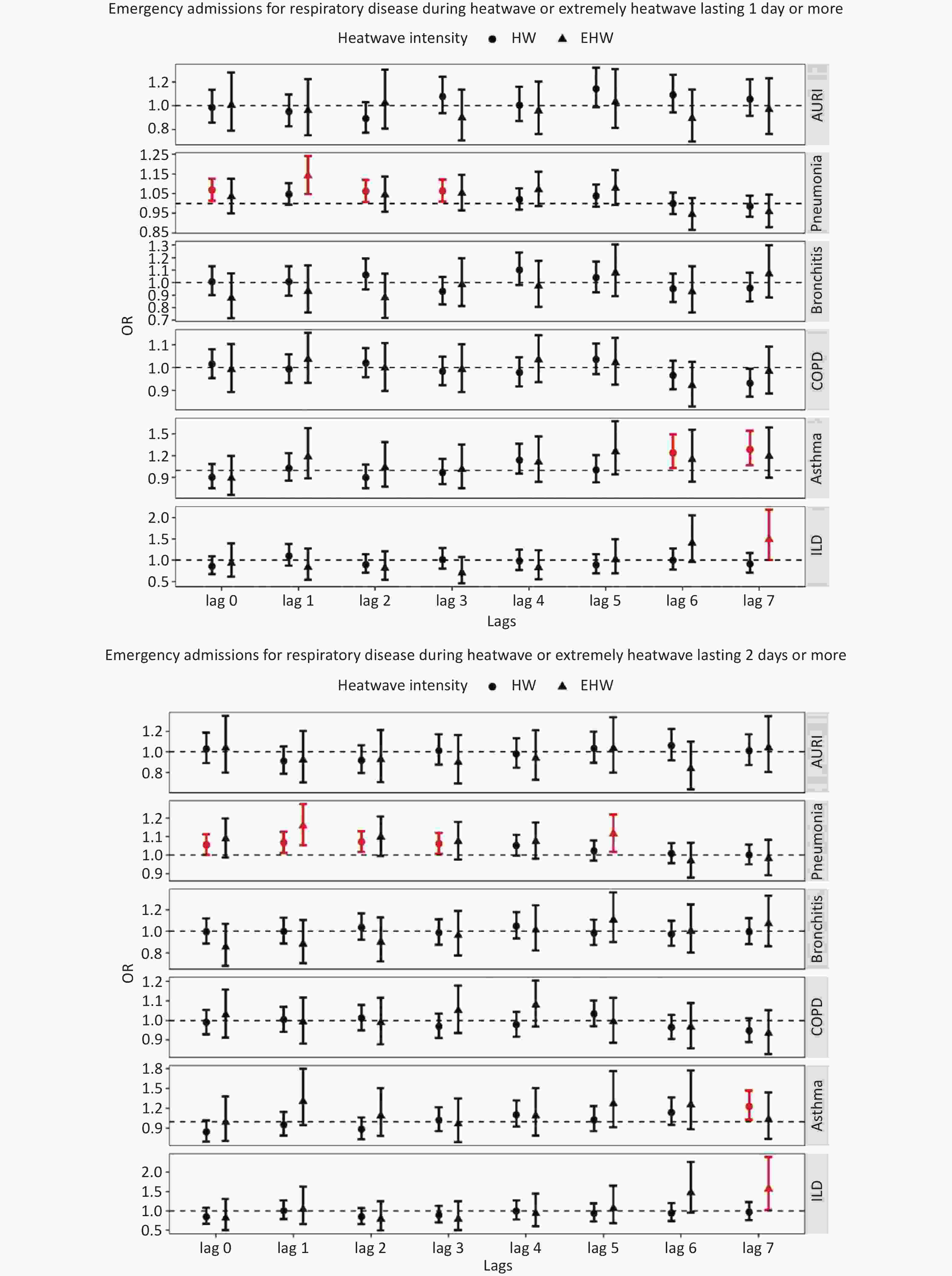
Figure 1. The lag effects of different exposure periods. OR, odds ratio; HW, heatwave; EHW, extremely heatwave.
We further conducted a sensitivity analysis to test the robustness of the model. In terms of model fitting, single-pollutant models of PM2.5 and O3 were established to test the robustness of the results of the two-pollutant model, and the method for controlling the relative humidity in the model was also changed using a natural spline function control with three degrees of freedom. In terms of effect estimation, holidays in the model were changed to three categorical variables—legal holidays, weekends, and working days—and the results were compared (Supplementary Table S3).
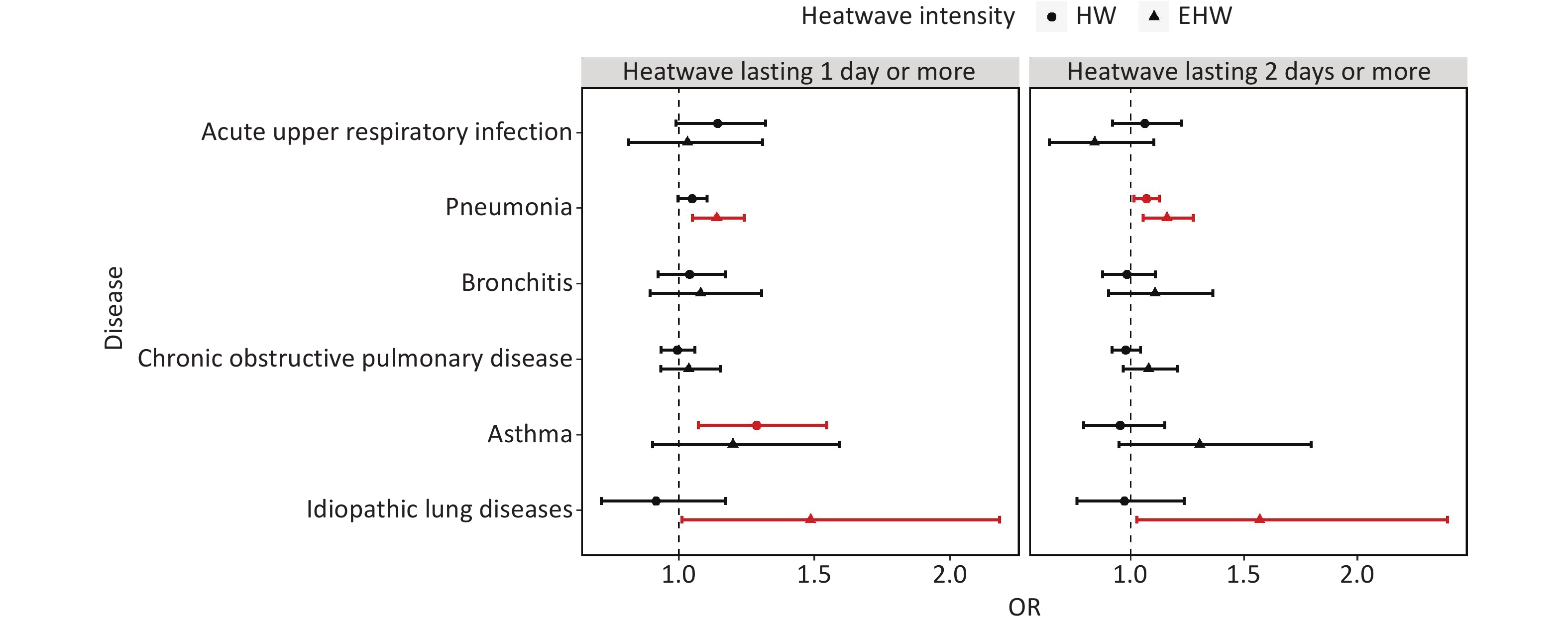
Mild heatwave days increased emergency visits for both asthma (1 day or more, OR: 1.287, 95% CI: 1.072, 1.546) and pneumonia (2 days or more, OR: 1.069, 95% CI: 1.014, 1.127). Extreme heatwave days increased the number of emergency visits for pneumonia (1 day or more, OR: 1.140, 95% CI: 1.048, 1.240; 2 days or more, OR: 1.160, 95% CI: 1.054, 1.276) and ILD (1 day or more, OR: 1.485, 95% CI: 1.011, 2.183; 2 days or more, OR: 1.569, 95% CI: 1.027, 2.396) (Figure 2).
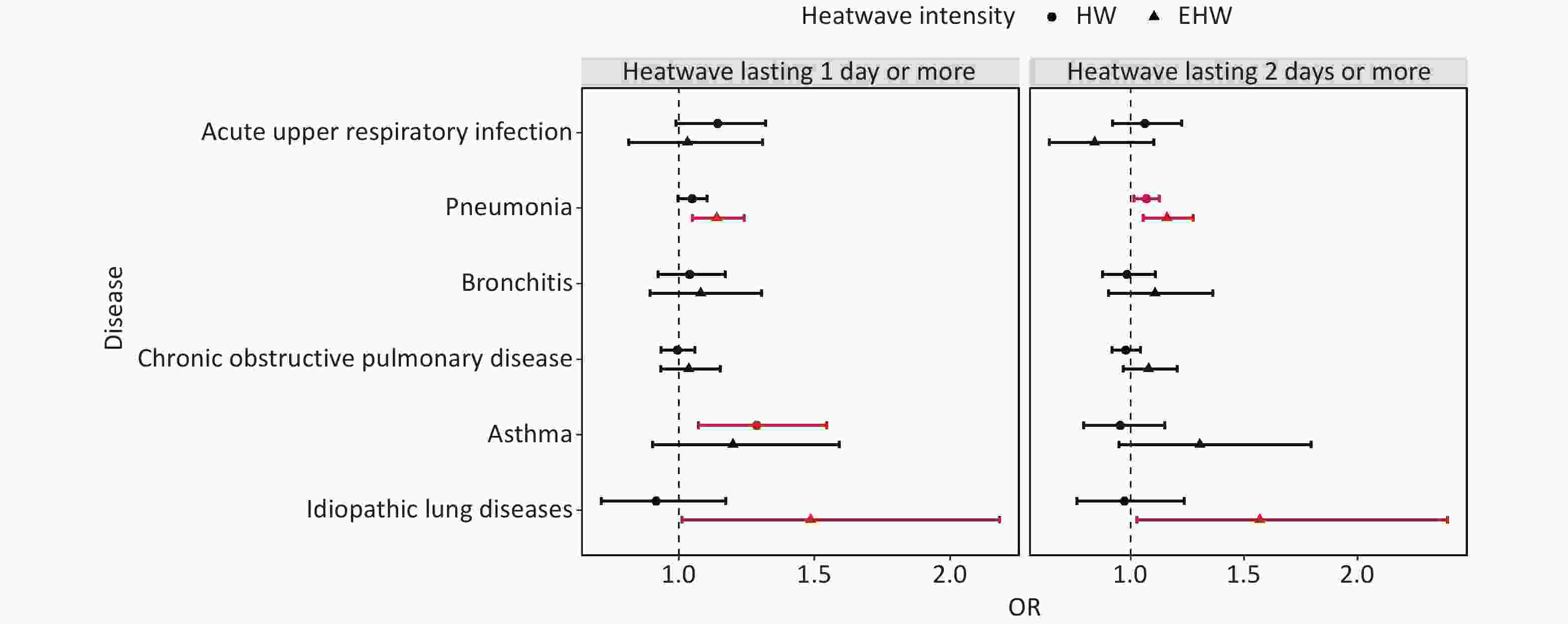
Figure 2. Effect of heatwaves on emergency admissions for respiratory diseases. OR, odds ratio; HW, heatwave; EHW, extremely heatwave.
The increased risk of pneumonia observed herein may be attributable to an increase in the number of pathogens, the transmission of which is affected by temperature and relative humidity. For example, the parainfluenza virus and respiratory syncytial virus are more active at high temperatures and tend to induce inflammation, respiratory disease, and decreased lung function[3]. People may seek shelter near water during hot weather; however, heatwaves may promote increased microbial growth in the water, consequently leading to the inhalation of respiratory pathogens.
When the circulatory system regulates heat dissipation, blood flow in the skin increases and the relative blood flow in the pulmonary vessels decreases, resulting in reduced gas exchange. Patients may develop hyperventilation when breathing is made difficult by dyspnea. This effect occurs via the cholinergic reflex pathway, which can be triggered by brief exposure to high temperatures, and is associated with asthma[4]. Additionally, an increase in allergens, such as pollen and mold, in the environment is a possible cause.
Under high ambient temperatures, the body experiences heat stress when maintaining the core body temperature stability, which manifests as increased respiration and blood flow to facilitate heat dissipation. Increased respiratory load further imposes an additional burden on the lungs, which are already fibrotic and exhibit reduced elasticity. The elevated respiratory rate and blood circulation result in increased oxygen consumption. However, high temperatures reduce oxygen solubility[5] and shift the oxygen dissociation curve to the right (i.e., the oxygen-binding capacity of hemoglobin is reduced at the same alveolar oxygen partial pressure)[6], thereby impeding oxygen diffusion across the alveolar–capillary barrier. Consequently, an imbalance between increased oxygen demand and reduced diffusion can lead to hypoxia, which may exacerbate preexisting respiratory insufficiency in patients with ILD.
In addition, high temperatures can promote the production of reactive oxygen species (ROS), causing oxidative damage and activating inflammatory signaling pathways such as the NF-κB and MAPK pathways. High tempetatures can also induce dehydration of the airway surface liquid (ASL), leading to impaired mucociliary clearance[7]. These effects may adversely affect patients with ILD through multiple pathways and could help to explain the increased number of ILD-related emergency visits during extreme heatwaves.
In the present study, the emergency risk for pneumonia was predominantly elevated at lags of 0–3 days, whereas the emergency risk for asthma and ILD was mainly elevated at lags of 6–7 days, indicate that the speed of the response to heatwave exposure may differ across respiratory diseases. These differences in the lag patterns may reflect differences in the pathophysiological mechanisms underlying each disease. For example, the more rapid elevation in pneumonia risk may be related to short-term effects, such as high temperatures directly promoting pathogen proliferation, aggravating dehydration, and impairing respiratory defense function, whereas the delayed response in asthma and ILD may conversely involve relatively slower pathological processes, including progressively worsening respiratory insufficiency, sustained activation of inflammatory pathways, accumulation of oxidative stress, and impaired mucociliary clearance resulting from dehydration of the airway surface liquid.
In the present study, we did not observe significant associations with COPD or bronchitis, possibly because of different pathophysiological mechanisms or smaller case numbers; these null findings warrant further verification in studies with larger sample sizes.
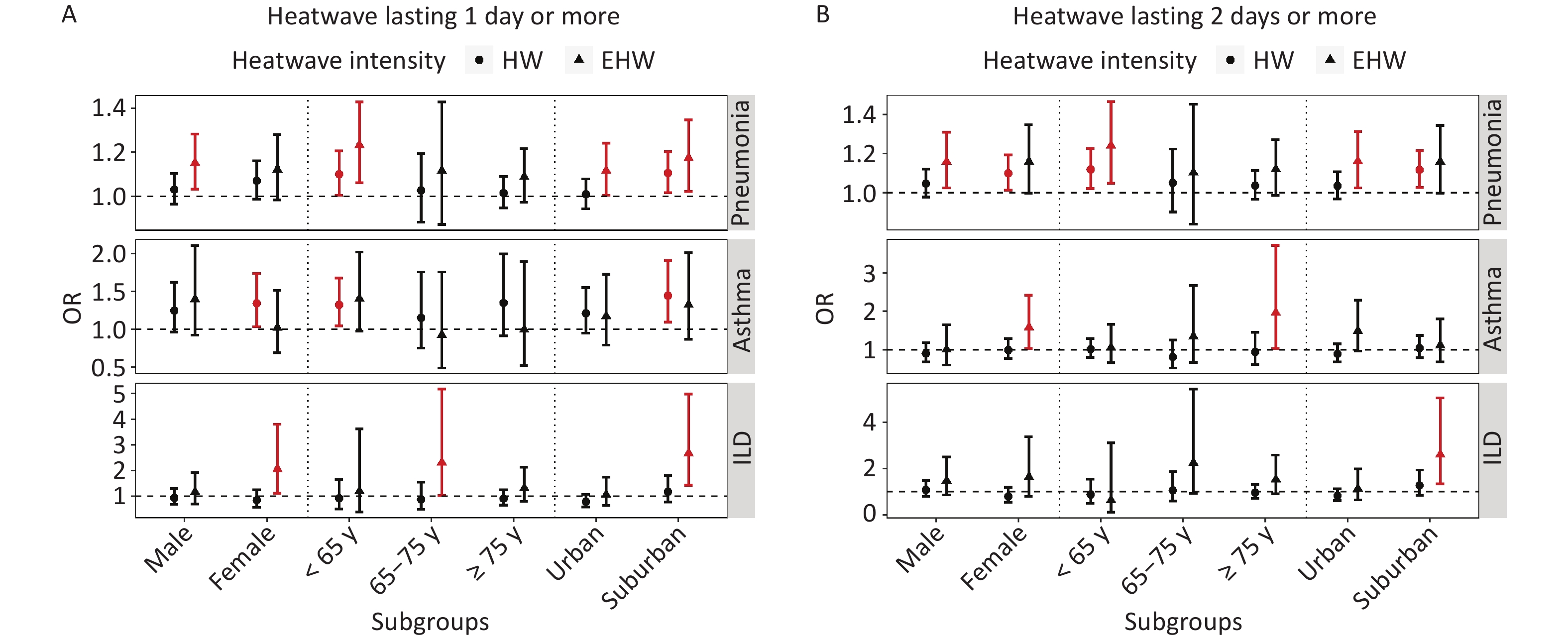
People aged < 65 years and urban residents were at a higher risk of developing pneumonia (Figure 3). This may be because suburban water, soil, animals, and plant resources are more suitable for pathogen growth and reproduction, increasing human exposure to pathogens, while people aged < 65 years may visit the outdoors more frequently.
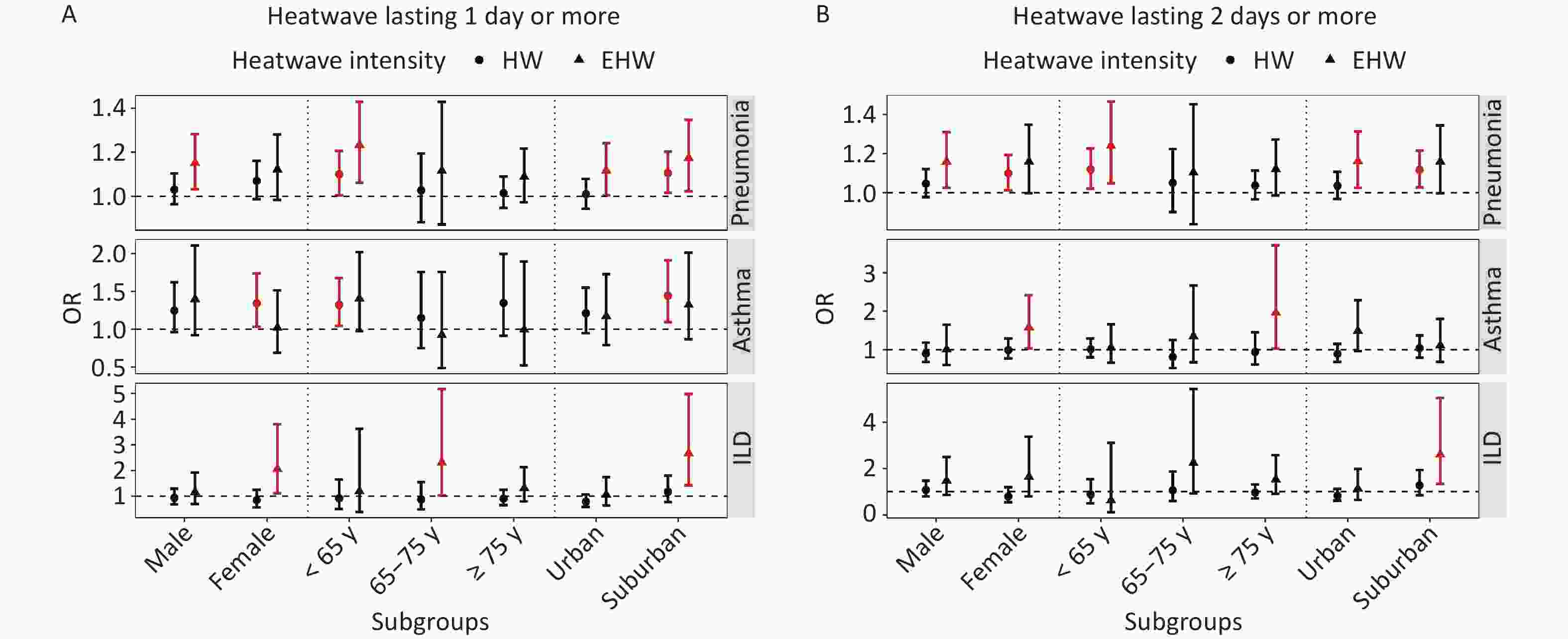
Figure 3. Sensitivity of different populations to heatwave. OR, odds ratio; HW, heatwave; EHW, extremely heatwave.
For asthma, the OR was higher in women, and the risk was higher for those aged < 65 years on mild heatwave days, while the risk was higher for those aged ≥ 75 years on extreme heatwave days. Notably, non-retired people may be more likely to take cooling precautions and avoid going outdoors on extreme heatwave days, while they conversely may be less vigilant and engage in fewer protective behaviors on mild heatwave days (especially those with a short duration).
The risk of ILD was also higher among suburban residents (Figure 3). When extreme heatwaves lasted for more than one day, women and people aged 65–75 years were more susceptible to ILD. Specifically, lung function in patients with a history of respiratory disease may be more likely to be affected by high-temperature exposure during the summer[8].
This study had some limitations. Firstly, analyses were based solely on the mean temperature and uses the 90th and 98th percentiles as the thresholds for mild and extreme heatwaves, respectively. This choice of heatwave definition may influence the effect estimates, and we did not conduct any sensitivity analyses using other commonly used heatwave definitions (e.g., definitions based on the heat index or alternative thresholds, such as the 92nd, 95th, 97.5th, and 99th percentiles). Accordingly, the robustness of our findings across different heatwave definitions remains uncertain, and future studies applying standardized or multiple heatwave definitions would help further validate our findings. District-specific temperature percentile thresholds were employed in this study, which accounted for climatic differences across districts within Beijing to some extent. However, microclimatic variations at finer spatial scales (e.g., the urban heat island effect and local microenvironmental differences) were not considered, and the temperature data were assigned to the district, rather than at the individual level. Consequently, individual-level heatwave exposure may be misclassified. Further, this study used emergency admission data to identify acute ILD-related events. Such data capture only severe cases requiring emergency care, and may miss milder episodes in which patients did not seek medical attention or were not admitted. Accordingly, our findings may primarily reflect the effects of extreme heatwaves on more severe health outcomes and cannot be extrapolated to mild episodes or subclinical health effects. Because this study was restricted to Beijing, the findings may have been influenced by factors specific to Beijing, including climatic characteristics, demographic structure, lifestyle, and healthcare accessibility. Therefore, caution should be exercised when extrapolating these findings to regions with different climatic and population characteristics. Future studies involving multicenter validations across different regions are necessary to confirm our findings. Finally, the data in this study cover the period from 2013 to 2017, and are therefore relatively dated. Given the changes in climate, population structure, and medical conditions in recent years, the impact of heatwaves on respiratory diseases may have changed, and the timeliness of the findings is subject to certain limitations. Accordingly, further studies using more recent data are required to verify these findings.
HTML
Competing Interests The authors declare that they have no conflicts of interest regarding this study to disclose.
Ethics Given that this study did not involve any animal or human subjects, and the data used were anonymized and did not contain personally identifiable information, ethical approval was not required for this study.
Authors’ Contributions This study was conducted by Yang et al. Data analysis was performed by H. N., Y. Z., J. L., and D. F. The first draft of the manuscript was written by H. N., Y. Z., J. L., and D. F. All the authors have revised the manuscript.
Data Sharing The supplementary materials will be available in www.besjournal.com.
&These authors contributed equally to this work.
Reference

 Quick Links

 DownLoad: