


-
Echinococcosis is a zoonotic disease caused by the larval stages of tapeworms belonging to the genus Echinococcus, and it presents substantial global health and economic challenges[1]. Qinghai Province, situated in the northeastern Qinghai-Tibet Plateau (QTP) with an average altitude exceeding 3,000 m[2], is characterized by unique environmental features such as hypoxia, intense ultraviolet radiation, and low temperatures. These conditions create an environment suitable for the transmission of echinococcosis, rendering the region a highly endemic area. The 2023 National Epidemiological Survey on Echinococcosis in China reported a prevalence of 0.05% for humans, with cystic echinococcosis (CE) accounting for 62.61% of cases[3]. The prevalence in Qinghai Province is significantly higher than the national average, imposing a heavy burden on both the health of the local population and socioeconomic development of the region.
CE in China is predominant in pastoral and semi-pastoral regions, with QTP being a highly endemic area, encompassing provinces including Sichuan, Gansu, and Qinghai. Prevalence rates are significantly higher among females, the elderly, Tibetan populations, and herders than in other demographic groups[3]. This indicates the high degree of geographical clustering of the disease and its distinct epidemiological characteristics across different populations. In molecular diagnostics, cyclooxygenase 1 (COX1) serves as a reliable marker to accurately differentiate sequence variations among parasite species, demonstrating high credibility in amplification results[4]. Therefore, based on molecular genetic analysis of the COX1 gene, the genetic evolutionary patterns of CE in the Qinghai region were systematically investigated in this study.
All samples in this study were collected consecutively from Yushu Prefecture People’s Hospital in Qinghai Province, China between 2014 and 2024, comprising 20 confirmed cases of CE that met the inclusion criteria. No artificial selection or exclusion was performed during sample collection. Polymerase chain reaction amplification and sequencing were conducted using the COX1 gene as a molecular marker. The obtained sequences were aligned using NCBI BLAST. Haplotype diversity was analyzed using DnaSP v6, and a haplotype network was constructed using PopArt. Using Taenia multiceps as the outgroup, a phylogenetic tree was generated using the maximum likelihood method in Iqtree v2.2.0, and node divergence times were estimated using BEAST v2.7.4. To enable an integrative analysis of molecular genetics and geoinformatics, geographical mapping was performed using ArcGIS. All maps were generated using the standard map services provided by the National Platform for Common Geospatial Information Services (https://www.tianditu.gov.cn/), with the base map review number GS(2024)0650. The basic geographic boundaries of the base map have not been altered in any way.
Echinococcus DNA was successfully identified in all 20 cyst fluid samples, yielding a COX1 band that was approximately 800 bp in length (Supplementary Figure S1). All sequences exhibited 98.35%–99.76% identity with E. granulosus (GenBank ID: MN787531). These findings indicated that the cases of CE in Qinghai Province predominantly affected Tibetan herders. The distribution may be associated with the higher density of dogs and livestock in pastoral counties, limited access to clean water, and suboptimal personal hygiene practices among herders. The distribution of CE showed a slightly higher prevalence in males than in females, contrasting with some previously reported findings[5]. This discrepancy may be attributed to differences in case detection methods. The inclusion criteria of our study were more likely to involve male patients who, due to engagement in heavy physical labor, developed more severe complications and sought medical attention. In contrast, most community-based surveys are better equipped to comprehensively capture asymptomatic or mild infections.
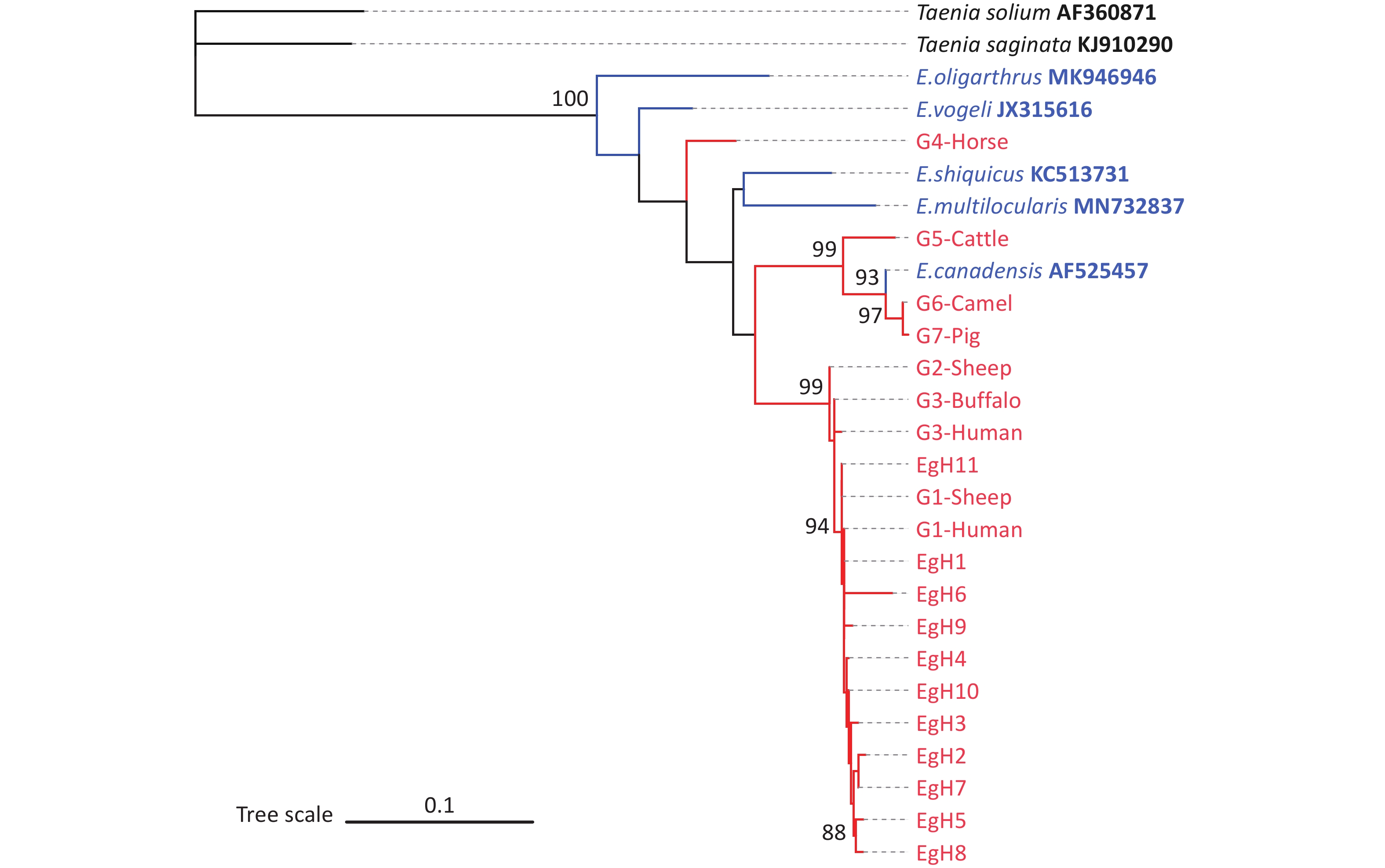
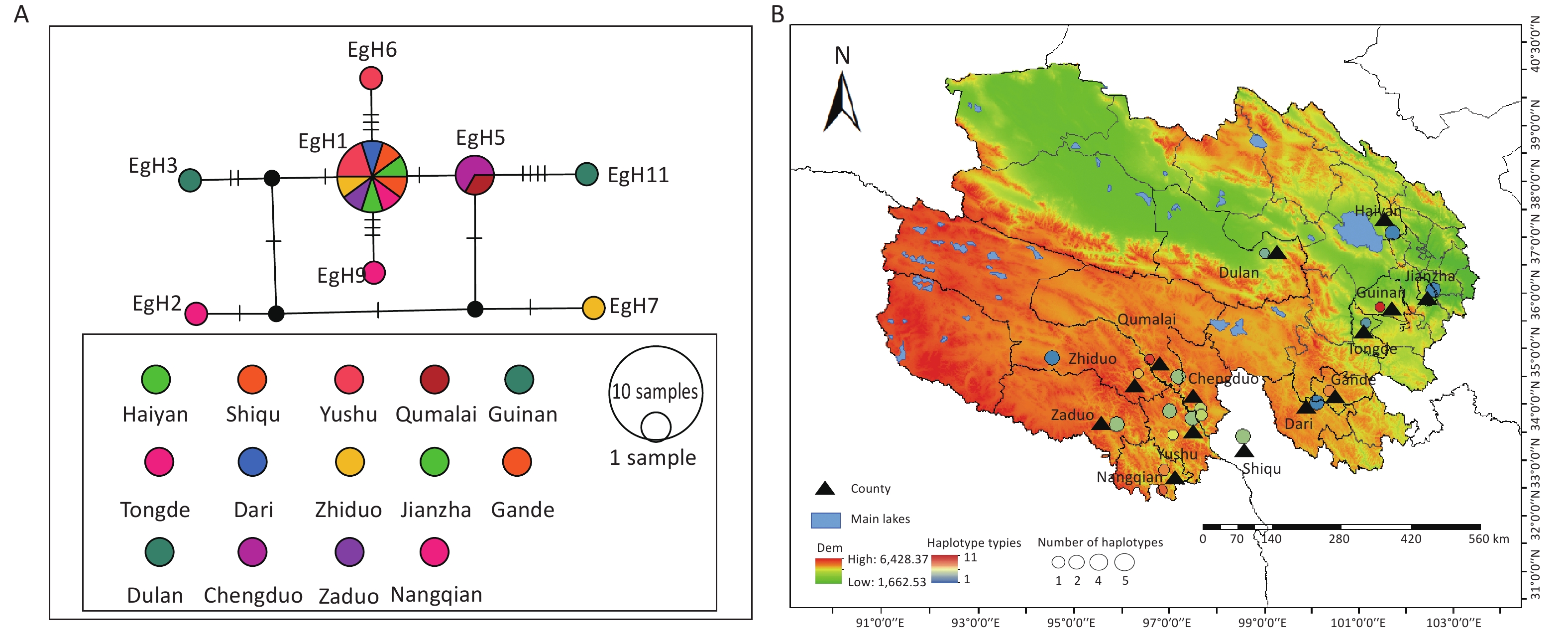
Eleven haplotypes of E. granulosus were identified in this study (Figure 1). Among them, 7 were found in Yushu Tibetan Autonomous Prefecture. Given its high haplotype diversity (0.905), nucleotide diversity of 0.03035, and genetic background characterized by 182 variable sites in our study, we hypothesized that Yushu Prefecture may serve as an important center for the genetic differentiation of E. granulosus in the Qinghai region. In this study, EgH4 was determined to be the dominant haplotype (accounting for 25%, 5/20), followed by EgH1 (accounting for 20%, 4/20), and then EgH5 and EgH8 (each accounting for 10%, 2/20). The remaining haplotypes accounted for 5% each. All 11 haplotypes of E. granulosus clustered into a single branch, with E. granulosus isolates from sheep and cattle hosts retrieved from GenBank (Figure 2), indicating that E. granulosus in Qinghai Province belongs to the typical pastoral type and shares a common evolutionary origin with strains from livestock hosts. Comparisons with the surrounding regions indicated that the diversity indices reported in some areas of Tibet were similar to those obtained in this study[6], whereas in parts of western Sichuan, the diversity tended to be higher[7]. This geographical gradient may be attributable to the Qinghai population acting as a transitional zone for dispersal from Tibet to Sichuan, with its genetic composition incorporating lineages from different sources.
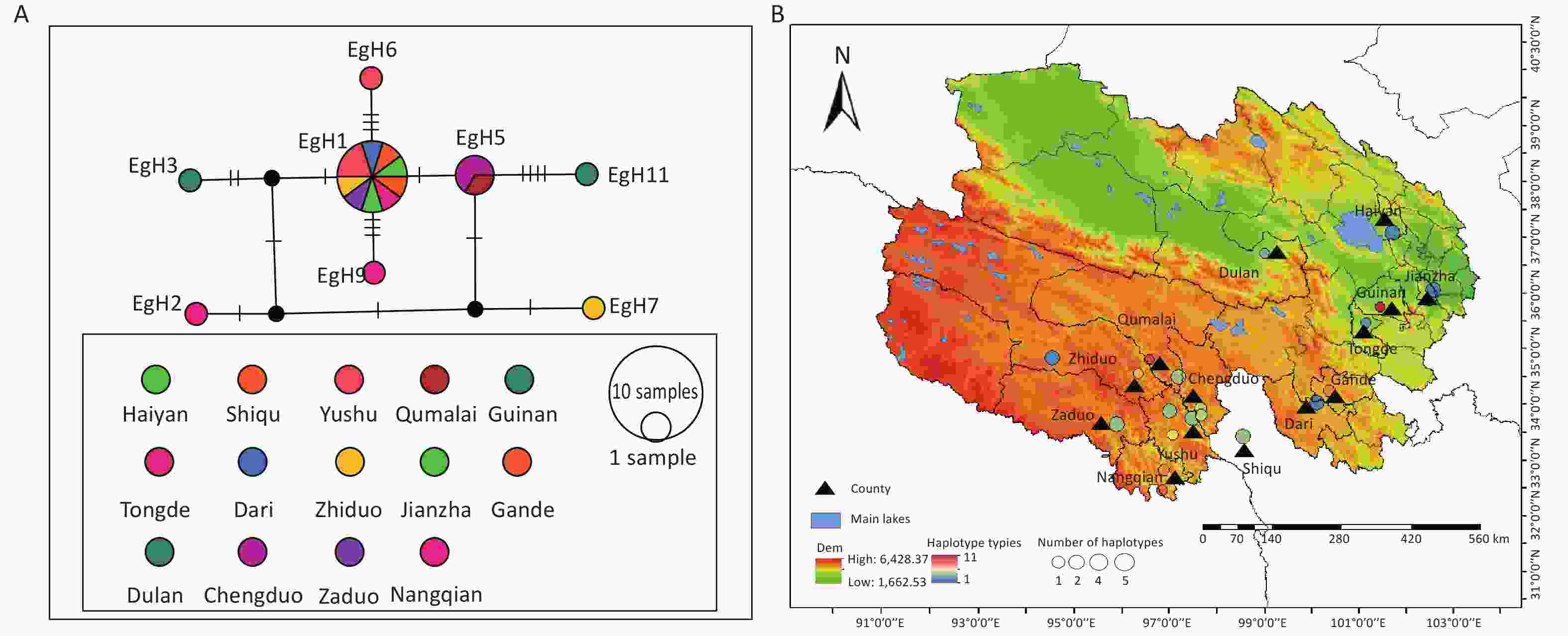
Figure 1. (A) Haplotype network constructed based on haplotype data of human-derived E. granulosus in Qinghai Province. (B) EgH1: Haiyan, Dari, Zhiduo, Jianzha; EgH2: Tongde; EgH3: Dulan; EgH4: Yushu, Zaduo, Qumalai, Shiqu; EgH5: Chengduo; EgH6: Yushu; EgH7: Zhiduo; EgH8: Nangqian, Gande; EgH9: Nangqian; EgH10: Qumalai; EgH11: Guinan; The area of each circle is proportional to the number of haplotypes.
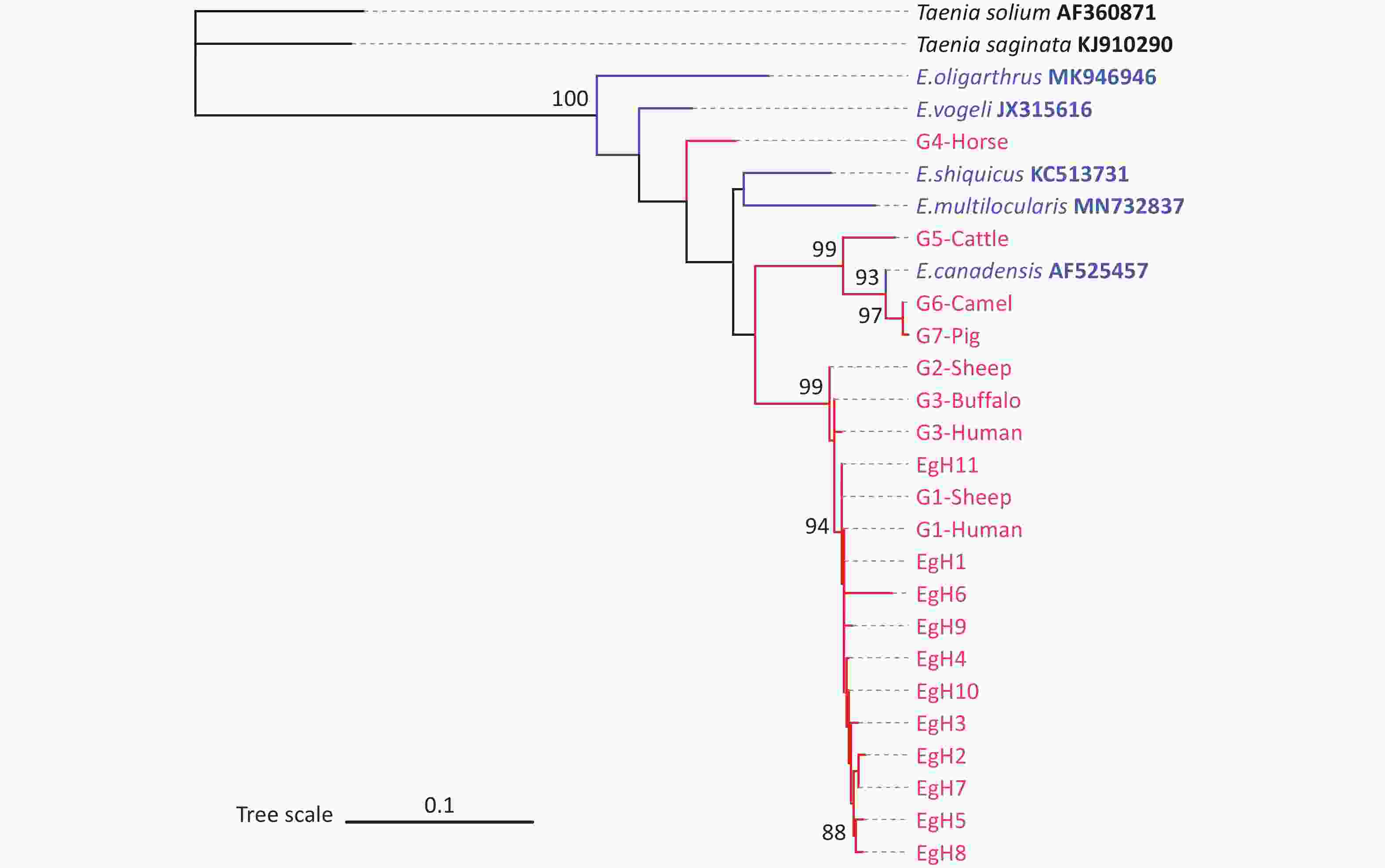
Figure 2. Maximum likelihood phylogenetic tree of E. granulosus based on the COX1 gene. The text in black font represents the outgroup, the text in blue represents the genus Echinococcus, the text in red represents E. granulosus, and the text in bold red represents the E. granulosus haplotypes obtained in this study.
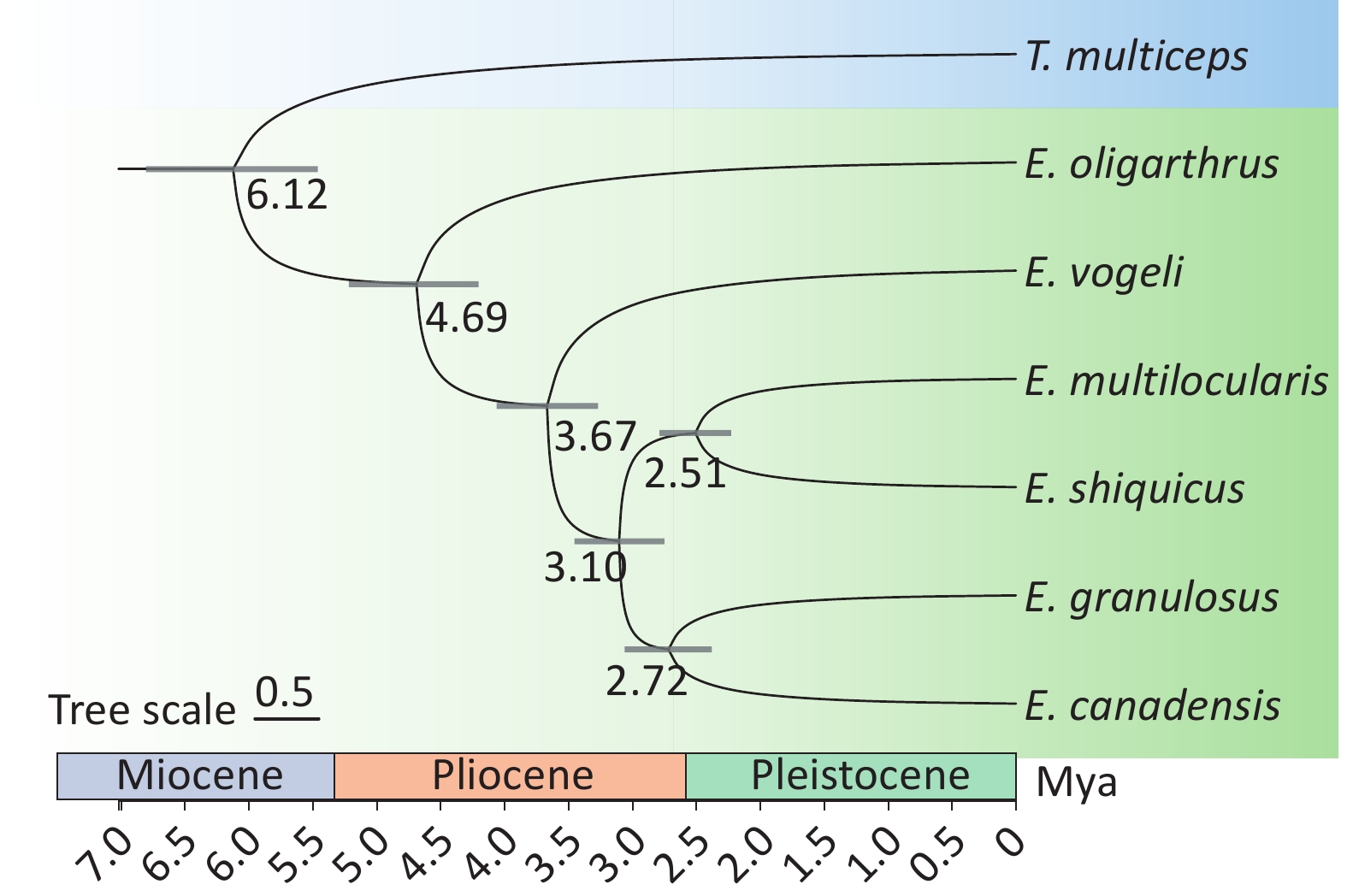
Based on divergence time estimation (Figure 3), the split between E. granulosus and E. shiquicus occurred approximately 2.51 million years ago (Mya) (95% CI: 2.23–2.79 Mya). This time point closely coincides with the onset of intensified global glaciation[8]. Climatic changes directly influence the lineage evolution of the primary hosts of these parasites, thereby indirectly driving adaptive adjustments in the parasites themselves. Given this association and the temporal alignment, we propose that the cascade of ecological effects triggered by cold climates may have driven the divergence between these two Echinococcus species.
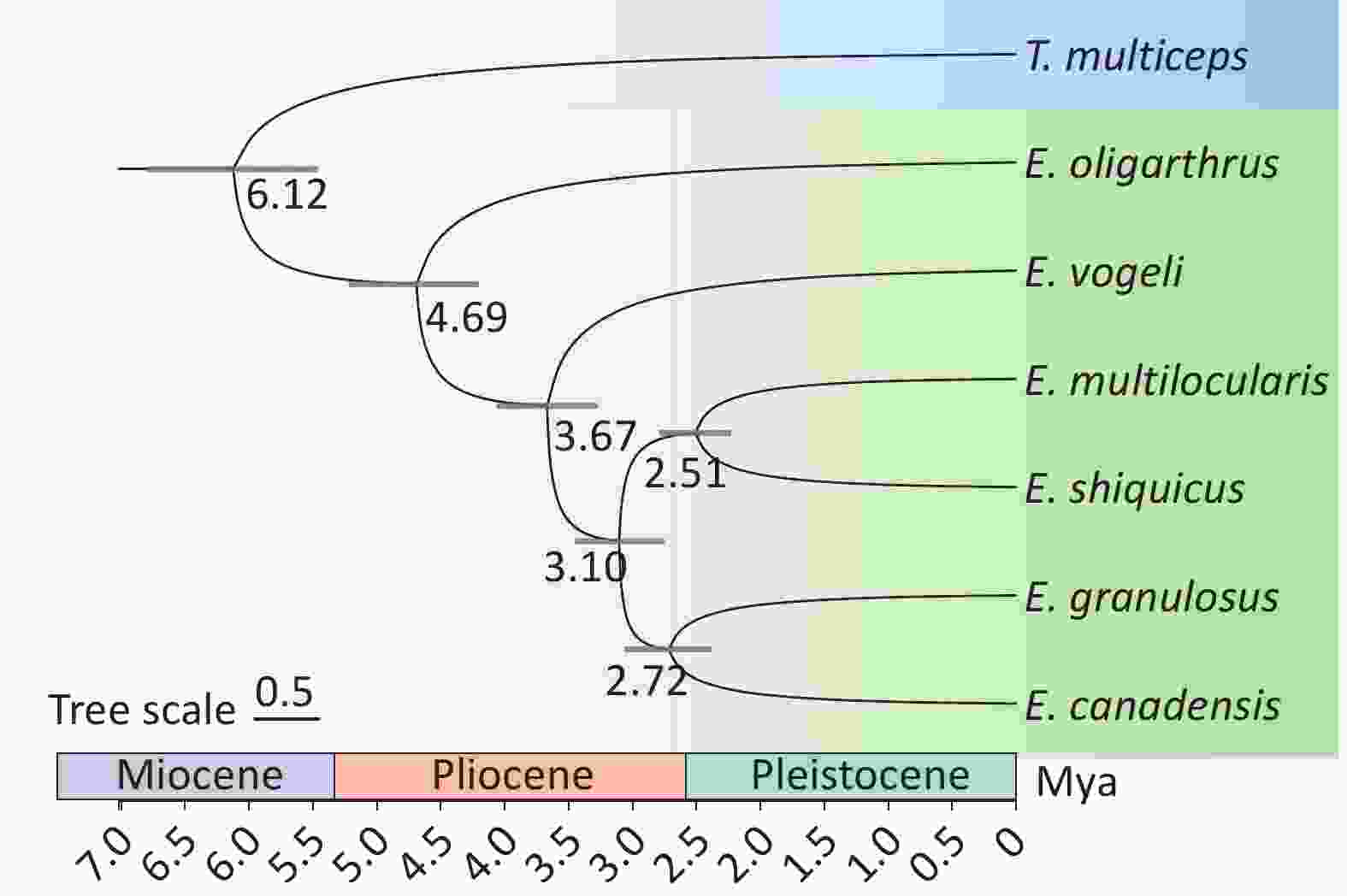
Figure 3. Divergence time estimation of Echinococcus species based on the COX1 gene.
E. granulosus and E. canadensis are recognized as sister species in the Echinococcus genus[9]. Their divergence is estimated to have occurred approximately 2.72 Mya, leading us to infer that they likely diverged in early Pleistocene and have since evolved as sister species through coordinated differentiation. This divergence time approximates the period of the intense uplift of QTP around 3 Mya[10]. Such profound geographic and climatic changes may have served as a key driver for their speciation.
Although this study utilizes molecular genetics and provides a preliminary analysis of the population structure of human-derived E. granulosus in Qinghai, the relatively limited sample size is a major limitation. A small sample size may overrepresent rare haplotypes while underestimating low-frequency haplotypes that truly exist in the population but were not sampled. Therefore, the 11 haplotypes and their relative frequencies identified in this study likely reflect only a subset of the genetic diversity present in the Qinghai region. Our findings indicate that the human-derived E. granulosus in Qinghai is predominantly of the G1 genotype, with EgH4 as the dominant haplotype. Based on regional geological evolutionary background analysis, we hypothesized that the divergence of E. granulosus may be associated with the intense uplift of the Tibetan Plateau. The current study provides important scientific evidence for tracing the origin of E. granulosus in the Qinghai region, understanding its transmission routes, and formulating targeted prevention and control strategies.
HTML
Competing Interests The authors declare no competing interests.
Authors’ Contributions Conceptualization, Project administration, Data analysis, and manuscript drafting: Yong Fu, Hailong Zhao; Executing laboratory experiments, Data analysis, and manuscript drafting: Hongrun Ge; Sample collection, Environmental data collection, Data analysis, and review & Editing: Ru Meng, Zhi Li, Hong Duo, Yuanqing Lin, Suoang Qiupei, Xihuo You, Qinyi He. All authors read and approved the final manuscript.
Date Sharing The supplementary materials will be available in www.besjournal.com.
Reference

 Quick Links
 DownLoad: