



-
Neonatal necrotizing enterocolitis (NEC) is one of the most common and critical gastrointestinal emergencies in newborns, which predominantly affects preterm infants[1]. With advancements in assisted reproductive technology and perinatal medicine in China, the improved survival rate of preterm infants may contribute to the increasing incidence of NEC[2–4]. The overall incidence of NEC among preterm infants with a gestational age of < 34 weeks in neonatal intensive care units (NICUs) in China was 3.3%, with a fatality rate of 9.5%[5]. In South Korean the total incidence rate was 13.5% for NEC in extremely preterm infants[6]. NEC survivors may face long-term complications, such as gastrointestinal issues, neurodevelopmental delays, malabsorption, and recurrent intestinal problems[7]. Besides the long-term health impacts, NEC imposes significant economic burdens on families and societies. The median cost of hospitalization for each infant with NEC in the United States was $73,000 in 2001 compared to $6,800 for an infant without NEC[8,9].
In the context of global climate change, the frequency, intensity, and duration of heatwaves are increasing[10] posing a significant threat to maternal and fetal health. Prenatal exposure to high ambient temperatures (TM) and heat waves can increase the risk of preterm birth (PTB)[11,12], which is an important risk factor for NEC[13]. The susceptibility of preterm neonates to NEC is due to intestinal immaturity, which manifests as increased structural and immunological vulnerability to hypoxia and inflammation[14]. Critically, a paradigm shift in understanding NEC pathogenesis is underway; emerging evidence supports a potential intrauterine origin[15] suggesting that the disease process may be initiated in utero by adverse fetal exposure rather than being solely a postnatal disorder[16]. Prenatal heat exposure has emerged as a biologically plausible yet understudied environmental cause. This hypothesis is supported by indirect evidence linking heat exposure to NEC via several biological pathways; however, direct evidence remains limited.
These hypothesized pathways primarily operate through two interconnected axes: impacts on the fetal gut and the placental interface. First, maternal heat stress may directly “prime” the fetal gut for later vulnerability. Environmental factors influence the gut microbiome of mothers and newborns[17,18]. For instance, PM1 or drought exposure positively correlate with neonatal gut microbial alpha diversity and affect the gut microbial composition of mothers and neonates[17,18]. A pig experiment further suggested that heat stress during pregnancy alters gut microbiota colonization and serum metabolites in offspring[19]. The imbalance in the gut microbiota might be one of the key factors inducing NEC, as it can weaken the integrity of the mucosal barrier, triggering inflammatory responses and necrotic processes within the intestines.[20,21] Moreover, maternal prenatal heat exposure may impair placental angiogenesis and development, subsequently compromising placental function and structure[22]. In hyperthermic conditions, pregnant women are more susceptible to dehydration and electrolyte imbalance, which increase blood viscosity and reduce placental perfusion[23]. These physiological changes may lead to fetal hypoxia, potentially elevating the risk of NEC. A mouse experimental study demonstrated that heat stress induced by maternal heat exposure may impair placental function and fetal development[24].
Additionally, several issues regarding the association between NEC, prenatal high TM, and heat wave exposure remain unclear, including the critical windows at which high TM and heat waves may induce NEC. Second, previous studies have found that exposure to high TM levels or heat waves during pregnancy may increase the risk of PTB[25,26] which is an important risk factor for NEC. However, to the best of our knowledge, no previous studies have examined this association. Finally, research on the disease burden of NEC attributable to high TM and heatwave exposure remains insufficient, and relevant burden estimates are lacking. Therefore, the existing epidemiological evidence needs to be supplemented.
In this study, we aimed to investigate the effects of exposure to high TM and heat waves during pregnancy on the risk of NEC, determine whether PTB serves as a mediating factor, and identify the critical windows during which high TM and heat waves may influence NEC development.
-
This study was conducted at 21 hospitals located in 11 provinces across China (Supplementary Figure S1). Only twin pregnancies that resulted in two live births were included. Initially, 9,429 twin pairs were recruited. We excluded cases with missing data regarding residential address during pregnancy (n = 194), the last menstrual period or birth date (n = 748), infant sex (n = 26), and single fetal demise in twins (n = 127). Overall, 8,334 twin pairs and their mothers were included In the final analyses (Supplementary Figure S2). This study was approved by the Ethics Committee of the Third Affiliated Hospital of Guangzhou Medical University [ID: 2020(097)].
-
We collected data from the electronic medical records (EMRs) of 21 hospitals between January 2010 and December 2020. The data collected for each participant included maternal (residential address, age, parity, conception method, last menstrual period [LMP], delivery mode) and newborn (infant sex, birth date, gestational age) information. According to the classification criteria of the American College of Obstetricians and Gynecologists (ACOG), PTB is categorized into early (before 34 weeks of gestation) and late (between 34 and 36 weeks and six days of gestation) Preterm. More detailed information is provided previously[27,28].
Daily average TM (°C) and maximum temperature (TMmax) in 2010–2020 were obtained from the European Centre for Medium-Range Weather Forecasts Reanalysis 5th Generation (ERA-5) with a spatial resolution of 0.25° × 0.25° and a temporal resolution of hours. We compared the TM data from ERA-5 with measurements from 698 weather stations across China using 10-fold cross-validation. The validation showed a cross-validation coefficient of determination (CV-R2) of 0.93 and a root mean squared prediction error (RMSE) of 3.22 °C[29]. The ERA-5 dataset was highly correlated with the observed data from weather stations, suggesting its high quality and reliability.
We obtained daily particulate matter ≤ 2.5 μm (PM2.5 in aerodynamic diameter) concentrations from the Tracking Air Pollution in China (TAP, https://tapdata.org.cn/), which provides gridded PM2.5 data at 10 × 10 km spatial resolution across China. The PM2.5 data from TAP were estimated based on a two-stage machine learning model coupled with the synthetic minority oversampling technique and a tree-based gap-filling method. Previous studies have shown that the model used to collect PM2.5 was not only comparable to those of other studies, but also improved its performance at high pollution levels and filled the gaps in missing aerosol optical depth daily scales (CV-R2 from 0.80 to 0.83, and RMSE 13.9 to 22.1 μg/m3)[30]. Similarly, we obtained the maximum eight-hour daily average ozone (MDA8O3) data from the TAP, which was estimated using a five-fold cross-validation approach. The results showed a high correlation with other observations (R2 = 0.70, RMSE = 26 µg/m3)[31].
Individual exposures estimated for TM, PM2.5, and MDA8 O3 were derived through geospatial linkages with the participants' residential coordinates. For each participant, the average TM, PM2.5, and MDA8 O3 levels were calculated for the first trimester (weeks 1–13+6 of pregnancy), second trimester (weeks 14–27+6 of pregnancy), third trimester (week 28 of delivery), and for the entire pregnancy (from LMP to delivery).
-
We used the Modified Bell’s staging criteria to identify NEC, which is defined as stage II or higher, diagnosed based on clinical symptoms and the relatively specific radiographic sign of pneumatosis intestinalis[32]. Stage IIA is characterized by the presence of pneumatosis intestinalis and patients may exhibit diminished or absent bowel sounds and abdominal tenderness. Stage IIB involves more severe abdominal signs, such as abdominal wall cellulitis or a right lower quadrant mass, with mild metabolic acidosis or thrombocytopenia. Stage IIIA involves critically illness without intestinal perforation, with symptoms such as hypotension, acidosis, apnea, respiratory failure, disseminated intravascular coagulation, thrombocytopenia, and neutropenia. Abdominal examination reveals rigidity and tenderness, and imaging typically reveals a gasless abdomen or floating bowel loops with distended flanks. Stage IIIB is characterized by intestinal perforation with imaging demonstrating the presence of free intraperitoneal air. In this study, if either or both twins were diagnosed with NEC at any stage, they were considered NEC cases[27].
-
A heatwave was defined as three or more consecutive days with daily maximum temperatures exceeding the local 90th percentile threshold in each district or county in China between 2010 and 2020[29,33]. Prenatal exposure to heatwaves was assessed throughout pregnancy and in each trimester. Heatwave exposure was categorized into two groups: exposed (experiencing at least one heat wave) and unexposed.
-
We selected the following potential confounding factors based on previous studies[34–36]: maternal age, maternal ethnicity, year of delivery, season of conception (cold season [November to April] or warm season [May to October]), maternal parity (nulliparous or multiparous), mode of delivery (vaginal or cesarean), gestational week, twins’ sex (male and female, male and male, or female and female), type of conception (natural or assisted), PM2.5 and MDA8 O3.
-
Demographic characteristics were compared between the NEC and non-NEC groups using the chi-square test for categorical variables and t-tests for continuous variables. Continuous variables are expressed as mean ± standard deviation (SD) and categorical variables as numbers (proportions). Pearson’s correlation analysis was used to analyze the correlation between TM, PM2.5, and MDA8 O3 levels throughout pregnancy.
The association between prenatal TM exposure and NEC was modeled using a generalized linear model (GLM) that incorporated a natural spline for TM (three degrees of freedom)[12] with the median TM level serving as the reference. From this model, adjusted odds ratios (OR)s and 95% confidence intervals (CI)s were derived for TM exposure at the 90th and 95th percentiles. Additionally, GLM was used to assess the association between prenatal heatwave exposure and NEC. The models were adjusted for maternal age, ethnicity, year and season of delivery, mode of delivery, gestational week, twin sex, type of conception, PM2.5, and MDA8 O3. Based on these associations, we further calculated the NEC attributable to high TM and heat waves using the population attributable fraction (PAF). We adopted the following equation to calculate the PAF of NEC incidence due to high TM and heat waves[28].
$$ PAF=\frac{\sum \left( {P}_{i} \times \text{exp} \left(\beta \times{T}_{i}\right)\right)-1} {\sum({P}_{i} \times \text{exp} (\beta \times {T}_{i})) } \times 100{\text{%}} $$ Pi: indicates the distribution of the population exposed to TM; β: indicates the estimated coefficient of NEC related to TM and heatwaves in the GLM model; Ti: the TM of each participant.
To identify populations susceptible to TM and heat wave exposure, we conducted stratified analyses by maternal age (≤ 30 or > 30 years), parity (nulliparous or multiparous), season of conception (cold season or warm season), and residential regions (rural or urban). A two-sample z-test was used to examine the differences in the strata-specific estimates for each stratification variable[37,38]. The formula is as follows:
$$ z=\frac{{\beta }_{1}-{\beta }_{2}}{\sqrt{SE_{1}^{2}+SE_{2}^{2}}} $$ Where β indicates the strata-specific point estimate in the GLM model; SE indicates the corresponding standard error for each β.
Additionally, we conducted a mediation analysis to explore whether PTB served as a mediating factor between exposure to high TM levels and NEC. To establish the mediating effect, we considered the following conditions[39]: (1) There was a significant association between TM exposure and the risk of NEC. (2) There is a significant association between TM exposure and an increased risk of PTB. (3) There is a significant relationship between PTB and an increased risk of NEC. (4) After including PTB in the model, the correlation between TM exposure and NEC risk weakened. The total effect of TM exposure on NEC could be decomposed into two components: an indirect effect (ORIE, the impact of TM exposure on NEC through PTB) and a direct effect (ORDE, the direct impact of TM exposure on NEC without PTB as a mediator). The standardized parameter estimates and their standard errors from these two separate models were combined to estimate the magnitude of the mediating effect. Finally, the proportion of the mediated effect (PM) was calculated as follows: The 95% CI) of the mediating effect was determined using 10,000 bootstrap iterations.
$$ PM=\frac{{OR}_{DE}({OR}_{IE}-1)}{{OR}_{DE} \times {OR}_{IE}-1} $$ -
Sensitivity analyses were performed by adjusting for pre pregnancy BMI and residential area to confirm the robustness of the relationship between high TM levels and NEC. All analyses were performed using R software (version 4.3.2). All statistical tests were two-sided, and a P-value < 0.05 was considered significant.
-
We included 8,334 twin pairs and their mothers: 227 (2.72%) twin pairs were NEC cases. Among all pregnant women, 4,571 (54.9%) were over 30 years old, 5,421 (65.2%) were nulliparous, 4,971 (59.9%) conceived by assisted reproduction (ART), 7,428 (89.4%) had a cesarean delivery, and 4,264 (51.2%) conceived during warm seasons. Compared with the non-NEC group, the NEC group had a significantly lower average gestational age (32.5 ± 2.87 weeks vs. 35.6 ± 2.34 weeks, P < 0.001) and a higher average TM (21.3 ± 4.32 °C vs. 19.1 ± 5.24 °C, P < 0.001) (Table 1).
Characteristics n (%) / mean (SD) Total n = 8,334 Non-NEC n = 8,107 NEC n = 227 P Maternal age (continuous, years) 31.1 (4.55) 31.1 (4.53) 31.6 (5.21) 0.146 Maternal age (years) 0.516 ≤ 30 3,750 (45.1) 3,653 (45.1) 97 (42.7) > 30 4,571 (54.9) 4,441 (54.9) 130 (57.3) Gestational age (weeks) 35.5 (2.41) 35.6(2.34) 32.5 (2.87) < 0.001 Parity 0.042 Nulliparous 5,421 (65.2) 5,288 (65.3) 133 (58.6) Multiparous 2,899 (34.8) 2,805 (34.7) 94 (41.4) Season of conception 0.012 Cold season 4,070 (48.8) 3,940 (48.6) 130 (57.3) Warm season 4,264 (51.2) 4,167 (51.4) 97 (42.7) Delivery mode < 0.001 Vaginal 879 (10.6) 833 (10.3) 46 (20.3) Cesarean 7,428 (89.4) 7,247 (89.7) 181 (79.7) Residential area 1.000 Rural 2,807 (33.7) 2,731 (33.7) 76 (33.5) Urban 5,527 (66.3) 5,376 (66.3) 151 (66.5) Infant sex < 0.001 Male-female 2,977 (35.7) 2,924 (36.1) 53 (23.3) Male-male 3,006 (36.1) 2,907 (35.9) 99 (43.6) Female-female 2,351 (28.2) 2,276 (28.1) 75 (33.0) Types of conception Natural pregnancy 3,324 (40.1) 3,210 (39.8) 114 (50.2) 0.002 Assisted reproduction 4,971 (59.9) 4,858 (60.2) 113 (49.8) Heatwaves 0.617 Yes 7,538 (90.4) 7,330 (90.4) 208 (91.6) No 796 (9.6) 777 (9.6) 19 (8.4) Preterm birth < 0.001 Yes 5,470 (65.6) 5,250 (64.8) 220 (96.9) No 2,864 (34.4) 2,857 (35.2) 7 (3.1) Ambient temperature (°C) 19.1 (5.23) 19.1 (5.24) 21.3 (4.32) < 0.001 MDA8 O3 (μg/m3) 88.9 (14.28) 88.8 (14.30) 89.7 (13.49) 0.408 PM2.5 (μg/m3) 37.5 (12.74) 37.6 (12.74) 33.4 (12.20) < 0.001 Note. SD, standard deviation; NEC, necrotizing enterocolitis; PM2.5, fine particulate matter ≤ 2.5 μm in diameter; MDA8 O3, daily 8 h maximum ozone concentrations. The chi-square test was used to compare the differences in categorical variables between the groups with and without NEC, and the t-test was used to compare the differences in continuous variables between the groups with and without NEC. The ambient temperature values in the table represent the average temperatures across the entire pregnancy period, covering the cold and warm seasons. Therefore, the final values exhibited a relatively narrow range of variation. Table 1. Summary characteristics of twin pregnancy mothers for study in China from 2010 to 2020
During the entire pregnancy, the average TM was 19.1 ± 5.23 °C. The average concentration of MDA8 O3 and PM2.5 were 88.9 ± 14.28 μg/m3 and 37.5 ± 12.74 μg/m3, respectively (Table 1). The average TM exposure was significantly higher among participants living in urban areas (19.5 °C) than among those in rural areas (18.5 °C) (P < 0.001) (Supplementary Table S1). Pearson correlation analyses showed weak negative correlations between TM and PM2.5 (r = −0.42, P < 0.001), and MDA8 O3 and PM2.5 (r = −0.04, P < 0.001). Weak positive correlations were observed between TM and MDA8 O3 levels (r = 0.19, P < 0.001) (Supplementary Table S2).
-
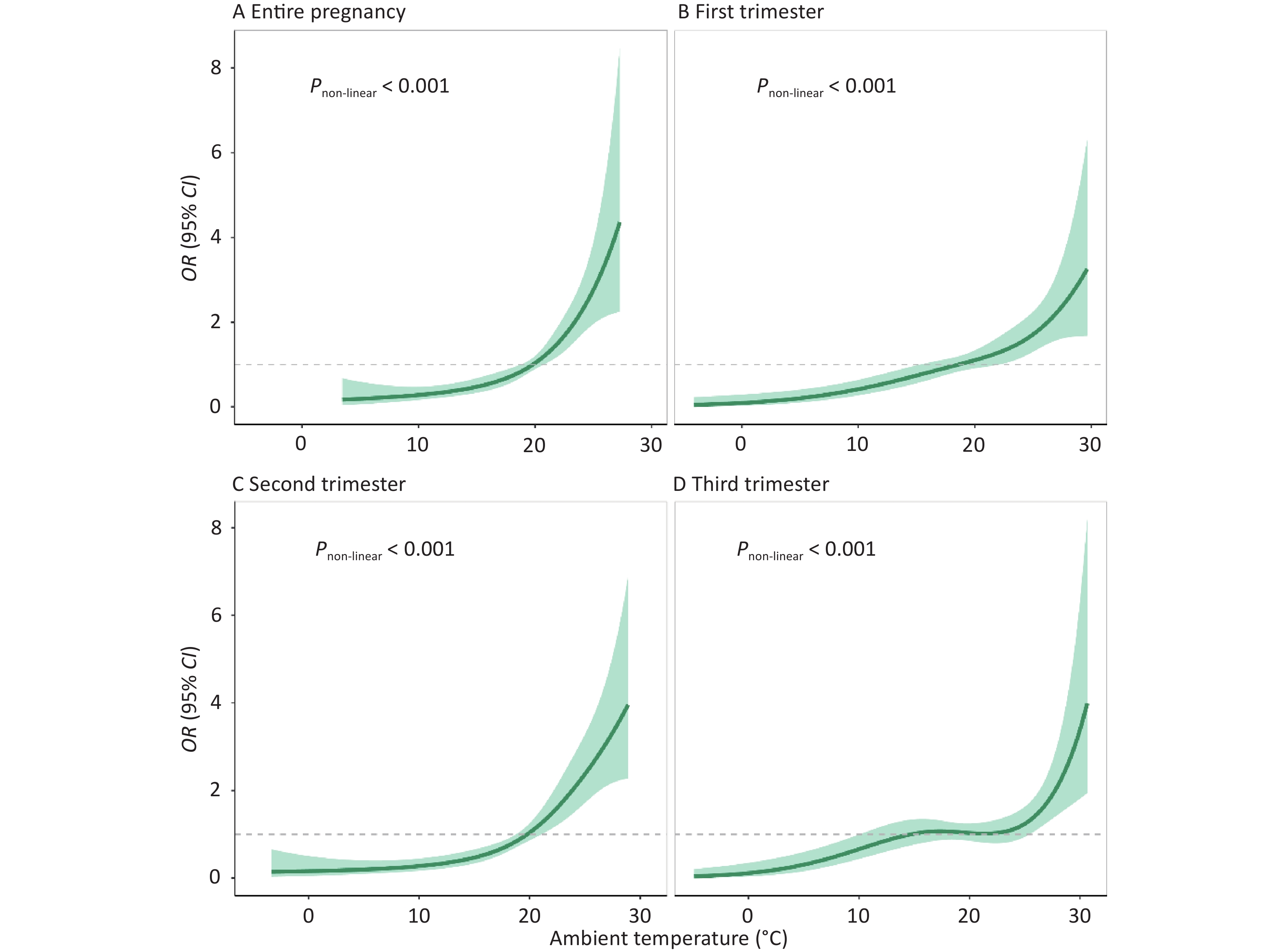
Figure 1 shows the nonlinear exposure-response associations between prenatal exposure to TM and the risk of NEC. A nonlinear relationship was observed between TM and NEC risk during pregnancy and in each trimester.
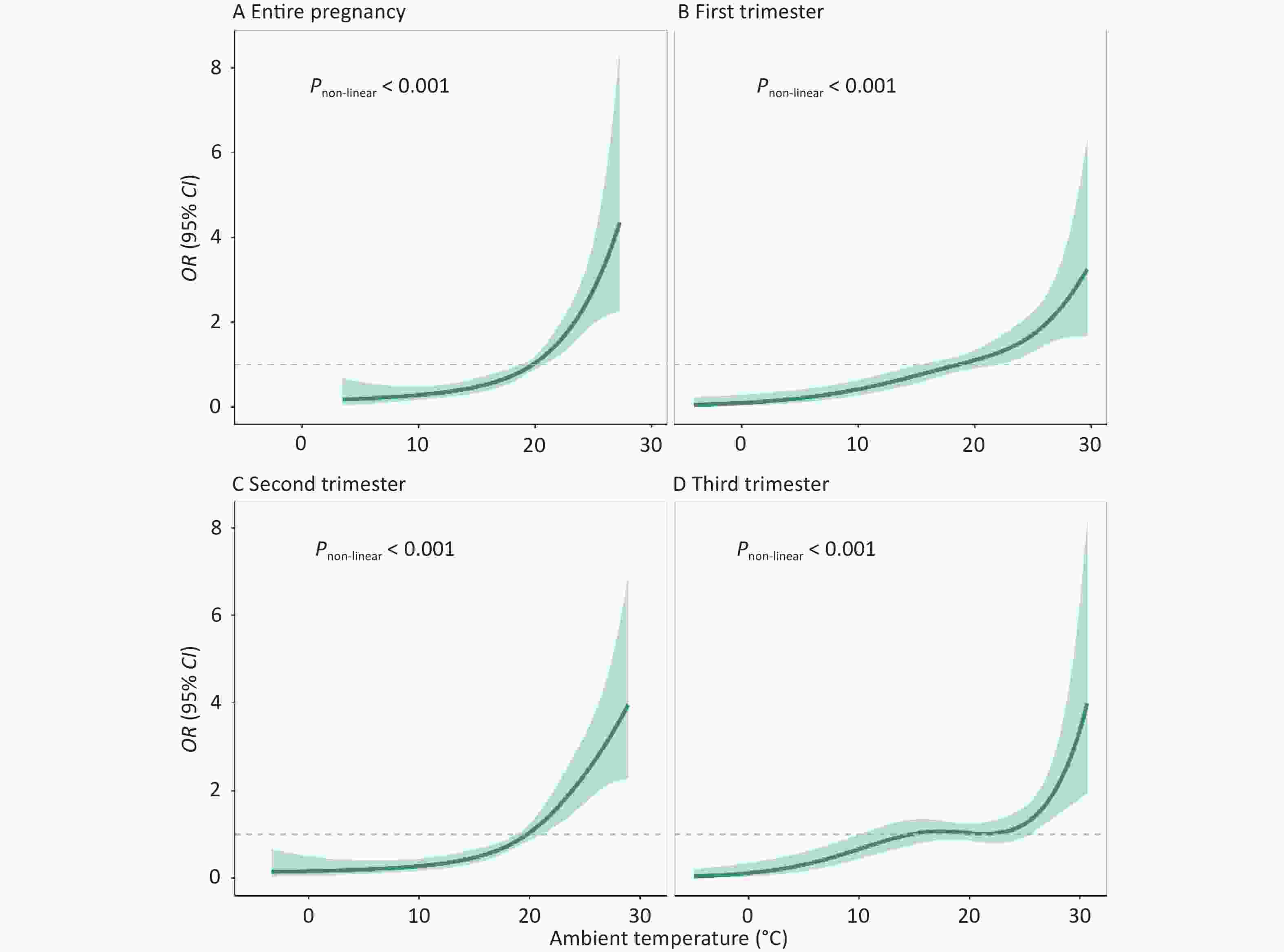
Figure 1. The exposure-response association curves between maternal TM exposure and the risk of NEC. Models were adjusted for maternal age, parity, gestational age, seasons of conception, sex of twin fetuses, year of conception, maternal ethnicity, type of conception, modes of delivery, PM2.5, and MDA8 O3. OR, odds ratio; CI, confidence interval; TM, ambient temperature; NEC, necrotizing enterocolitis; PM2.5, fine particulate matter ≤ 2.5 μm in diameter; MDA8 O3, daily 8-h maximum ozone concentrations.
Compared to the reference TM (19.8 °C), TM exposure to the 90th percentile (24.8 °C) and 95th percentile (25.4 °C) during the entire pregnancy were associated with an increased risk of NEC (OR, 2.68; 95% CI: 1.93–3.72 and 3.03; 2.06–4.46), respectively (Table 2). Compared to the unexposed group, pregnant women exposed to heatwaves during the entire pregnancy had an OR of 1.98 (95% CI: 1.14, 3.43) for NEC in their newborns.
TM/ Heatwaves Entire pregnancy First trimester Second trimester Third trimester TM (°C) OR (95% CI) TM (°C) OR (95% CI) TM (°C) OR (95% CI) TM (°C) OR (95% CI) Percentile of TMa Reference temperature 19.8 18.6 19.8 20.9 90th percentile 24.8 2.68 (1.93–3.72) 27.5 2.41 (1.63–3.55) 27.4 3.30 (2.18–4.99) 27.9 2.06 (1.43–2.98) 95th percentile 25.4 3.03 (2.06–4.46) 28.0 2.59 (1.66–4.04) 28.0 3.56 (2.24–5.67) 28.3 2.25 (1.49–3.38) Heatwavesb 1.98 (1.14–3.43) 1.81 (1.26,–2.59) 1.81 (1.19–2.75) 0.94 (0.65–1.36) Note. TM, ambient temperature; NEC, necrotizing enterocolitis; OR, odds ratio; CI, confidence interval;aModel was adjusted for maternal age, parity, gestational age, seasons of conception, sex of twin fetuses, year of conception, maternal ethnicity, type of conception, modes of delivery, PM2.5, and MDA8 O3; bModels were adjusted for maternal age, parity, gestational age, seasons of conception, sex of twin fetuses, year of conception, maternal ethnicity, type of conception, modes of delivery, and MDA8 O3. PM2.5, fine particulate matter ≤ 2.5 μm in diameter; MDA8 O3, daily 8- h maximum ozone concentrations. Table 2. Associations of maternal exposure to specific centile of TM and heatwaves during pregnancy with NEC
Exposure to the 90th percentile TM during the first, second, and third trimester was associated with increased NEC risk, with ORs of 2.41 (95% CI: 1.63–3.55), 3.30 (95% CI: 2.18–4.99), and 2.06 (95% CI: 1.43–2.98), respectively. Similar trends were observed for the 95th percentile TM exposure during the first (OR = 2.59, 95% CI: 1.66–4.04), second (OR = 3.56, 95% CI: 2.24–5.67), and third trimesters (OR = 2.25, 95% CI: 1.49–3.38) (Table 2). Additionally, exposure to heatwaves during the first (OR = 1.81, 95% CI: 1.26–2.59) and the second trimester (OR = 1.81, 95% CI: 1.19–2.75) was associated with an increased risk of NEC (Table 2). The sensitivity analyses showed that our findings were robust (Supplementary Table S4).
-
Stratified analysis demonstrated associations between prenatal heat exposure and NEC risk in different subgroups. Pregnant women living in urban areas (OR = 3.59, 95% CI: 2.19–5.87) exposed to the 95th percentile TM had a higher risk of NEC compared to those living in rural areas (OR = 2.06, 95% CI: 1.10–3.84).
The association between prenatal heatwave exposure and NEC risk also varied according to maternal age and residential area. Specifically, those aged ≥ 30 years had an OR of 2.16 (95% CI: 1.06–4.37), and those living in urban areas had an OR of 3.96 (95% CI: 1.70–9.26). In contrast, women aged < 30 years had an OR of 1.84 (95% CI: 0.76–4.47), and those living in rural areas had an OR of 1.22 (95% CI: 0.58–2.54) (Table 3).
Subgroups TM (°C) OR (95% CI) P value Specific percentile of TM a Season of conception Cold season Reference temperature 21.3 90th percentile 25.3 2.48 (1.69–3.62) Ref 95th percentile 25.7 2.69 (1.73–4.16) Ref Warm season Reference temperature 18.8 90th percentile 23.0 2.84 (1.74–4.62) 0.664 95th percentile 23.8 3.52 (1.95–6.38) 0.471 Maternal age (years) ≤ 30 Reference temperature 19.1 90th percentile 24.7 2.48(1.57–3.92) Ref 95th percentile 25.3 3.03(1.75–5.25) Ref > 30 Reference temperature 20.1 90th percentile 24.9 2.82(1.77–4.50) 0.695 95th percentile 25.4 3.04(1.78–5.21) 0.99 Parity Nulliparous Reference temperature 19.5 90th percentile 24.8 2.95(1.91–4.55) Ref 95th percentile 25.4 3.45(2.09–5.70) Ref Multiparous Reference temperature 20.2 90th percentile 24.8 2.42(1.48–3.95) 0.935 95th percentile 25.4 2.62(1.44–4.74) 0.722 Residential area Rural Reference temperature 17.9 90th percentile 24.4 2.00(1.19–3.38) Ref 95th percentile 25.1 2.06(1.10–3.84) Ref Urban Reference temperature 20.3 90th percentile 25.0 3.20(2.06–4.99) 0.182 95th percentile 25.4 3.59(2.19–5.87) 0.171 Types of PTB Late preterm (34–36+6 weeks) Reference temperature 20.4 90th percentile 24.8 2.59 (1.51–4.44) Ref 95th percentile 25.3 3.03 (1.60–5.74) Ref Early preterm (< 34 weeks) Reference temperature 19.4 90th percentile 25.4 3.11 (1.61–5.99) 0.674 95th percentile 26.0 3.71 (1.67–8.22) 0.698 Types of conception Natural pregnancy Reference temperature 20.1 90th percentile 24.8 2.66 (1.85–3.86) Ref 95th percentile 25.6 3.02 (1.93–4.71) Ref Assisted reproduction Reference temperature 19.4 90th percentile 24.8 2.26 (1.55–3,27) 0.530 95th percentile 25.4 2.44 (1.54–3.86) 0.513 Heatwaves b Season of conception 0.855 Cold season 1.98 (0.7–5.54) Warm season – Maternal age (years) 0.783 ≤ 30 1.84 (0.76–4.47) > 30 2.16 (1.06–4.37) Parity 0.489 Nulliparous 1.67 (0.83–3.36) Multiparous 2.49 (1.02–6.07) Residential area 0.040 Rural 1.22 (0.58–2.54) Urban 3.96 (1.70–9.26) Types of PTB 0.139 Late preterm (34−36+6 weeks) 3.76 (0.88–15.98) Early preterm (< 34 weeks) 1.15 (0.64–2.08) Types of conception 0.725 Natural pregnancy 2.26 (0.99–5.15) Assisted reproduction 1.85 (0.87–3.92) Note. TM, ambient temperature; NEC, necrotizing enterocolitis; OR, odds ratio; CI, confidence interval; aModel was adjusted for maternal age, parity, gestational age, season of conception, sex of twin fetuses, year of conception, maternal ethnicity, type of conception, mode of delivery, PM2.5, and MDA8 O3. P value for intergroup comparisons in stratified analyses; bModels were adjusted for maternal age, parity, gestational age, seasons of conception, sex of twin fetuses, year of conception, maternal ethnicity, type of conception, mode of delivery, and MDA8 O3. P value for intergroup comparisons in stratified analyses. PM2.5, fine particulate matter ≤ 2.5 μm in diameter; MDA8 O3, daily 8-h maximum ozone concentrations Table 3. Stratified analyses on the associations of maternal exposure to specific centile of TM and heatwaves with NEC
-
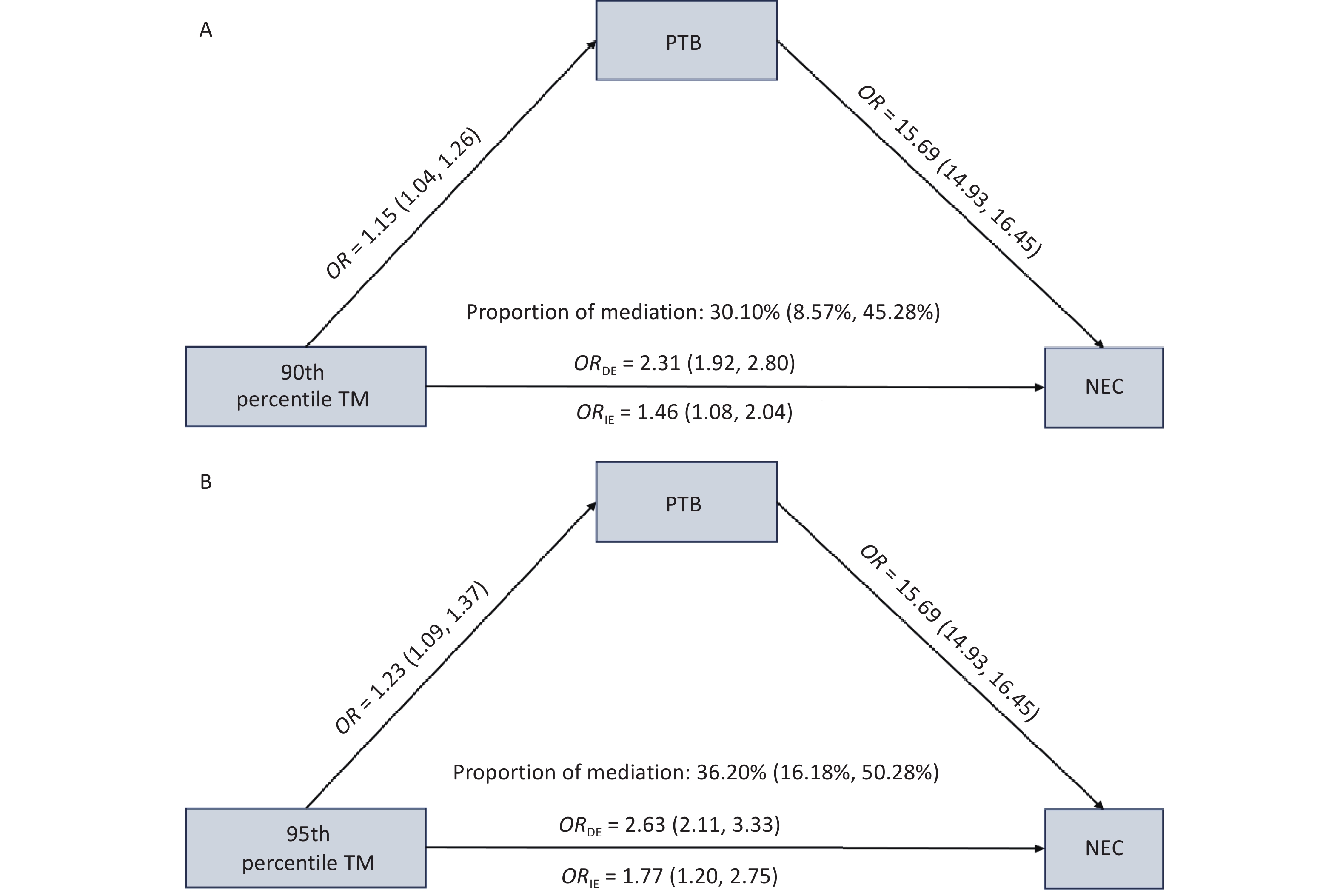
Prenatal exposure to the 90th and 95th percentile TM was associated with 15% (OR = 1.15, 95% CI: 1.04–1.26) and 23% (OR = 1.23, 95% CI: 1.09–1.37) higher PTB risks, respectively (Figure 2). PTB was associated with a significantly higher risk of NEC (OR = 15.65, 95% CI: 14.93–16.45). Additionally, the 90th TM had a significant indirect effect on NEC (ORIE = 1.46, 95% CI: 1.08–2.04). After controlling for PTB, the direct effect of 90th percentile on NEC remained significant (ORDE = 2.31, 95% CI: 1.92–2.80). PTB mediated the association between high TM exposure (90th and 95th percentiles) during the entire pregnancy and NEC, with mediation proportions of 30.10% (95% CI: 8.57%–45.28%) and 36.20% (95% CI: 16.18%–50.28%), respectively.
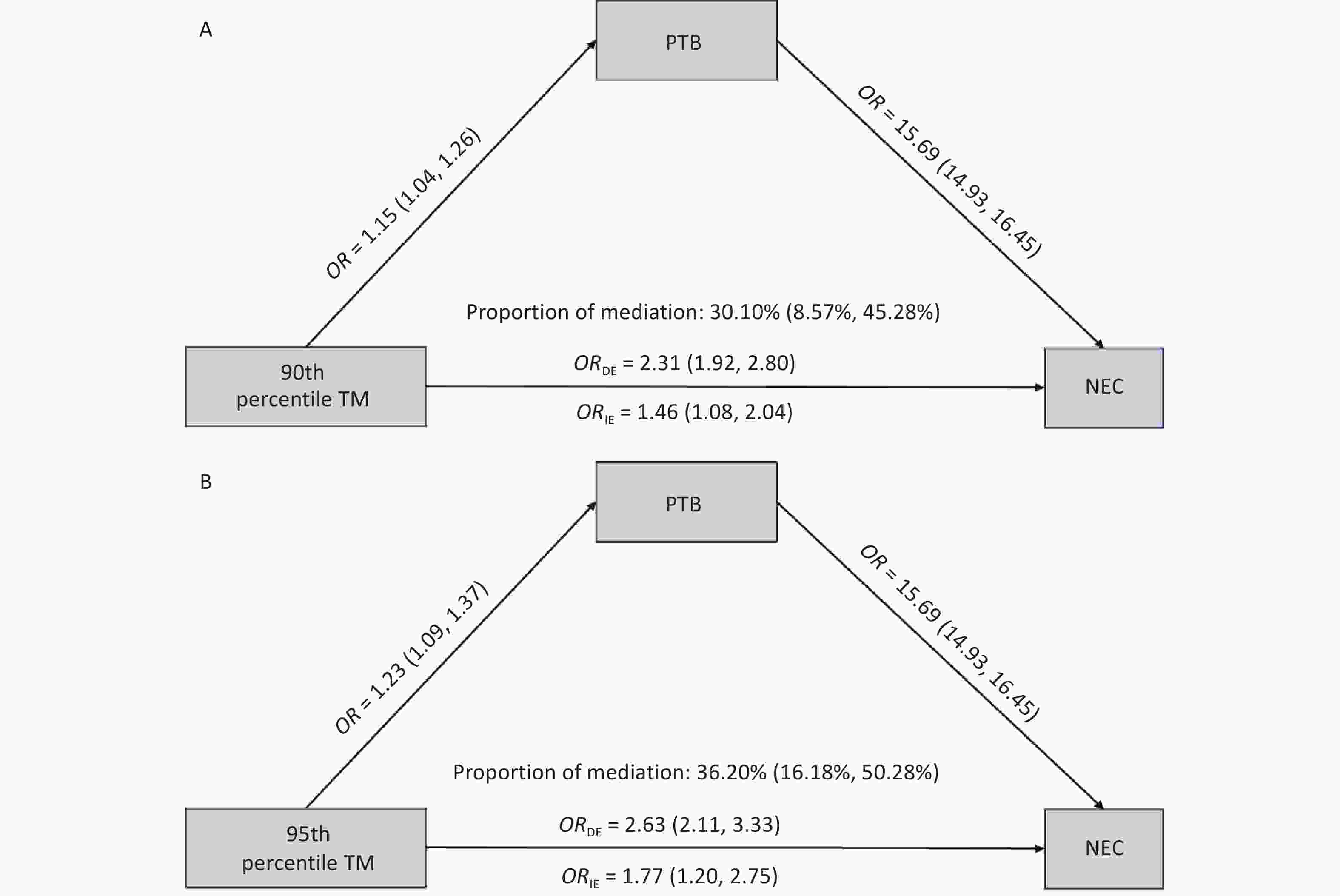
Figure 2. The mediation effects of PTB on the associations of maternal heat exposure [90th (A) and 95th (B) percentile TM] with NEC during the entire pregnancy. TM, ambient temperature; PTB, preterm birth; NEC, necrotizing enterocolitis; OR, odds ratio; ORDE, direct effect; ORIE, indirect effect; PM2.5, fine particulate matter ≤ 2.5 μm in diameter; MDA8 O3, daily 8- h maximum ozone concentrations. TM is the standardized percentile of TM. All models were adjusted for maternal age, parity, season of conception, sex of twin fetuses, year of conception, maternal ethnicity, type of conception, mode of delivery, PM2.5, and MDA8 O3.
-
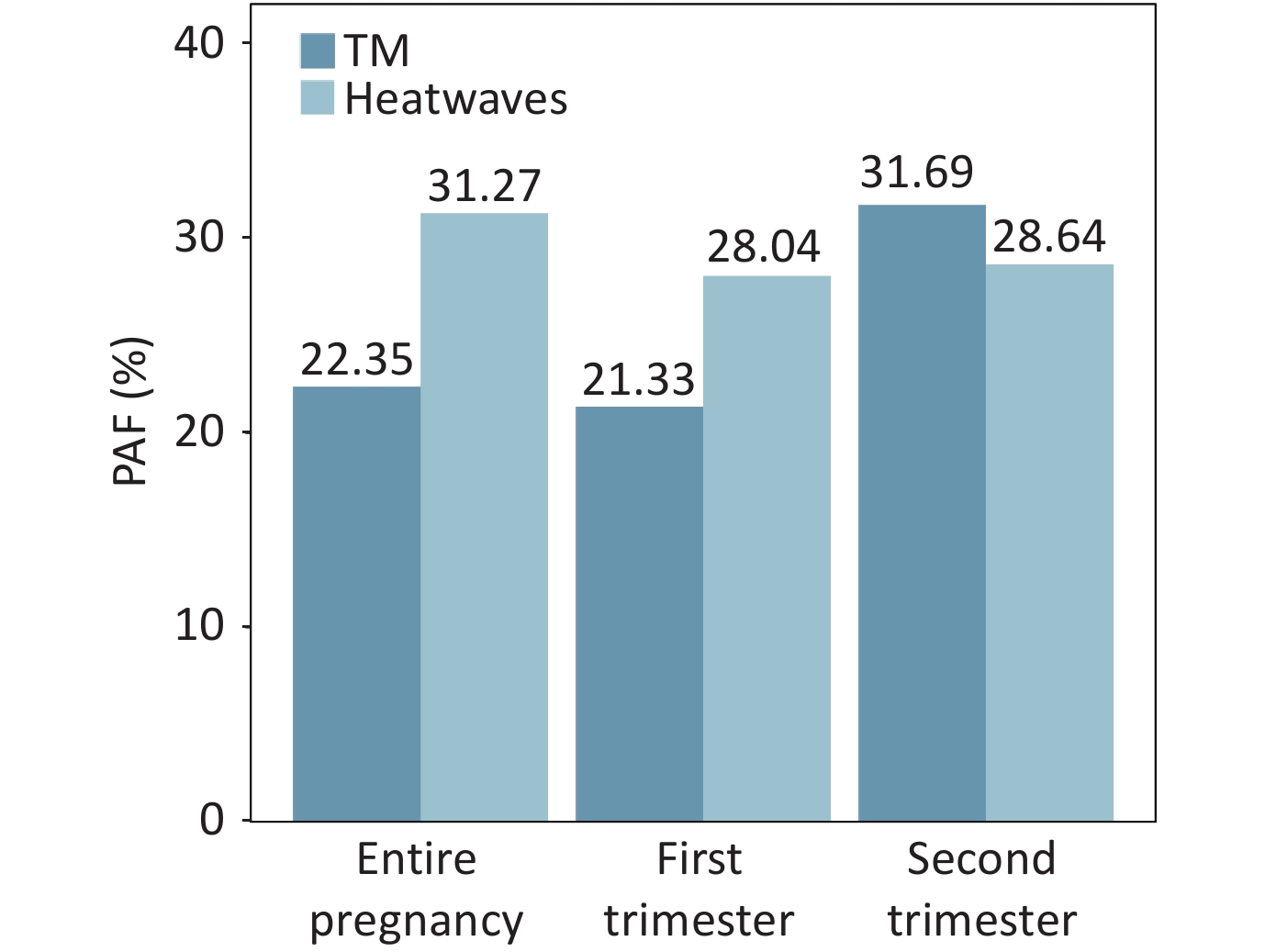
The PAFs of TM and heatwaves for NEC were 22.35% (95% CI: –2.82%–42.08%) and 31.27% (95% CI: 25.98%–37.00%), respectively. The PAF of TM was highest in the second trimester (PAF = 31.69%, 95% CI: 3.21–52.36%). The PAF of heatwaves for NEC in the first and second trimesters were 28.04% (95% CI: 13.68%–40.02%) and 28.64% (95% CI: 12.05%–42.10%) respectively (Supplementary Table S3 for details) (Figure 3).
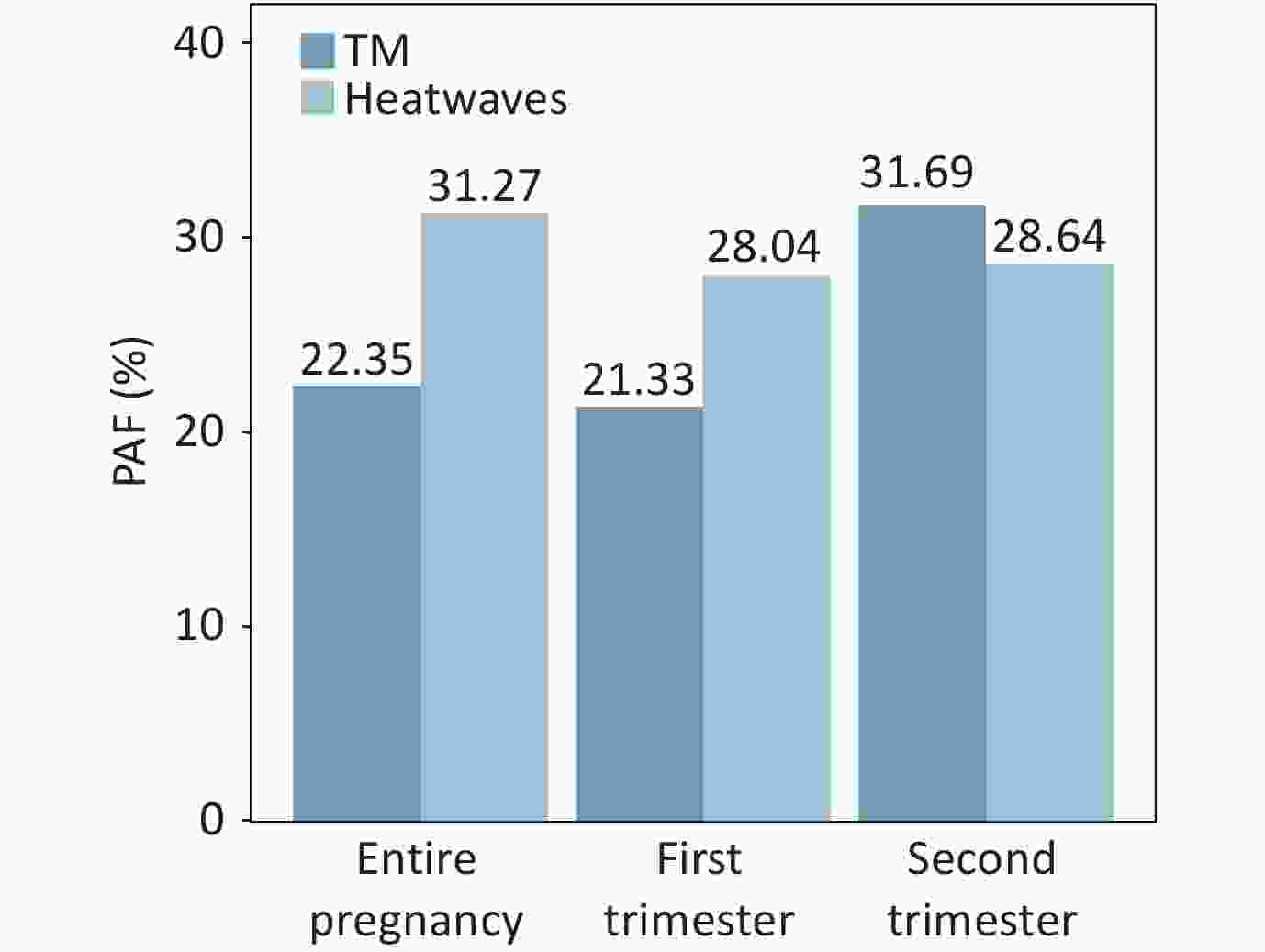
Figure 3. PAFs of NEC attributable to prenatal exposure to TM and heatwaves. NEC, necrotizing enterocolitis; TM, ambient temperature; PAF, population attributable fraction; PM2.5, fine particulate matter ≤ 2.5 μm in diameter; MDA8 O3, daily 8-h maximum ozone concentrations. The models were adjusted for maternal age, parity, gestational age, seasons of conception, sex of twin fetuses, year of conception, maternal ethnicity, type of conception, mode of delivery, PM2.5 (only for TM model), and MDA8 O3. Heatwave models were adjusted for maternal age, parity, gestational age, season of conception, sex of the twin fetuses, year of conception, maternal ethnicity, type of conception, mode of delivery, and MDA8 O3.
-
We investigated the associations of prenatally high TM levels and heatwave exposure with the risk of NEC. Exposure to elevated TM levels and heat waves increased the risk of NEC, with the first and second trimesters being the critical windows of exposure. Participants living in urban areas may be more susceptible to high TM and heatwaves. Furthermore, PTB might mediate the relationship between high TM exposure and NEC. This study supports the importance of high TM as a key public health issue and provides evidence that prenatal exposure to high TM and heat waves increase the risk of NEC in infants.
Cho et al. demonstrated an association between ambient temperature and NEC incidence[40]. High TM exposure can disrupt the maternal microbiota, leading to delayed or imbalanced colonization of the infant gut microbiota[19]. Microbial dysbiosis is particularly pronounced in preterm infants and may increase the risk of pathogen colonization, further predisposing them to NEC[41]. Additionally, high TM exposure can trigger systemic inflammatory responses in the mother, leading to a significant elevation in inflammatory cytokines, such as interleukin (IL)-6, IL-10, and nuclear factor-kB (NF-kB)[42–44]. These cytokines continue to affect the underdeveloped intestinal barrier function of preterm infants after birth, resulting in intestinal mucosal damage and localized inflammatory reactions, and also increase the risk of PTB[45].
PTB is a major risk factor for NEC[13]. Preterm infants have immature intestines, which increases their structural and immunological susceptibility to hypoxic and inflammatory injuries[14]. A systematic review by Chersich et al. reported that prenatal exposure to high TM levels may increase the risk of PTB[46]. This suggests that prenatal exposure to high temperatures indirectly increases the risk of NEC. Previously, we found that prenatal exposure to high temperatures was associated with a reduction in placental weight and volume, suggesting a potential impairment in placental function that may further affect fetal health[47]. In the context of placental insufficiency, increased placental vascular resistance and abnormal umbilical artery blood flow can lead to chronic fetal hypoxia, predisposing the intestinal mucosa to hypoxia-ischemic stress before birth. Additionally, fetal hypoxia may trigger a redistribution of cardiac output to prioritize vital organs, such as the brain, heart, and adrenal glands, resulting in reduced intestinal perfusion[48]. This intestinal ischemia constitutes a key pathophysiological basis for NEC development.
The first and second trimesters were more sensitive to TM and heat wave exposure. From a biological perspective, the early stages of pregnancy, particularly the maturation of gametes, fertilization, and formation of the developing embryo during the weeks surrounding conception, are critical[49]. This stage is most sensitive to environmental factors, and the developing fetus is highly susceptible to heat stress-induced oxidative stress and inflammatory effects[42–44]. Animal experiments have shown that early embryonic exposure to high TM can affect blastocyst formation, cell division, and embryonic development[50,51].
The second trimester is a critical period in fetal brain development[52]. Exposure to heat waves can activate the maternal hypothalamic-pituitary-adrenal (HPA) axis, leading to elevated maternal glucocorticoid levels[53,54]. Leveraging the relatively weak placental barrier function during this period, excessive glucocorticoids enter fetal circulation[55], interfering with the normal development of the fetal HPA axis and its higher regulatory centers, such as the hippocampus[56,57]. After birth, due to this programmed developmental abnormality, the neonatal intestine fails to mount effective negative regulation of Toll-like receptor 4 signaling upon microbial colonization.[58] This results in an uncontrolled inflammatory response, ultimately increasing the risk of NEC in newborns.
Although the association between heatwave exposure in the third trimester and NEC risk was not significant, this finding warrants careful interpretation. Pregnant women may adopt adaptive behaviors during late-gestation heat waves, such as using air conditioning[59], which could reduce their exposure to high TM levels. Additionally, the relatively small number of NEC cases in the third trimester heatwave exposure group may have limited the statistical power to detect a modest but true association. Furthermore, despite adjustment for multiple covariates, residual confounding from unmeasured factors cannot be ruled out and may mask a genuine effect.
This study further found that, compared to participants living in rural areas, those living in urban areas exposed to high TM levels had a higher risk of NEC. This finding is consistent with the results reported by Chen et al[60]. and may be attributed to two main factors. First, there were demographic differences, as the average age of urban pregnant women was higher than that of rural pregnant women, which may have increased urban residents' susceptibility to heat-related health effects. With increasing maternal age, there is a positive nonlinear relationship between maternal age and adverse pregnancy outcomes, such as gestational diabetes, pregnancy-induced hypertension, preeclampsia, placental abnormalities, cesarean section, PTB, macrosomia, and congenital anomalies in fetuses[61,62]. Pregnancy complications increase the risk of PTB[63]. Second, the urban heat island (UHI) effect may play a significant role[64], with participants living in urban areas exposed to a higher average TM (19.5 °C) compared to rural areas (18.5 °C). This TM discrepancy led to significantly elevated heat exposure levels in participants living in urban areas during heatwave events[65], exacerbating the risk of NEC. Although urban areas generally provide more accessible and advanced medical resources, they may lead to higher rates of NEC detection (diagnostic bias). Urban areas also have higher exposure to traffic-related pollution, which may independently affect pregnancy outcomes and NEC risk[16].
Compared with participants who conceived during the cold season, those who conceived during the warm season had a higher risk of NEC associated with high TM exposure. Zhong et al. reported that the risk of PTB increases with the duration of exposure to warm season (spring and summer) temperatures, highlighting a comparable seasonal pattern of heat-related vulnerability[66]. A high proportion (59.9%) of twins were conceived by ART in our study. In a Russian study of multiple pregnancies, 62.0% of pregnant women underwent in vitro fertilization and embryo transfer (IVF-ET)[67], similar to our findings. In clinical practice, multiple embryos are often transferred in a single cycle to increase the likelihood of pregnancy. The successful implantation of more than one embryo leads to a twin or multiple gestations[68]. In subgroup analyses, the risk of NEC was higher in naturally conceived infants than in those conceived using ART. The lack of significance in our analysis is consistent with the results of previous research in this area[69].
The PAF is a statistical measure used to quantify the association between risk factors and population health outcomes. The considerable uncertainty surrounding the PAF estimate for TM exposure across the entire pregnancy is reflected by its wide 95%CI, which included the null value. This indicates that, at the population level, we cannot exclude the possibility of no effect. This imprecision may be attributed to several factors, including the aggregation of exposure across the entire pregnancy, obscuring critical windows, measurement heterogeneity, and the limited sample size. In contrast, the PAF for heatwave exposure during the entire pregnancy period was significant, suggesting a more robust association. Therefore, our subsequent population burden estimation focused on heat wave exposure. Our study found that 31.27% of NEC risk could be attributed to prenatal heatwave exposure during the entire pregnancy. Based on the China National Maternal Near Miss Surveillance System (NMNMSS), a Chinese study indicated that the twin pregnancy rate was 3.22% in 2020[70]. In 2023, the number of births in China will be 9.02 million [http://news.china.com.cn/2024]. Accordingly, we estimated the number of twin pregnancies to be 290,000.
Recently, the relaxation of China's fertility policy, trend toward advanced maternal age, and widespread use of ART have led to an increasing incidence of multiple pregnancies, especially twin pregnancies. Compared with singleton pregnancies, twin pregnancies are characterized by excessive uterine distension and elevated intrauterine pressure, which restrict fetal growth space. Moreover, as the placenta occupies a relatively smaller proportion of the decidual surface, twin fetuses are more prone to adverse outcomes, such as growth restriction, preterm birth, and low birth weight, and the perinatal mortality rate is significantly higher than that of singletons[71]. These inherent differences limit the generalizability of our findings regarding the association between ambient temperature and NEC in the general singleton pregnancy population. Therefore, the conclusions drawn from this twin-based cohort should not be directly extrapolated to singleton pregnancies, which constitute most deliveries. Future studies based on large singleton pregnancy cohorts are warranted to further explore the association between environmental exposure and NEC, validate the applicability of our findings to singleton populations, and improve the external validity and population generalizability of the results.
With significant improvements in the treatment of extremely preterm infants (EPIs) in China, their survival rates have increased substantially[72]. This progress may be accompanied by an increase in the incidence of NEC. Climate change has led to increased temperatures and more frequent heatwaves[73], which may further exacerbate the risk of NEC. Against the backdrop of a declining birth rate, societal expectations for neonatal health quality have been continuously rising. Therefore, preventing complications such as NEC is essential for improving neonatal health outcomes. Pregnant women should avoid high-temperature environments and take necessary preventive measures, such as using air-conditioning devices, especially during the first and second trimesters.
-
This study has several strengths. First, this is the first study to investigate the potential link between prenatal exposure to TM and heatwaves with NEC. This pioneering study provides valuable insights and revelations for enhancing pregnant women's adaptation to climate change and mitigating adverse pregnancy outcomes. Second, the scale of our study's dataset was substantial, encompassing rich information from 8,343 pairs of twins in China, including detailed individual characteristics of mothers and infants from multiple hospitals. This vast dataset allowed us conduct comprehensive stratified analyses and effectively adjust for potential confounding factors, ensuring the accuracy and reliability of our research findings. Third, we calculated the PAF for high TM and heat waves to quantify their public health burden on NEC and assessed the mediation effect of PTB to elucidate the potential mechanisms through which high TM may indirectly increase NEC risk.
However, this study had some limitations. First, in estimating the TM and heat waves for each participant, we relied primarily on calculations based on their residential address, which, to some extent, overlooked the actual activity patterns and air conditioning usage of pregnant women during pregnancy. This simplification may lead to misclassification bias in the assessment of high-temperature exposure. This bias would likely drive the effect estimates toward the null hypothesis. This suggests that the true association between prenatal high-temperature exposure and NEC may be stronger than what we observed. Therefore, our findings should be interpreted as conservative estimates. Our sampling strategy may have introduced selection bias. Our study likely overrepresents urban, higher-socioeconomic-status populations with greater access to specialized maternal-neonatal care, while underrepresenting rural areas and lower-tier medical facilities. Consequently, our findings may not be directly generalizable to twin pregnancies managed in community hospitals or in resource-limited settings. Second, although we adjusted for several important covariates based on available data, the possibility of residual confounding cannot be completely excluded. Some unmeasured variables such as family socioeconomic status, maternal nutritional status, quality and frequency of prenatal care, and a more detailed history of obstetric complications may be associated with both maternal heat exposure and neonatal NEC risk. These factors may bias our estimates of the temperature-NEC association and potentially lead to an overestimation of the results. Third, due to missing data (e.g., BMI), certain confounding factors could not be adjusted for in the analysis. However, the sensitivity analysis showed that exposure to high temperatures and heat waves was still associated with NEC. To verify our research findings, future prospective cohort studies with a comprehensive collection of sociodemographic and clinical data are required to explore the potential link between prenatal heat exposure and NEC.
-
Prenatal exposure to high TM levels and heat waves is associated with an increased risk of NEC, with the first and second trimesters being critical periods of exposure. This association was more pronounced among pregnant women living in urban areas. PTB mediated the relationship between TM exposure during pregnancy and NEC.
HTML
Study Population and Data Collection
Data Collection
Outcome Definition
Heatwave Definition
Covariates
Statistical Analyses
Sensitivity Analyses
General Characteristics of Study Participants
Association Between Prenatal TM and Heatwaves Exposure with NEC
Associations between Prenatal TM Exposure and Heatwaves with NEC in Stratified Analysis
Mediation Effect of PTB on the Association of TM Exposure with NEC
PAFs of NEC Attributable to Prenatal Exposure to TM and Heatwaves
Strengths and Limitations
Competing Interests The authors declare that they have no known competing financial interests or personal relationships that could have appeared to influence the work reported in this paper.
Ethics This study was approved by the Ethics Committee of the Third Affiliated Hospital of Guangzhou Medical University [ID: 2020(097)].
Authors’ Contributions Wan Peng: Writing the original draft, Software, Formal analysis, and data curation. Xinqi Zhong: Formal analysis, data curation, and conceptualization. Yuan Zheng: Formal analysis, data curation, and data verification. Yixiang Huang: Software, Formal analysis, and data curation. Lyu Wang: Formal analysis and data curation. Jingjie Fan: Formal analysis and data curation. Daner Lin Formal analysis and data curation. Changshun Xia: Formal analysis and data curation. Yilin Li: Software, Formal analysis, and data curation. Xinjie Xiao: Formal analysis and data curation. Zhiqing Chen: Formal analysis and data curation. Yuwei Fan: Formal analysis and data curation. Yiyu Lai: Formal analysis and data curation. Qiliang Cui: Writing–review and editing, Supervision, Methodology, Funding acquisition, and conceptualization. Tao Liu: Writing – review and editing, Supervision, Methodology, Funding acquisition, conceptualization. All the authors have read and approved the final version of the manuscript.
Data Sharing The authors do not have permission to share data. The supplementary materials will be available in www.besjournal.com.
&These authors contributed equally to this work.

 Quick Links
 DownLoad: