



-
Wildfires have intensified in frequency, duration, and burned area worldwide over the past two decades, driven largely by anthropogenic climate change. Recent analyses have revealed marked increases in fire activity across North America, southern Europe, Australia, the Amazon Basin, and sub-Saharan Africa, reflecting both climatic and land-use pressures. Zheng et al. demonstrated that global warming amplifies wildfire emissions under current socioeconomic pathways, exacerbating regional inequalities in exposure to fine particulate matter (PM2.5) and extreme heat[1]. In the western United States, co-occurring wildfire smoke and heat extremes have increased significantly since 2006, creating compound health hazards[2]. Beyond these regional patterns, recent global assessments have indicated that the number of the most socially and economically disastrous wildfires, which cause high mortality and property loss, has increased sharply in recent decades[3]. Analysis of a 44-year dataset (1980–2023) showed that disastrous wildfires were historically concentrated in the Mediterranean and temperate conifer biomes; however, economic and human losses have escalated worldwide, with 43% of the 200 most damaging events occurring in the last decade[3]. These catastrophic events are strongly linked to extreme climatic conditions and their intersection with densely populated, affluent areas, highlighting the urgent need for adaptive strategies to mitigate escalating wildfire risks and associated societal impacts.
Wildfires pose a wide range of acute and chronic health risks and affect multiple organ systems and vulnerable populations. Epidemiological evidence indicates that exposure to wildfire smoke is associated with increased all-cause mortality, respiratory disease, and cardiovascular morbidity, whereas emerging data suggest potential links between cancer and mental health outcomes[4-7]. The PM2.5, gases, and volatile organic compounds released during wildfires contribute to systemic oxidative stress, inflammation, and immune dysregulation, which may cause both short-term exacerbations and long-term chronic conditions[6,7]. Children, the elderly, and individuals with pre-existing cardiopulmonary conditions are particularly susceptible, with studies showing heightened respiratory morbidity, increased hospital admissions, and elevated emergency visits during wildfire events[7,8]. Health impacts are not limited to acute episodes. Wildfire smoke exposure has been linked to elevated long-term mortality risk, including cardiovascular and respiratory deaths, highlighting the persistent burden on affected populations[4,7]. Despite the increasing recognition of these risks, most studies have focused on high-income countries and short-term outcomes, leaving substantial gaps in the understanding of the global distribution of wildfire-related health impacts and the role of socioeconomic factors in modifying vulnerability[4,5].
Despite a growing body of evidence regarding the acute respiratory and cardiovascular effects of wildfires, significant gaps remain in our understanding of the heterogeneous health impacts across countries with different levels of development. This study addresses these limitations by systematically examining the associations between annual wildfire exposure and 22 age-standardized mortality outcomes, including all-cause mortality and 21 cause-specific mortality categories, across 62 countries over two decades (2002–2022). By integrating global-scale ecological panel data and stratifying analyses using the Human Development Index (HDI), we provide insights into how socioeconomic development and demographic transitions modify the long-term health vulnerability to wildfires worldwide.
-
This ecological study examined the association between wildfire exposure and disease-specific mortality rates across multiple countries between 2000 and 2023. We employed a panel data design with repeated annual observations for each country, allowing us to examine both temporal trends and cross-sectional associations. Wildfire exposure data were obtained from the Global Fire Emissions Database version 5 (GFED5), which provides monthly burned area estimates at a 0.25° × 0.25° spatial resolution derived from satellite observations[9]. We calculated the annual average burn index for each country by aggregating grid-level data to national boundaries for the period of 2002–2022. Disease mortality data were extracted from the Global Burden of Disease Study 2023 (GBD 2023) conducted by the Institute for Health Metrics and Evaluation (IHME)[10]. We obtained age-standardized mortality rates (per 100,000 population) for all causes and 21 Level-2 disease categories for 204 countries and territories from 2000–2023. HDI data were obtained from the United Nations Development Programme (UNDP) for the years 2000–2023[11]. Additional socioeconomic indicators were extracted from the World Development Indicators database maintained by the World Bank, including population density (people/km2), urban population (% of the total), access to basic sanitation services (%), access to basic drinking water services (%), current health expenditure (% of GDP), and GDP per capita (constant 2015 US$)[12].
We utilized a satellite-derived burn index as the primary exposure indicator because it offers a standardized and consistent measurement of wildfire activity on a global scale. This is particularly advantageous because it enables the inclusion of low- and middle-income countries, which often lack comprehensive ground-level air quality monitoring networks, thereby minimizing selection bias and improving the geographic representativeness of our study.
-
To focus on populations with relevant wildfire exposure, we restricted our analyses to countries that demonstrated any wildfire activity during the study period. Countries were included if their annual burn index exceeded zero in at least one year during the study period. This criterion identified 69 countries with documented wildfire exposure, of which 62 had complete disease mortality data and were included in the final analysis. These 62 countries comprised the analytical sample, representing diverse geographic regions (sub-Saharan Africa: 73%; Middle East and North Africa: 24%; Asia, Europe, and the Americas: 3%) and development levels (HDI range: 0.345–0.918). For countries meeting the inclusion criteria, we included all available years of data (2002–2022 for analyses requiring wildfire data; 2000–2023 for descriptive mortality analyses), regardless of whether wildfires occurred every year. This approach maximized the sample size while ensuring that all included countries had demonstrated wildfire exposure capacity. Wildfire analyses covered 2002–2022 (21 years), corresponding to the period with available GFED5 data. Descriptive analyses of disease mortality utilized the full 2000–2023 period (24 years) to capture longer-term trends, whereas analyses examining wildfire–mortality associations were restricted to 2002–2022 to match wildfire data availability.
-
Primary exposure was the annual average burn index, defined as the mean burned area fraction across all grid cells within each country’s boundaries for each calendar year. To facilitate interpretation, we multiplied burn index values by 100, such that regression coefficients represented the change in mortality associated with a 0.01-unit increase in burn index (equivalent to 1% of the land area burned annually). Primary outcomes were age-standardized mortality rates (per 100,000 people) for all causes and 21 Level-2 disease categories as defined by GBD 2023: cardiovascular diseases, chronic respiratory diseases, diabetes/kidney diseases, digestive diseases, enteric infections, HIV/AIDS and sexually transmitted infections, maternal and neonatal disorders, mental disorders, musculoskeletal disorders, neoplasms, neurological disorders, neglected tropical diseases (NTDs) and malaria, nutritional deficiencies, other infectious diseases, other non-communicable diseases, respiratory infections and tuberculosis, self-harm and interpersonal violence, skin and subcutaneous diseases, substance use disorders, transport injuries, and unintentional injuries.
-
The HDI was multiplied by 100 to allow the interpretation of coefficients as effects per 0.01-unit increase in HDI. World development indicators were standardized using z-score transformation (mean = 0, standard deviation [SD] = 1) to compare effect sizes across variables with different scales. The year was centered on the median year (2012) to improve model convergence and facilitate intercept interpretation.
-
We calculated descriptive statistics (mean, SD, median, and interquartile range) for the overall wildfire burn index and disease mortality rates and stratified them temporally. Temporal trends in the burn index were assessed using ordinary least squares linear regression with the year as a predictor, reporting slopes, 95% confidence intervals (CIs), coefficients of determination (R2), and P values.
For disease mortality, we calculated Estimated Annual Percent Change (EAPC) using log-linear regression models of the form: $ ln(mortalityrate) = \beta {_{0}}+\beta _{1}\times year $, where $ EAPC=(exp(\beta _{1} )1)\times 100 $. CIs for the EAPC were calculated using the delta method. Trends were considered statistically significant at P < 0.05.
Preliminary unadjusted associations between wildfire exposure and disease mortality were examined using Pearson’s correlation coefficients with 95% CIs calculated using Fisher’s z-transformation. Correlations were computed overall and stratified by HDI quartiles to assess potential effect modification. Statistical significance was set at α = 0.05 (two-tailed).
To account for the hierarchical structure of the data (repeated measurements within countries over time) and to control for potential confounders, we employed linear mixed-effects regression models. The models included country-specific random intercepts to control for time-invariant country characteristics and account for the within-country correlation of observations. The following model was fitted:
$$ \begin{split} & Y_{ij}=\beta_0+\beta_1(Burn_index_100)_{ij}+\beta_2(HDI_100)_{ij}+ \\ & \beta_3(Population_density)_{ij}+\beta_4(Urban_population)_{ij}+ \\ & \beta_5(Basic_sanitation)_{ij}+\beta_6(Basic_drinking_water)_{ij}+ \\ & \beta_7(Health_expenditure)_{ij}+\beta_8(GDP_per_capita)_{ij}+ \\ & \beta_9(Year_centered)_{ij}+u_i+\varepsilon_{ij} \end{split} $$ where Yij refers to mortality rate for country i in year j; β1 refers to the effect of wildfire burn index (primary parameter of interest); β2-β8 refer to the effects of confounding variables; β9 refers to the linear temporal trend; ui ~ N(0, σu2) refers to the country-specific random intercept; εij ~ N(0, σe2) refers to the residual error. Ambient air pollutants, such as PM2.5, were considered primary mediators of the causal pathway between wildfire activity and mortality. Therefore, they were not included as confounders in the multivariable models to avoid over-adjustment bias. Similarly, although temperature is a driver of wildfire activity, it was not included because of the challenges in achieving consistent spatial and temporal alignment with the country-level annual mortality data across 62 diverse nations.
All world development indicator variables were standardized (z-scores) before inclusion in the models. The models were fitted using restricted maximum likelihood (REML) estimation. Regression coefficients (β) represent the change in mortality rate per unit change in the predictor, with 95% CIs calculated as β ± 1.96 × SE. P values were derived from t-statistics using the Satterthwaite approximation for the degrees of freedom (DOF). Separate models were fitted for all-cause mortality and each of the 21 disease categories. Countries were included as random effects if they had at least 3 years of data; countries with fewer observations were excluded from that specific disease model.
To assess whether wildfire effects varied by development level, we stratified the study population into HDI quartiles based on the mean HDI across the study period (2002–2022). Quartile intervals were: Q1 (Low HDI) < 0.591; Q2 (Medium–Low HDI) 0.591–0.720; Q3 (Medium–High HDI) 0.720–0.817; Q4 (High HDI) ≥ 0.817. Mixed-effects models were fitted separately within each HDI stratum, excluding the HDI variable itself from the stratified models to avoid collinearity while retaining all other covariates.
-
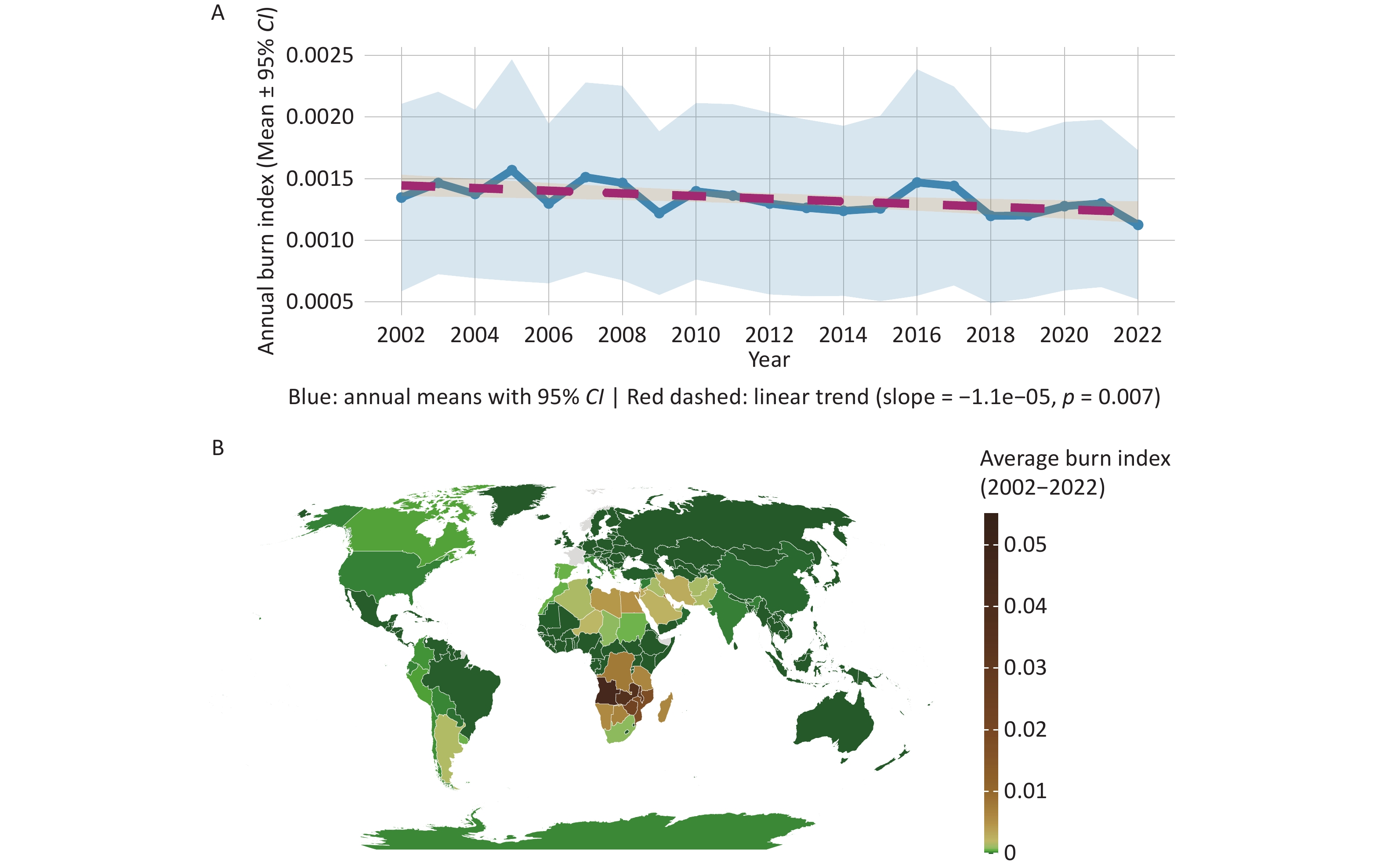
During the 21-year study period (2002–2022), the global mean annual burn index was 0.00134 (SD = 0.00012), with values ranging from 0.00112 in 2009 to 0.00157 in 2005 (Figure 1A). A significant declining temporal trend was observed (slope = –1.08 × 10⁻⁵ per year, P = 0.007, R2 = 0.325), representing a 16.1% decrease from baseline. The distribution of burn index values was highly right-skewed (median ≈ 0, 90th percentile = 0.0016), with half of the 234 countries exhibiting near-zero values. Spatial analysis revealed marked geographic heterogeneity (Figure 1B). The highest burn indices were concentrated in sub-Saharan Africa, particularly in the savanna belts spanning Angola (0.046), Zambia (0.037), Malawi (0.029), Zimbabwe (0.024), and Mozambique (0.018). Elevated burn indices have also been observed in Middle Eastern arid regions, including Kuwait (0.010), Israel (0.009), and Bahrain (0.007). In contrast, most European, Asian, and American countries demonstrated minimal fire activity (burn index < 0.001).
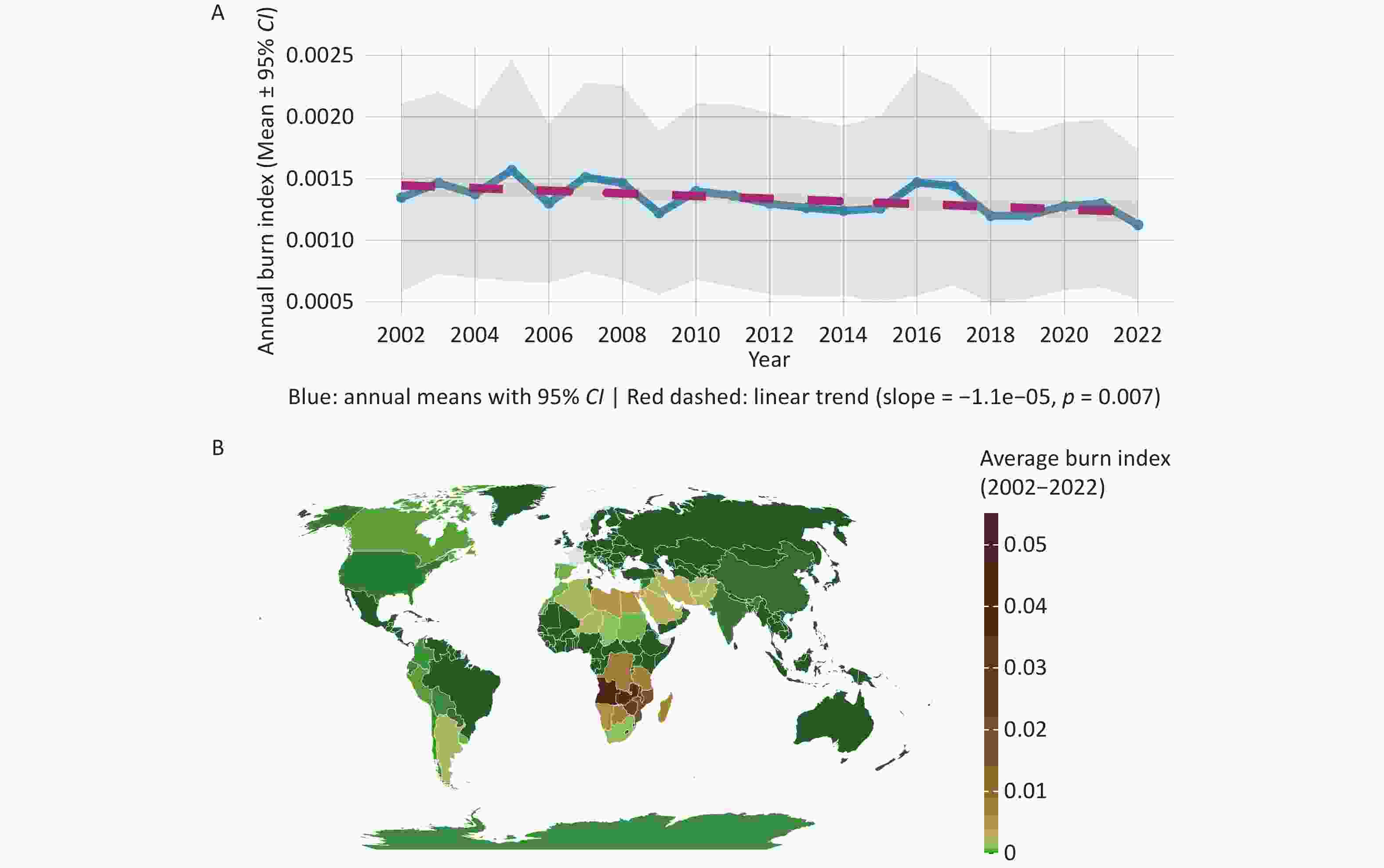
Figure 1. Global wildfire distribution and temporal trends (2002–2022). (A) Annual mean burn index with 95% confidence intervals (CIs) showing a significant declining trend (slope = –1.08 × 10⁻⁵ per year, P = 0.007, representing a 16% decrease). (B) Spatial distribution of average annual burn index using Robinson projection (green for low fire activity to brown for high activity). The highest values were in sub-Saharan Africa and the Middle East.
-
Of the 69 countries with documented wildfire activity (burn index > 0 during 2002–2022), 62 had complete disease mortality data and were included in the analyses (Box 1). These countries spanned diverse development levels (HDI: 0.345–0.917) and were primarily located in sub-Saharan Africa (73%) and the Middle East (24%). Countries were stratified into HDI quartiles (Q1–Q4, n = 15–16 each) for comparative analyses.
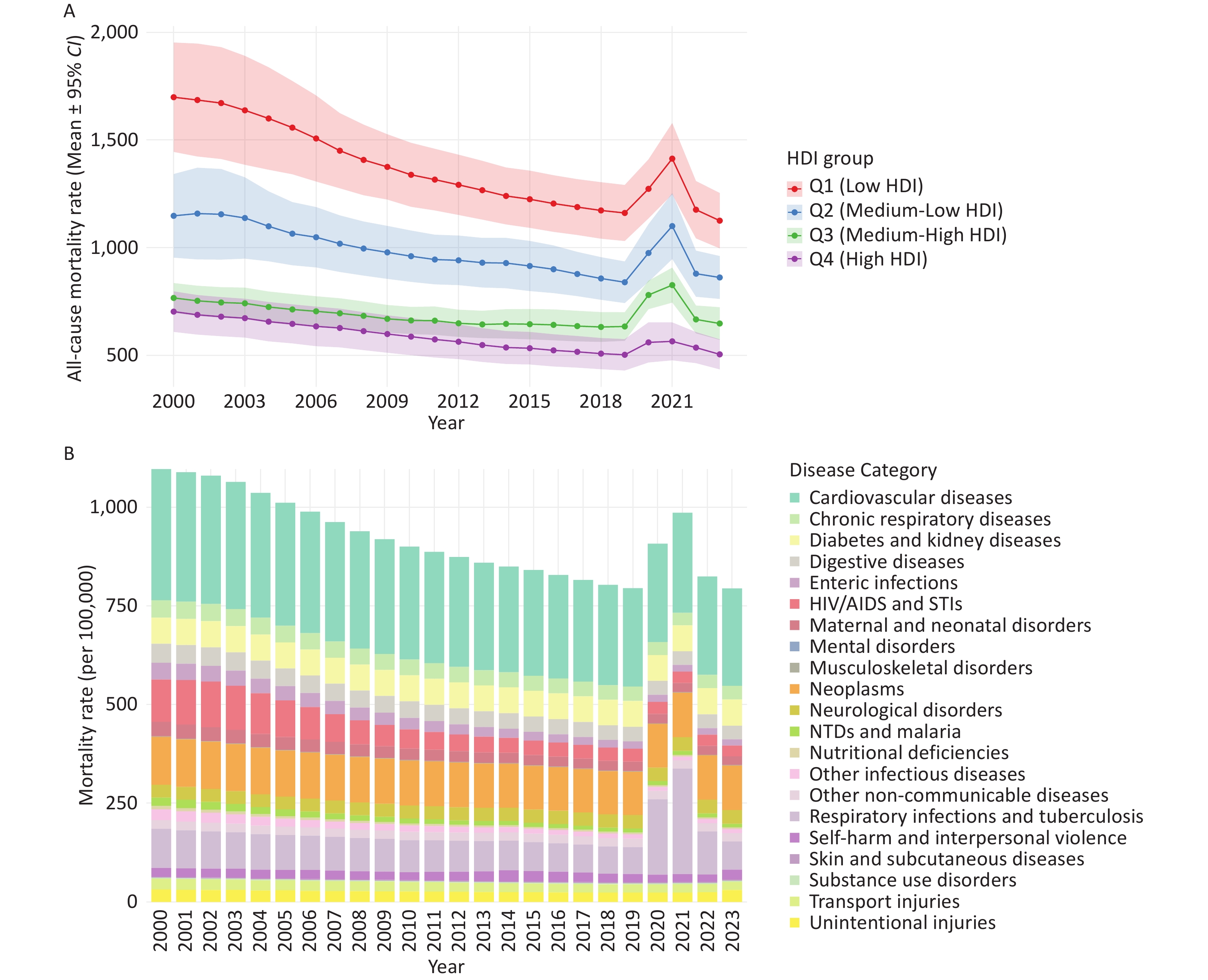
All-cause mortality demonstrated a strong inverse HDI gradient, with low-HDI countries experiencing 2–3 times higher mortality than high-HDI countries from 2000 to 2023 (Figure 2A). Despite this gradient, all groups showed declining trends, with overall mortality decreasing significantly (EAPC: –1.15%, 95% CI: –1.45% to –0.85%, P < 0.001) (Table 1). Disease-specific analyses identified cardiovascular diseases as the leading cause of death (283.78 per 100,000), followed by neoplasms (114.35) and respiratory infections/tuberculosis (95.19) (Figure 2B). Of 21 disease categories, 15 showed significant declines, with the fastest decreases for enteric infections (–3.69%/year), nutritional deficiencies (–3.15%/year), and maternal/neonatal disorders (–2.55%/year). Notably, respiratory infections/tuberculosis increased significantly (+1.45%, P < 0.001) in contrast to the overall decline in mortality.
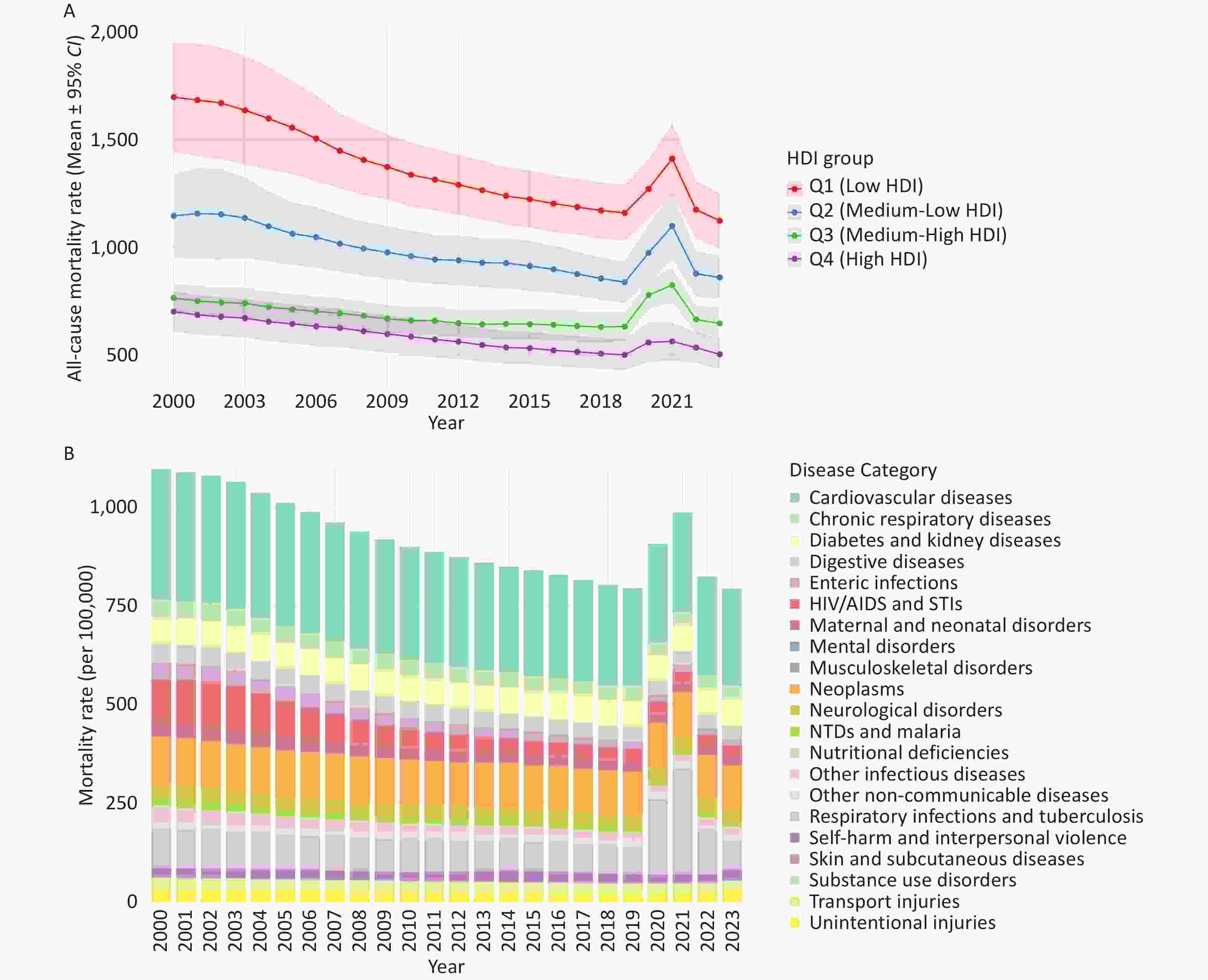
Figure 2. Global disease mortality patterns among countries with wildfire exposure (2000–2023). (A) All-cause mortality trends stratified by Human Development Index (HDI) quartiles. (B) Disease composition over time for 21 disease categories.
Rank Disease Mean (SD) Median (Q1, Q3) EAPC (95% CI) All causes 923.01 (410.07) 813.54 (614.74, 1,144.33) –1.15 (–1.45, –0.85) Cause specific 1 Cardiovascular diseases 283.78 (148.82) 252.36 (178.75, 350.12) –1.54 (–1.89, –1.18) 2 Neoplasms 114.35 (41.75) 110.17 (91.48, 132.39) –0.31 (–0.54, –0.08) 3 Respiratory infections and tuberculosis 95.19 (99.38) 49.25 (28.48, 140.62) 1.45 (0.73, 2.18) 4 Diabetes/kidney diseases 65.70 (30.75) 62.87 (40.57, 85.76) –0.12 (–0.49, 0.24) 5 HIV/AIDS and STIs 58.83 (166.34) 3.63 (0.83, 22.17) –2.48 (–4.03, –0.92) 6 Digestive diseases 41.02 (22.12) 36.17 (24.80, 52.10) –1.58 (–1.92, –1.23) 7 Chronic respiratory diseases 39.12 (22.13) 33.79 (25.44, 44.90) –1.23 (–1.57, –0.89) 8 Neurological disorders 33.15 (7.11) 32.72 (27.73, 36.77) 0.34 (0.18, 0.50) 9 Maternal and neonatal disorders 28.55 (25.62) 19.50 (8.05, 41.69) –2.55 (–3.25, –1.85) 10 Enteric infections 27.77 (51.60) 4.02 (1.87, 31.18) –3.69 (–4.91, –2.46) 11 Unintentional injuries 26.74 (16.72) 21.38 (15.09, 34.43) –1.21 (–1.61, –0.82) 12 Transport injuries 23.53 (15.00) 19.69 (13.62, 30.40) –1.92 (–2.37, –1.48) 13 Self-harm and interpersonal violence 22.31 (27.60) 16.03 (6.32, 29.14) –0.62 (–1.30, 0.07) 14 Other non-communicable diseases 21.41 (7.15) 20.90 (16.60, 26.37) –0.15 (–0.42, 0.11) 15 Other infectious diseases 16.02 (26.34) 4.75 (2.23, 18.43) –3.55 (–4.49, –2.60) 16 NTDs and malaria 13.56 (30.58) 0.72 (0.15, 6.92) –3.77 (–5.51, –2.01) 17 Nutritional deficiencies 5.49 (6.69) 2.98 (0.82, 7.78) –2.11 (–3.12, –1.09) 18 Substance use disorders 2.59 (3.36) 1.83 (1.12, 2.80) –0.58 (–1.32, 0.17) 19 Skin and subcutaneous diseases 2.54 (2.62) 1.92 (1.06, 3.30) 1.47 (0.74, 2.21) 20 Musculoskeletal disorders 1.35 (0.73) 1.26 (0.79, 1.89) –0.20 (–0.70, 0.29) 21 Mental disorders 0.002 (0.005) 0.0001 (0.00004, 0.002) 3.04 (1.39, 4.71) Note.CI, confidence interval; SD, standard deviation; STIs, sexually transmitted infections; NTDs, neglected tropical diseases Table 1. Descriptive statistics and temporal trends of disease-specific age-standardized mortality rates (per 100,000) among 62 countries with wildfire exposure, 2000–2023
Between 2000 and 2023, the mortality rankings of countries with wildfire records showed notable shifts. In 2000, mortality from cardiovascular diseases was dominant in countries such as Sudan, Afghanistan, and Morocco. By 2023, cardiovascular diseases remained the leading cause of death, but the relative positions of countries changed—Egypt, Afghanistan, and Sudan were among the top countries. Although the leading disease category remained consistent, the geographic distribution of the highest mortality burden shifted from a concentration in the Middle East and North Africa toward broader representation across these regions, suggesting evolving health profiles and possible changes in environmental and health system factors over time (Supplementary Table S1).
-
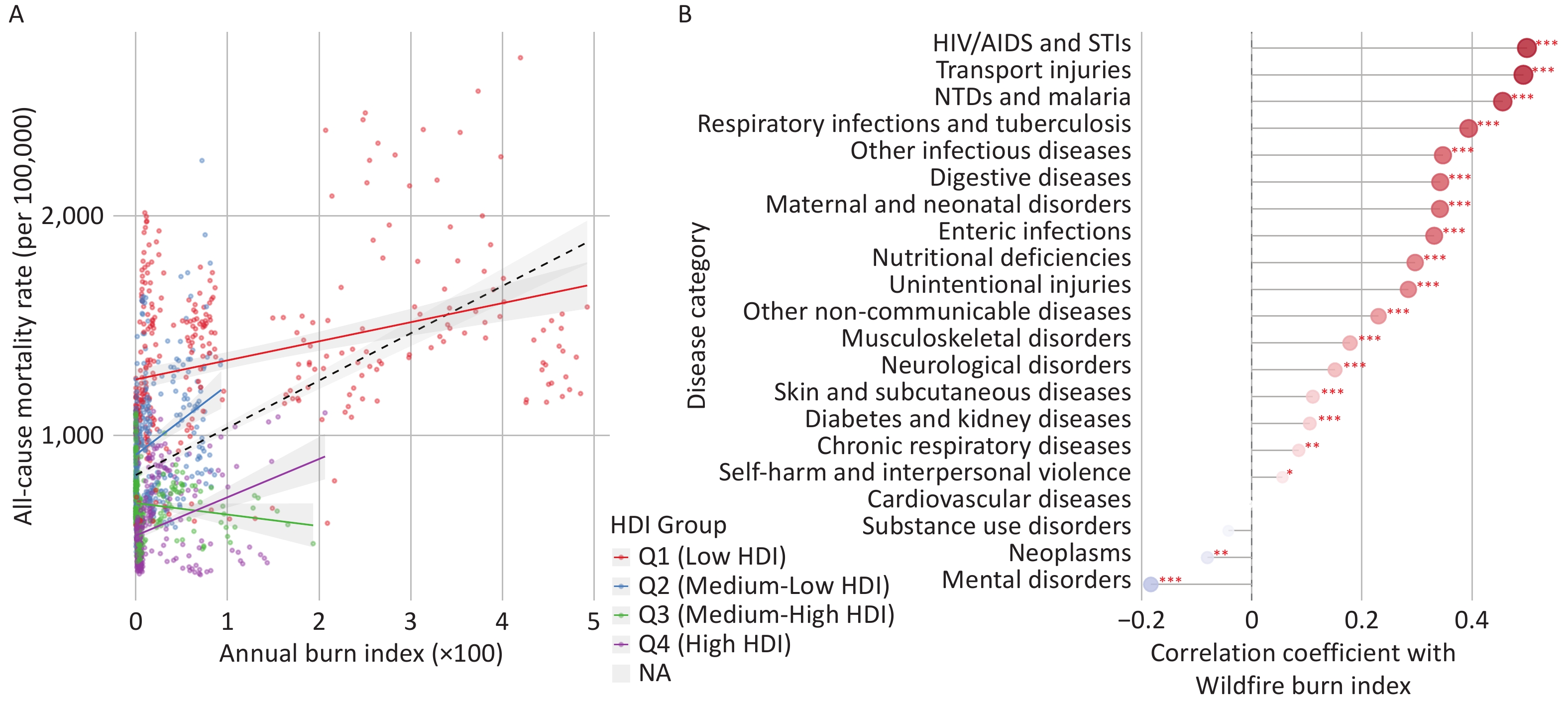
Wildfire burn index showed a moderate positive correlation with all-cause mortality (r = 0.478, P < 0.001) (Figure 3A), with heterogeneity by HDI level: significant positive correlations in Q1 (r = 0.335), Q2 (r = 0.301), and Q4 (r = 0.333) (all P < 0.001), but a weak inverse association in Q3 (r = –0.106, P = 0.060).
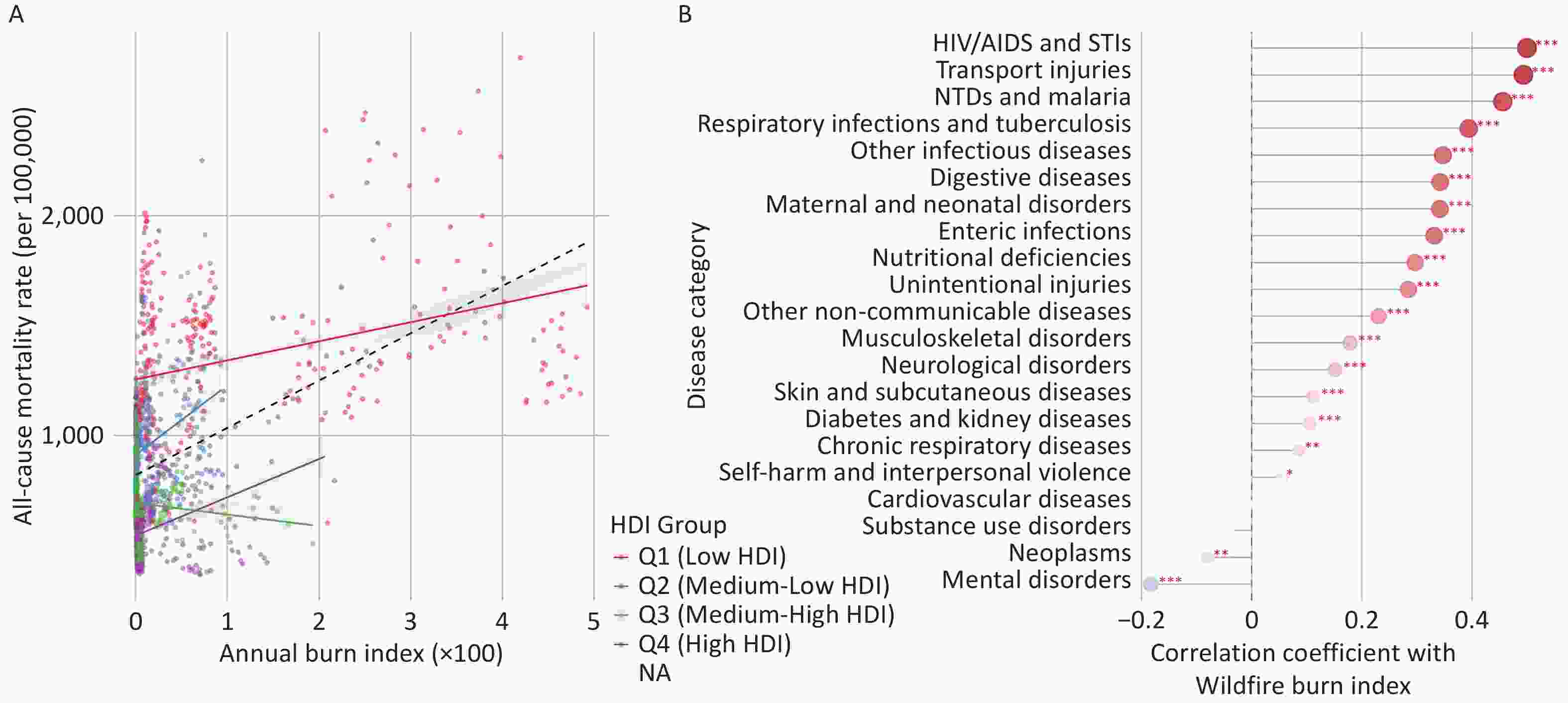
Figure 3. Preliminary associations between wildfire exposure and mortality. (A) Scatter plot of burn index versus all-cause mortality, stratified by HDI quartiles. (B) Correlation coefficients between wildfire and 21 disease categories. *, **, *** indicate statistical significance at P < 0.05, P < 0.01, and P < 0.001, respectively.
Disease-specific analyses revealed strong correlations for infectious diseases, such as—HIV/AIDS (r = 0.500), transport injuries (r = 0.493), NTDs/malaria (r = 0.456), and respiratory TB (r = 0.394) (all P < 0.001), while mental disorders (r = –0.184, P < 0.001) and neoplasms (r = –0.081, P = 0.003) showed negative correlations (Figure 3B). Cardiovascular diseases showed no significant correlation (r = –0.005, P = 0.866). These crude associations likely reflect confounding geographic and socioeconomic factors, necessitating adjusted multivariable analyses.
-
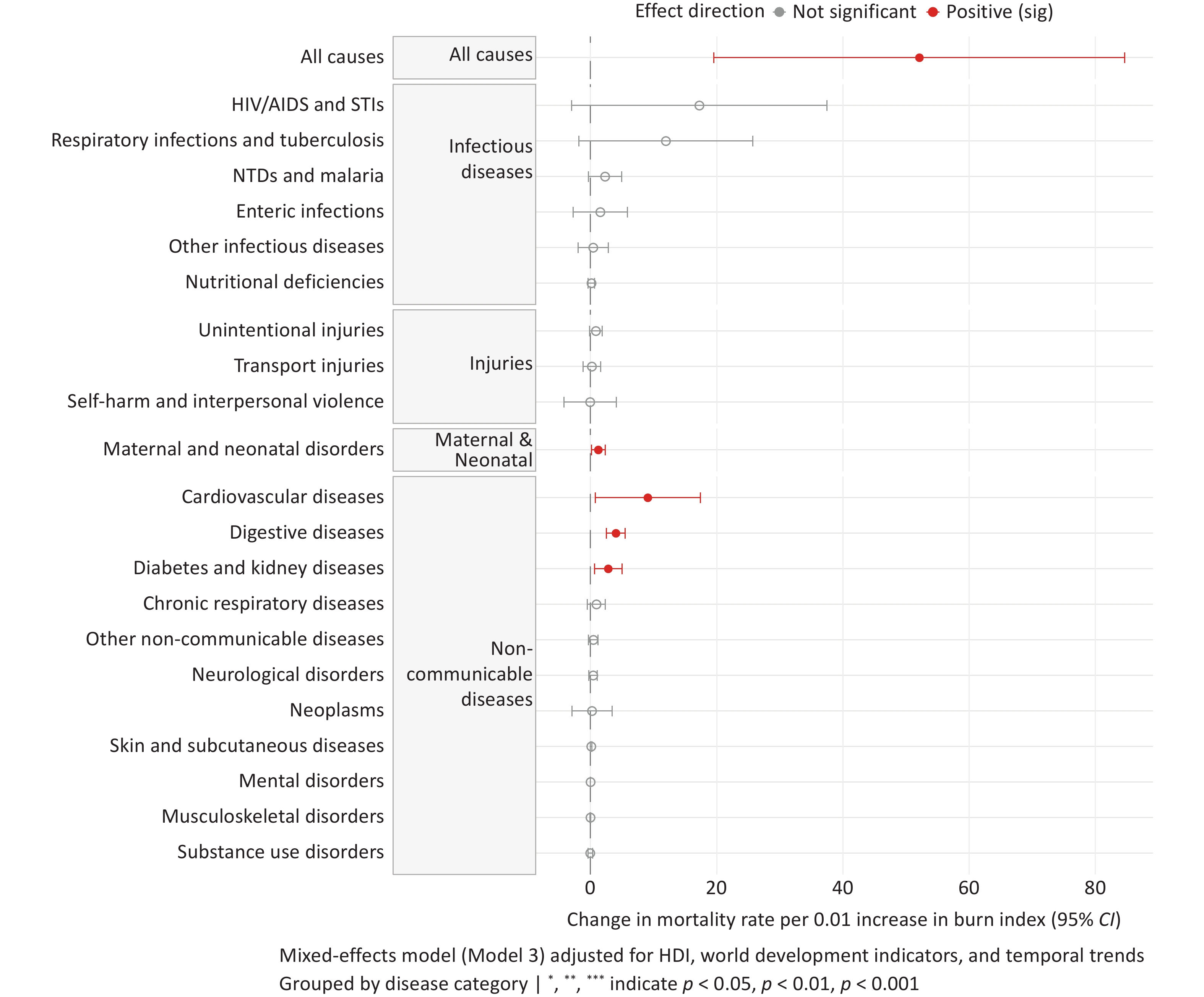
Multivariable mixed-effects models adjusted for the HDI, world development indicators, and temporal trends identified significant wildfire associations for 5 of the 22 disease categories (Figure 4). All-cause mortality showed the strongest effect (β = 52.10, 95% CI: 19.54–84.66, P = 0.002), followed by cardiovascular disease (β = 9.07, 95% CI: 0.73–17.41, P = 0.033), digestive disease (β = 4.02, 95% CI: 2.53–5.51, P < 0.001), diabetes/kidney disease (β = 2.80, 95% CI: 0.62–4.99, P = 0.012), and maternal/neonatal disorders (β = 1.23, 95% CI: 0.14–2.32, P = 0.027).
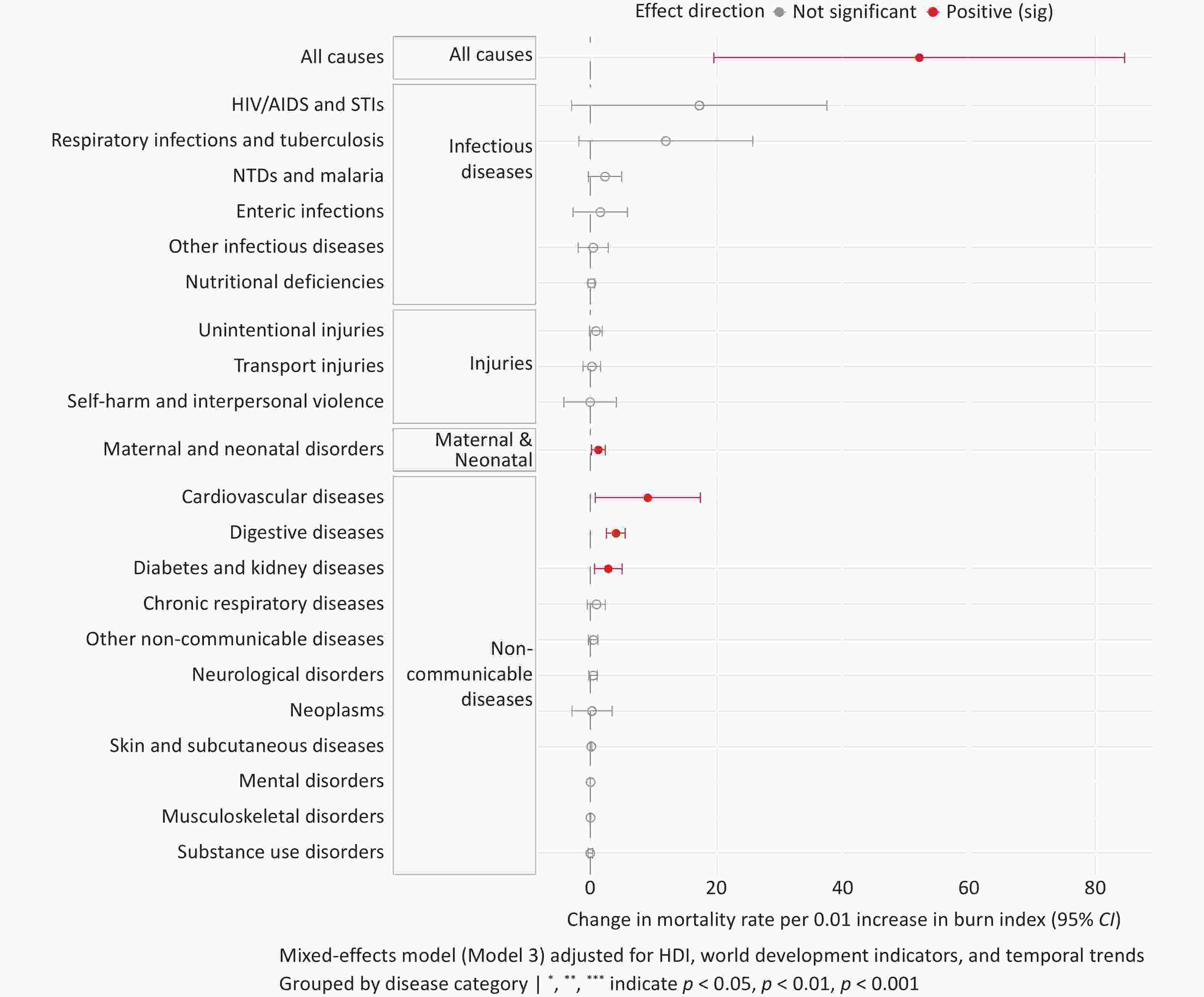
Figure 4. Wildfire–mortality associations adjusted for HDI, world development indicators, and temporal trends: Results for 22 disease categories.
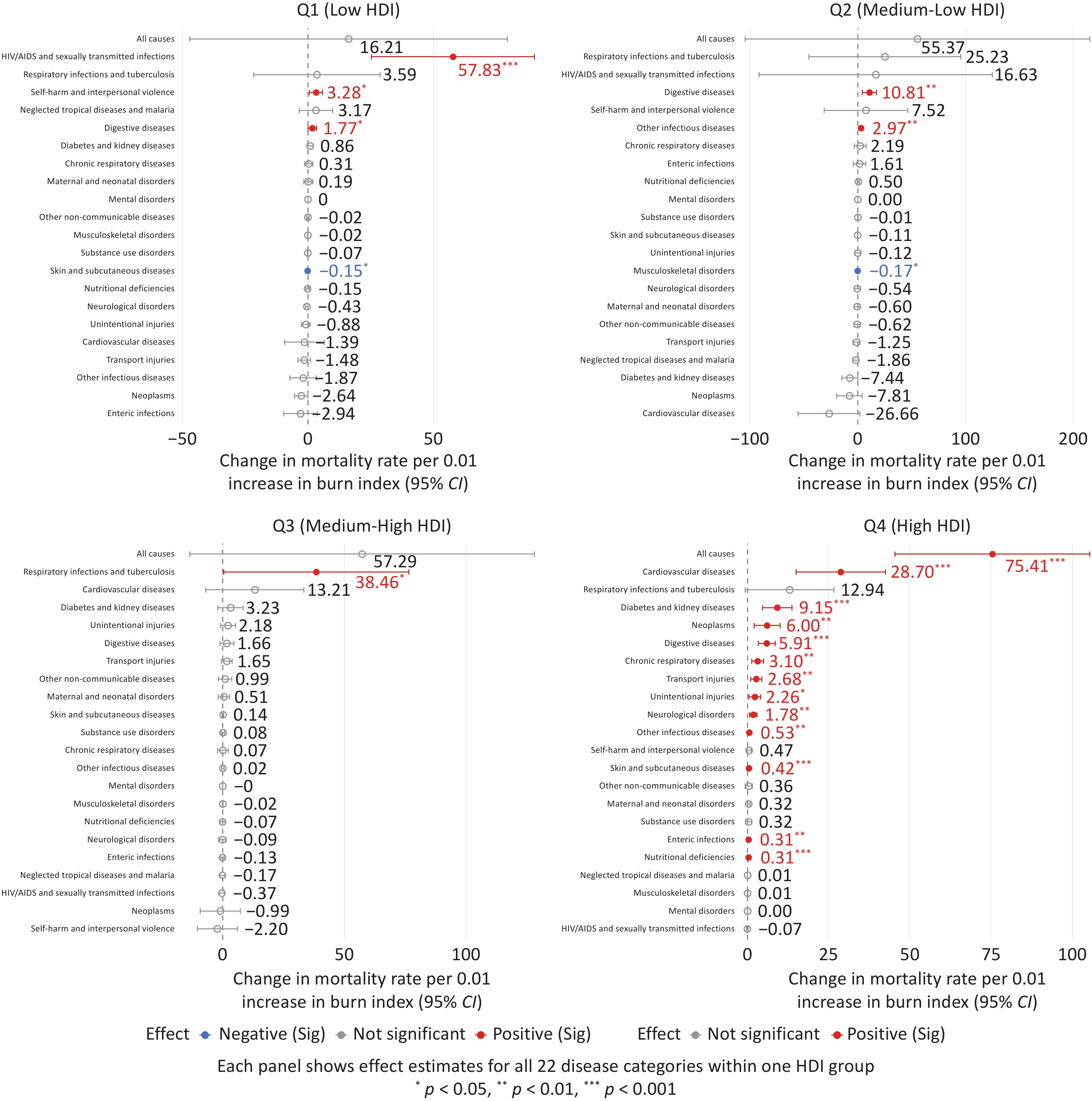
However, stratified analyses across HDI quartiles revealed striking heterogeneity in the wildfire effects (Figure 5). Among high-HDI countries (Q4, n = 15), 13 of 22 diseases (59.1%) showed significant associations, with all-cause mortality increasing by 75.41 deaths per 100,000 per 0.01-unit burn index increase (95% CI: 54.37–96.45, P < 0.001). Major effects were observed for cardiovascular diseases (β = 28.70, P < 0.001), diabetes/kidney diseases (β = 9.15, P < 0.001), and neoplasms (β = 6.00, P = 0.004). In contrast, low-HDI countries (Q1, n = 16) demonstrated only four significant associations (18.2%), primarily for HIV/AIDS (β = 57.83, P < 0.001) and violence-related mortality. These findings challenge the assumptions of uniform vulnerability, revealing heightened susceptibility to wildfire-related mortality among more developed populations, particularly for chronic non-communicable diseases.
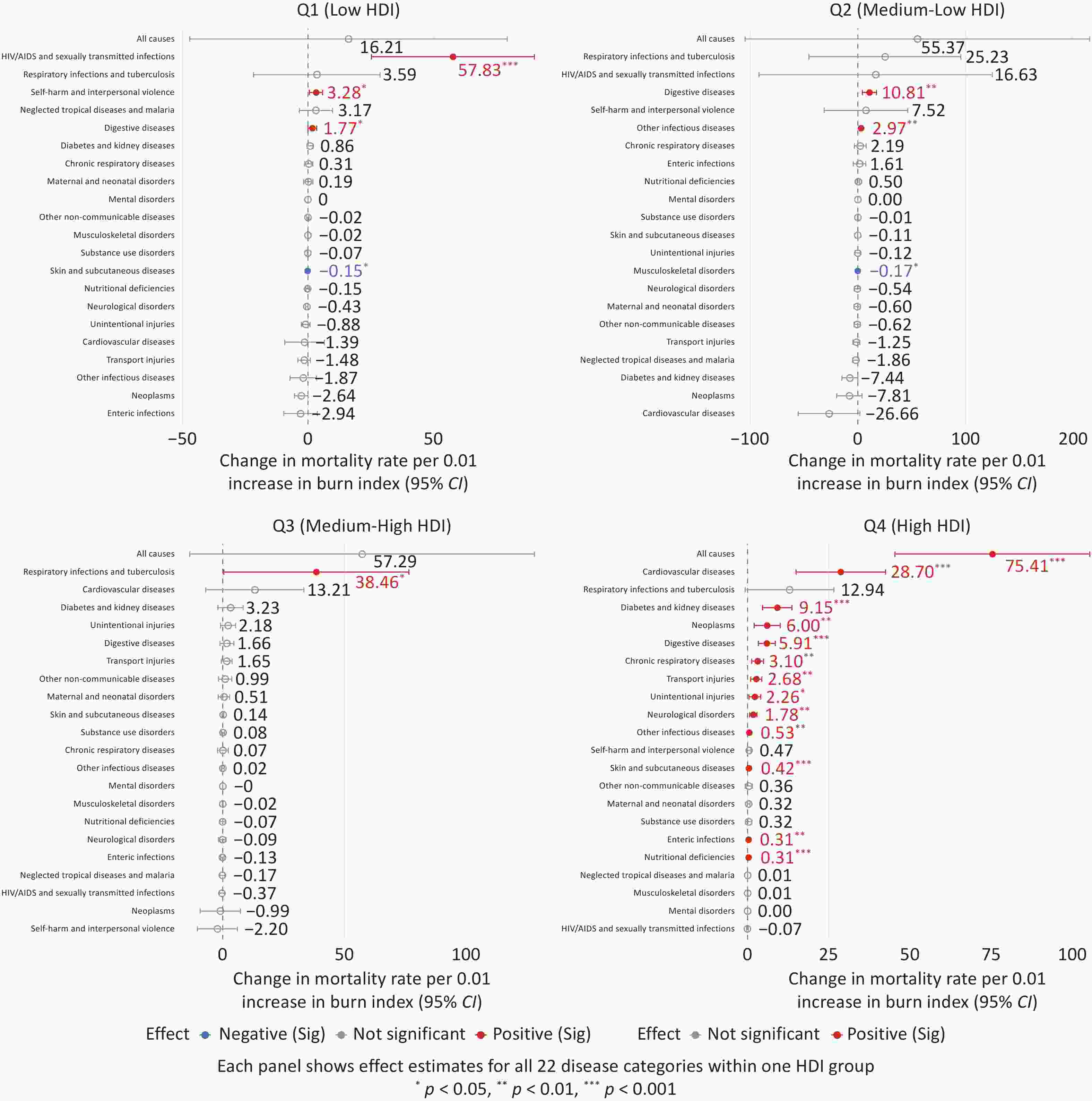
Figure 5. Wildfire effects on disease mortality stratified by Human Development Index (HDI) quartiles: Evidence of effect modification after adjusting for socioeconomic indicators and temporal trends.
-
To our knowledge, this is the first study to systematically quantify the global associations between wildfire exposure and cause-specific mortality across countries of varying levels of socioeconomic development. Our analysis of 62 wildfire-affected countries from 2002 to 2022 revealed several important findings. Wildfire exposure, even after adjusting for socioeconomic development and temporal trends, was significantly associated with elevated mortality rates across multiple disease categories. Specifically, for every 0.01 increase in the burn index, the all-cause mortality rate increased by approximately 52 deaths per 100,000 population. Notably, stronger associations were observed for cardiovascular, digestive, and metabolic diseases, suggesting that wildfire-related health impacts extend well beyond the traditionally emphasized respiratory outcomes. Marked heterogeneity was also evident across developmental levels. In high-HDI countries, a 0.01-unit increase in the burn index corresponded to approximately 75 more deaths per 100,000, with pronounced effects on chronic non-communicable diseases such as cardiovascular and diabetes-related conditions. In contrast, in low-HDI countries, wildfire exposure was more strongly associated with deaths from HIV/AIDS and violence, reflecting differing disease burdens and exposure vulnerabilities. These findings indicate that the health effects of wildfire exposure interact heavily with demographic, epidemiological, and socioeconomic transitions. These results have important theoretical and practical implications. Theoretically, this study expands the current paradigm of climate-health research by providing the first global-scale evidence that the long-term, multi-disease burden of wildfires is fundamentally modified by socioeconomic development levels. Practically, our findings offer a roadmap for stakeholders and policymakers to develop context-specific adaptation strategies. High-HDI countries should prioritize the protection of aging populations and non-communicable disease management during fire seasons, whereas low-HDI nations must integrate wildfire risk into existing infectious disease control and violence prevention programs.
Our study demonstrated a robust positive association between wildfire exposure and all-cause mortality on the global scale, suggesting that wildfire impacts on human health are more pervasive and enduring than previously recognized. The observed increase in mortality with increasing burn index implies that wildfires exert cumulative and indirect health burdens that extend beyond the immediate fire season. Wildfire smoke comprises a complex mixture of fine particulate matter, carbon monoxide, nitrogen oxides, and toxic organic compounds that can penetrate the respiratory tract and enter the bloodstream, triggering systemic inflammation, oxidative stress, and an impaired immune response[13-15]. Additionally, wildfires disrupt healthcare access, displace populations, and exacerbate pre-existing social vulnerabilities, all of which may contribute to increased mortality risk[16,17]. The persistence of this association after adjusting for socioeconomic indicators and temporal trends suggests that wildfire-related mortality is not merely a byproduct of poverty or underdevelopment, but reflects an independent environmental determinant of population health. Importantly, the relationship observed in this study encompasses both acute and delayed consequences, ranging from immediate respiratory or cardiovascular crises during smoke episodes to long-term health deterioration following repeated exposure. These findings highlight the need to frame wildfires as a sustained global health threat rather than as isolated environmental events, demanding integrated mitigation strategies that span environmental management, public health preparedness, and climate adaptation.
Beyond respiratory outcomes, our findings emphasized significant increases in wildfire-related mortality in cardiovascular, metabolic, and digestive diseases, indicating systemic physiological stress and chronic health consequences associated with wildfire smoke and heat exposure. Specifically, each 0.01-unit increase in the burn index was associated with an estimated increase of 9.07 deaths per 100,000 for cardiovascular diseases and 2.80 deaths per 100,000 for diabetes/kidney diseases. These findings align with emerging evidence that particulate and gaseous pollutants emitted from wildfires induce endothelial dysfunction, autonomic imbalance, and systemic inflammation, thereby aggravating cardiovascular and metabolic risks[18,19]. Similarly, elevated mortality from digestive diseases may reflect the indirect consequences of contaminated food and water supplies, disrupted nutrition, and limited healthcare accessibility following major fires[16].
The observed association with maternal and neonatal disorders further underscores the vulnerability of certain physiological and life stages. Pregnant women and newborns are particularly sensitive to ambient air pollution, and exposure to wildfire smoke is associated with preterm birth, low birth weight, and perinatal complications[20-22]. The wide range of affected disease categories in our study suggests that wildfires act as multifactorial stressors that interact with biological, social, and healthcare determinants to amplify existing health burdens. These findings reinforce the need to integrate wildfire preparedness into broader public and maternal-child health strategies. The significant increase in mortality from respiratory infections and TB observed in our study may stem from the biological impact of wildfire smoke on lung defenses. Particulate matter from wildfires can damage the respiratory epithelial barrier and impair the immune function of alveolar macrophages[13-15]. This suppression of pulmonary immunity not only increases susceptibility to new viral and bacterial pathogens but may also trigger the reactivation of latent infections, such as TB[23].
An unexpected but important finding of this study was the stronger wildfire–mortality association observed in high-HDI countries, where both the magnitude and the diversity of affected diseases were greater than in lower-HDI settings. Specifically, a 0.01-unit increase in the burn index corresponded to an estimated 75.41 additional deaths per 100,000 people in high-HDI countries, affecting over half of the examined disease categories. This strong association between wildfire and mortality in high-HDI countries can be attributed to three primary factors. First, these nations have a higher proportion of elderly individuals who are physiologically more vulnerable to environmental stressors[16,24]. Second, there is a higher baseline prevalence of chronic non-communicable diseases, such as cardiovascular and metabolic conditions, which are highly sensitive to air pollution[25,26]. Third, the expansion of the wildland–urban interface (WUI) in developed regions has placed more residents in direct proximity to fire-prone areas, increasing the likelihood of significant smoke exposure[27]. Moreover, the apparent resilience of low-HDI countries may partly reflect underreporting, limited health system surveillance, and competing mortality from infectious diseases, thus masking the full extent of wildfire-related risks[28]. Collectively, these findings suggest that socioeconomic development does not confer uniform protection against climate-linked hazards. Instead, the health impacts of wildfires are shaped by the interplay between demographic structure, disease profile, and environmental exposure, emphasizing the need for context-specific adaptation and risk-mitigation strategies.
This study has several limitations. First, the use of country-level aggregate data limits causal inferences and may obscure subnational heterogeneity in wildfire exposure and health impacts. Second, although the burn index is a widely used indicator of wildfire activity, it does not directly measure the population exposure to smoke or pollutant concentrations, leading to potential exposure misclassification. Third, the use of the GBD has inherent limitations. The data are only available at annual and national resolutions, and in countries or years with sparse or missing surveillance data, mortality estimates were derived through statistical modeling, which may introduce bias or uncertainty. Fourth, despite adjusting for key socioeconomic and temporal covariates, residual confounding from unmeasured factors such as ambient air pollution, temperature extremes, healthcare accessibility, and population mobility cannot be excluded. Finally, the ecological and observational nature of the analysis precludes definitive causal inference and limits our ability to capture short-term or lagged exposure–response relationships. Nevertheless, these limitations do not diminish the value of this global investigation linking wildfire exposure to cause-specific mortality across varying developmental contexts. Future research should aim to integrate high-resolution, ground-level pollution data with satellite indices to better characterize personal exposure. Additionally, prospective cohort studies are required to provide stronger causal evidence and explore the biological pathways linking wildfire smoke to specific non-communicable diseases. Investigating the compound health effects of extreme heat and wildfire smoke is critical for future climate-health research.
-
This study provides the first global evidence quantifying wildfire-related mortality across 62 countries with diverse developmental levels. We found that increased wildfire activity was significantly associated with higher all-cause mortality and disease-specific deaths, particularly from cardiovascular, metabolic, and perinatal disorders. The magnitude of these effects was substantially greater in high-HDI countries, where 59% of the disease categories showed significant associations. This indicates that more developed populations may face heightened susceptibility due to aging demographics, a higher prevalence of chronic diseases, and prolonged exposure to ambient pollution. These findings underscore the urgent need to integrate wildfire exposure into global health surveillance and climate adaptation strategies. Strengthening early-warning and air-quality monitoring systems, enhancing health system resilience to smoke-related surges, and expanding community-based adaptation measures are critical. In high-income nations, targeted protection of older adults and those with chronic diseases is essential, whereas in low-income settings, improving data coverage and emergency response capacity remains a priority. Collectively, these strategies are essential for mitigating the unequal and growing health burden of wildfires in a warming and increasingly fire-prone world.
HTML
Study Design and Data Sources
Study Population
Variable Definitions and Transformations
Covariates
Statistical Analysis
Global Wildfire Distribution and Temporal Trends
Mortality Patterns and Trends
Preliminary Wildfire–Mortality Associations
Adjusted Wildfire–Mortality Associations and Effect Modification
Competing Interests The authors declare that there are no competing interests.
Ethics Not applicable. This study is an ecological analysis based on publicly available, de-identified aggregate data and does not involve individual human participants.
Authors’ Contributions Conceived and designed the study: ML and JL; Searched literature and collected data: QL and ZZ; Analyzed data and drafted the paper: QL; Interpreted results: QL, ML, and JL; Supervised the study: ML and JL; Revised the paper: QL, ZZ, ML, and JL. All authors read and approved the final manuscript.
Data Sharing The processed dataset generated and analyzed during the current study is available from the corresponding author upon reasonable request.
Consent for Publication Not applicable.

 Quick Links
 DownLoad: