



-
Since 1963, when the first measles vaccine was licensed, substantial progress has been made in global measles control, and all six regions of the World Health Organization (WHO) have set formal elimination targets[1]. By 2025, more than 80 countries had successfully eliminated measles, mainly through high vaccination coverage and strategic large-scale supplementary immunization activities[2]. This progress represents one of the most successful public health achievements of the past half-century, with global measles deaths estimated to have declined by more than 80% since 2000[3].
However, sustaining elimination remains a major public health challenge. Measles is one of the most contagious human diseases, with a basic reproduction number (R0) between 12 and 18[4]. Therefore, 92%–95% of the population must be immune to achieve herd immunity and interrupt measles transmission[5]. Seroprevalence is commonly used to assess population immunity, providing direct evidence of population-level protection and identifying “immunity gaps” that may not be apparent from administrative vaccination coverage data alone[6]. Unlike administrative vaccination coverage indicators, which capture programmatic delivery but not necessarily seroconversion, seroprevalence directly measures the proportion of individuals with detectable measles antibodies and is therefore a more direct indicator of true population-level immunity.
Even after countries reach the measles elimination benchmark, recurrent threats remain: waning levels of vaccine-induced antibodies over time[7,8]; persistent immunity gaps in marginalized populations, such as migrants or those who refuse vaccination[9]; and the risk of cross-border importation in the context of intensified global mobility[10]. Recent verification decisions have underscored this fragility. Re-established transmission, defined as uninterrupted circulation for ≥ 12 months after elimination, was reported in the Russian Federation, Tajikistan, Uzbekistan, Sri Lanka, Armenia, Austria, Azerbaijan, Spain, the United Kingdom, and Canada during 2023–2025[11-14]. These reversals highlight the need for sustained two-dose coverage, sensitive surveillance, and the rapid closure of immunity gaps. Current studies are often fragmented and focus on individual countries or regions, and no global synthesis has compared seroprevalence before and after elimination verification. This study integrated available serological survey data from 31 countries that had achieved measles elimination, aiming to map population immunity, identify major immunity gaps in key age groups and special populations, and examine trends in antibody levels before and after elimination. These findings provide a scientific basis for adjusting immunization strategies and developing policy recommendations to sustain national measles elimination status.
-
We systematically searched PubMed (including MEDLINE), the Web of Science Core Collection, and Google Scholar for studies published between January 1, 2000, and December 31, 2025. The target countries were restricted to those whose measles elimination status had been confirmed by the WHO as of 2025. The search strategy was built using Boolean operators and combined Medical Subject Headings (MeSH) and free-text keywords across three concept domains: disease terms (measles), serological indicators (seroprevalence, serosurvey, and antibody prevalence), and names of the target countries. In PubMed and Web of Science, truncation operators were applied (e.g., seropositiv*); in Google Scholar, title-restricted search expressions were used (e.g., intitle:measles intitle:seroprevalence) to supplement the gray literature, including preprints and official reports.
All retrieved records were imported into reference management software (EndNote 2025), and deduplication was performed using automated tools followed by manual verification. The inclusion criteria were as follows: (i) a cross-sectional or seroepidemiological study design; (ii) reporting of measles seroprevalence data stratified by age or with clearly defined age ranges; and (iii) data collection within three years before national measles elimination verification or at any time afterward. Studies were excluded if the sample size was not reported or if the full text was unavailable. Two reviewers independently screened titles, abstracts, and full texts and extracted data. Disagreements were resolved by a third reviewer. The extracted data were standardized into four age groups: infants (0–2 years), children and adolescents (2–19 years), young adults (20–40 years), and middle-aged and older adults (> 40 years). To explore heterogeneity within the infant group, we extracted narrower age categories, as reported in the primary studies. Where available, categories such as < 6, 6–11/12, 12–18, and 12–23 months were included. Because age boundaries, survey periods, assay thresholds, and study settings differed across reports, and some studies reported both broad and narrow age categories, this analysis was descriptive. Pooled age-specific estimates or formal between-group comparisons were not performed. Special populations (healthcare workers, migrants/refugees, pregnant women, and military recruits) were also recorded. Descriptive statistics were presented as sample-size-weighted medians and interquartile ranges (IQRs), and Wilson score intervals were used to compute 95% confidence intervals (CIs) for weighted seroprevalence estimates. Chi-square tests were used to assess differences in weighted seroprevalence across age groups and between the pre- and post-elimination verification periods. Where overall age-group comparisons indicated significant differences, post hoc pairwise comparisons were performed using the Holm correction to control for the family-wise error rate. Country-level seroprevalence estimates were classified into three risk tiers based on established public health thresholds: low risk (≥ 92%), moderate risk (≥ 85% to < 92%), and high risk (< 85%). All analyses were performed using R software (version 4.4.4; R Foundation for Statistical Computing, Vienna, Austria).
The pre- and post-verification comparison was conducted as exploratory pooled analyses of the independently sampled cross-sectional datasets. However, this was not a paired within-country analysis. The pre- and post-verification estimates were not further stratified by age group or special population because sufficiently composition-matched data were unavailable. Accordingly, the comparison was interpreted descriptively.
-
The systematic search and screening process yielded 28 eligible studies covering 31 countries that had achieved WHO-verified measles elimination by 2025. These 31 countries spanned five of the six WHO regions, including the European Region (EURO, n = 13), the Region of the Americas (AMRO, n = 8), Western Pacific Region (WPRO, n = 6), South-East Asia Region (SEARO, n = 2), and Eastern Mediterranean Region (EMRO, n = 2); no eligible studies from the African Region (AFRO) were identified. From these studies, 351 individual datasets were extracted, encompassing 562,772 participants. The participants spanned a wide age range, with sample sizes distributed as follows: 2,696 infants (0–2 years); 79,397 children and adolescents (2–19 years); 301,207 young adults (20–40 years); and 179,875 middle-aged and older adults (> 40 years). An additional 12,415 participants were categorized into special population subgroups, including healthcare workers, refugees/immigrants, pregnant women, and military recruits.
All the included studies measured measles-specific IgG antibodies as an indicator of immunity. The dominant laboratory methods were enzyme-linked immunosorbent assay or enzyme immunoassay (ELISA/EIA, n = 14), chemiluminescence immunoassay (CLIA, n = 11), and multiplex bead immunoassay (MBA, n = 1), with the remaining studies using a combination of methods or other validated commercial assays. Although these assays differ in sensitivity, specificity, and quantitative thresholds, they are all widely accepted for the qualitative classification of measles IgG seropositivity. Therefore, we harmonized the reported seroprevalence estimates across assays.
-
A pooled analysis of all 351 datasets yielded an overall sample-size-weighted measles seroprevalence of 92.8%, which was marginally above the 92% lower limit of the herd immunity threshold required to interrupt measles transmission. However, the distribution of seroprevalence estimates varied widely, with values ranging from 56.5% in the lowest age stratum to 96.8% in the highest age stratum and from 62.9% to 96.4% across individual countries. This wide dispersion suggests that, although the aggregate immunity level among countries with confirmed elimination appears adequate, it conceals substantial heterogeneity that may compromise transmission control in specific national, regional, or demographic contexts. Therefore, the 92.8% overall estimate should be interpreted as an aggregate summary rather than a guarantee of uniform protection.
-
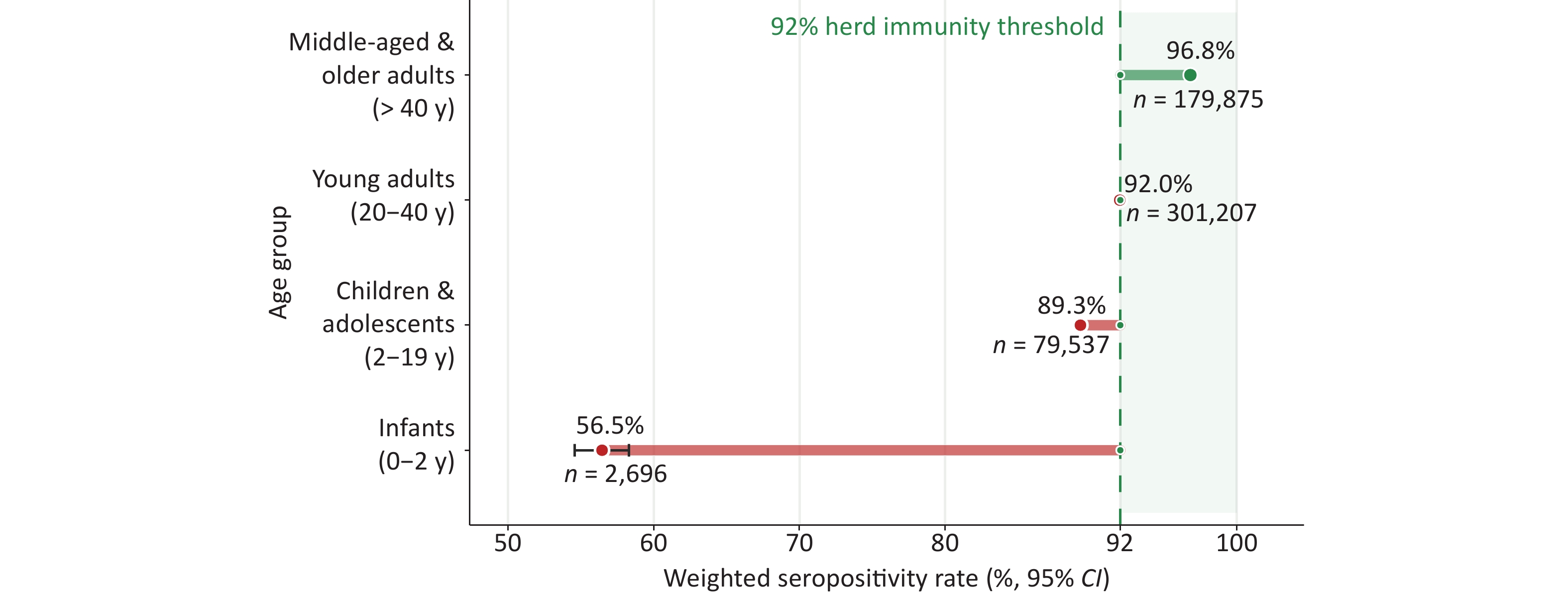
Age-stratified analysis revealed a clear, monotonic increase in seroprevalence with age (Figure 1). Infants aged 0–2 years exhibited the lowest seroprevalence at 56.5% (95% CI: 54.6%–58.3%), representing a striking 35.5 percentage-point gap below the 92% herd immunity threshold. Age-specific data for the infant subgroups are presented in Supplementary Table S1. Seropositivity was generally lower during the first year of life and often increased after 12 months, although the estimates varied across settings. These data were not pooled due to heterogeneity in age definitions, sampling periods, assays, and vaccination schedules. Children and adolescents (2–19 years) had a seroprevalence of 89.3% (95% CI: 89.1%–89.5%), which remained 2.7 percentage points below the protective threshold. Young adults (20–40 years) reached the lower limit of the herd immunity threshold, at 92.0% (95% CI: 91.9%–92.1%), whereas middle-aged and older adults (> 40 years) demonstrated the highest seroprevalence at 96.8% (95% CI: 96.7%–96.9%), which may reflect the cumulative effects of historical natural exposure prior to the widespread availability of measles vaccination.
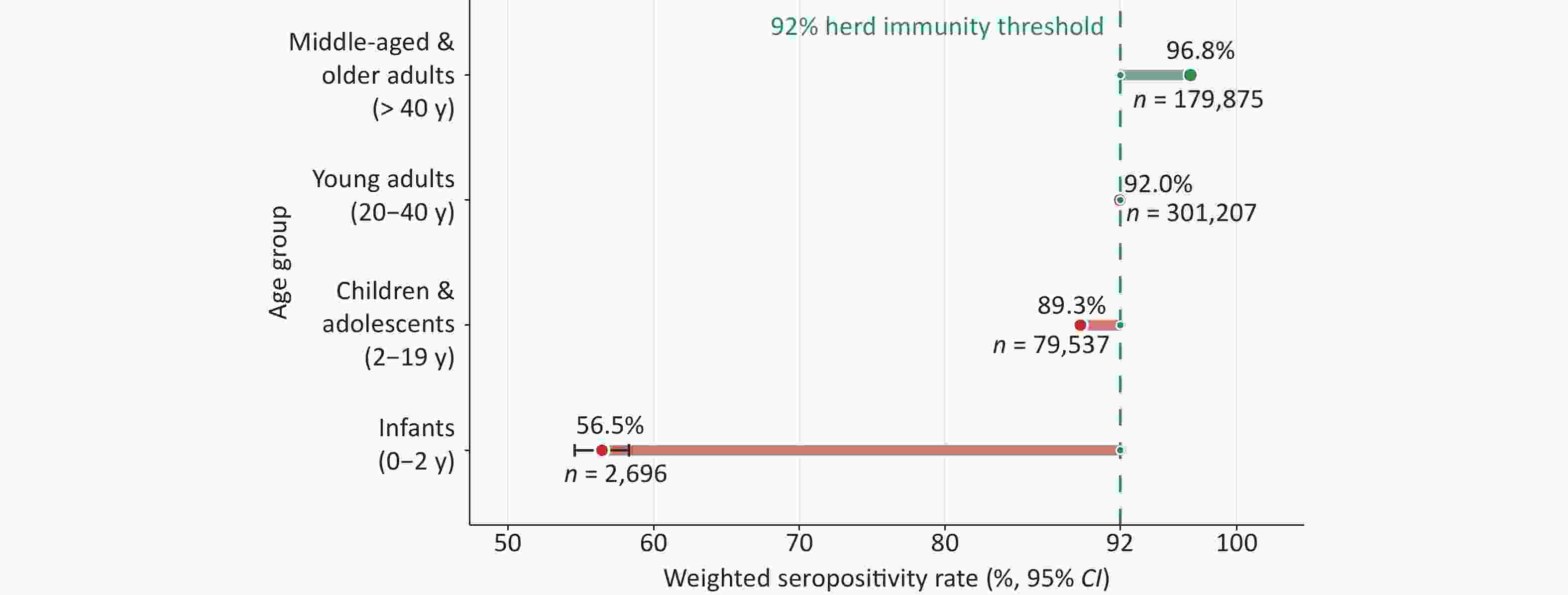
Figure 1. Age-stratified weighted seroprevalence and deviations from the 92% herd immunity threshold. Red bars indicate the gap below the threshold; the green bar indicates seroprevalence above it. Sample sizes (n) are annotated below each estimate. CI, confidence interval.
A multi-sample chi-square test indicated highly significant differences in weighted seroprevalence among the four age groups (χ2 = 11,635, P < 0.001). To clarify pairwise differences, post hoc comparisons using the Holm correction were performed, confirming statistically significant differences between all six pairs of age groups (all adjusted P < 0.001). Specifically, middle-aged and older adults had the highest weighted seroprevalence (96.8%), which was significantly higher than that of all other groups, followed by young adults (92.0%) and children and adolescents (89.3%). Infants showed the lowest seroprevalence (56.5%), which was significantly lower than that of all other age groups.
-
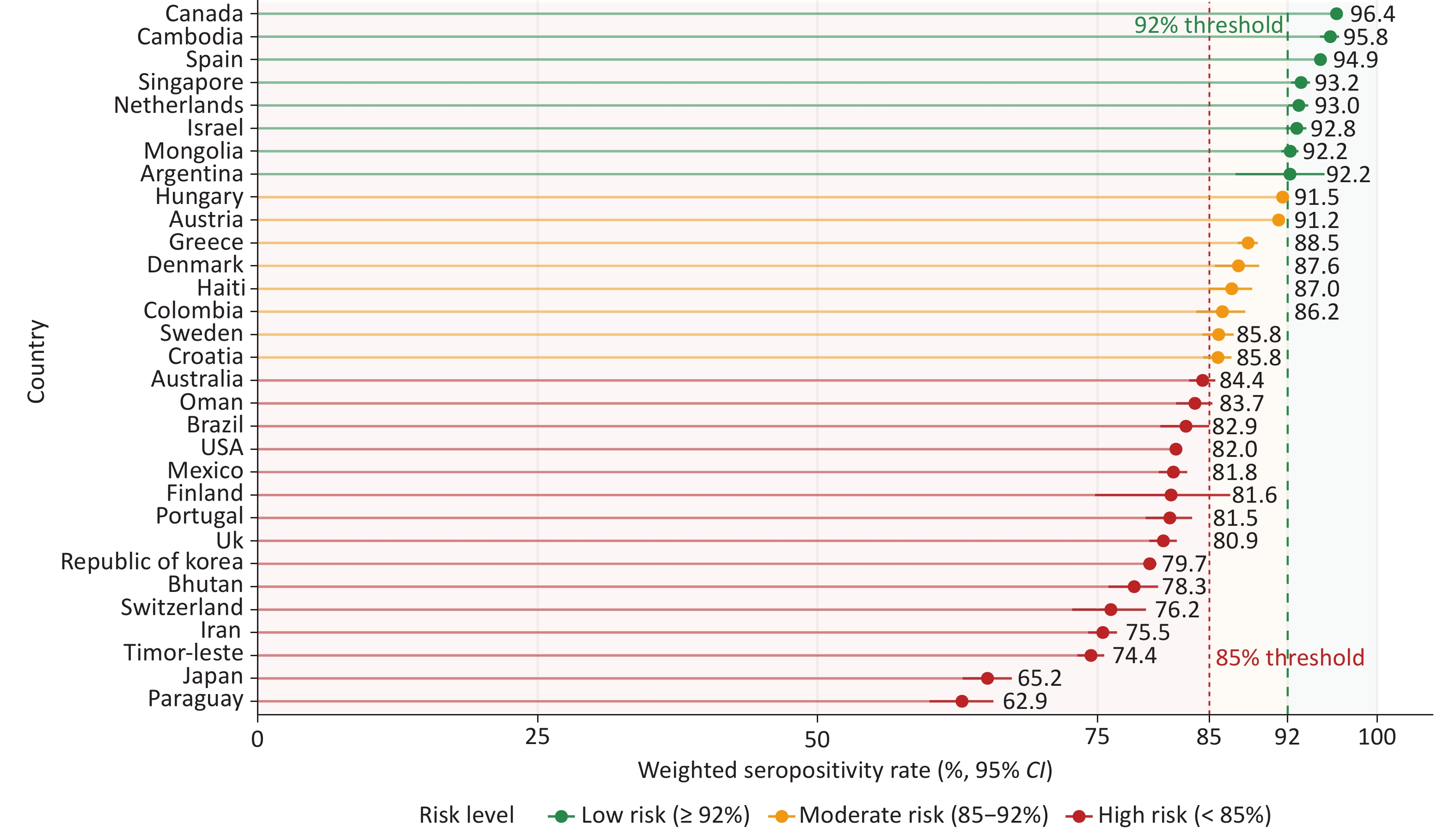
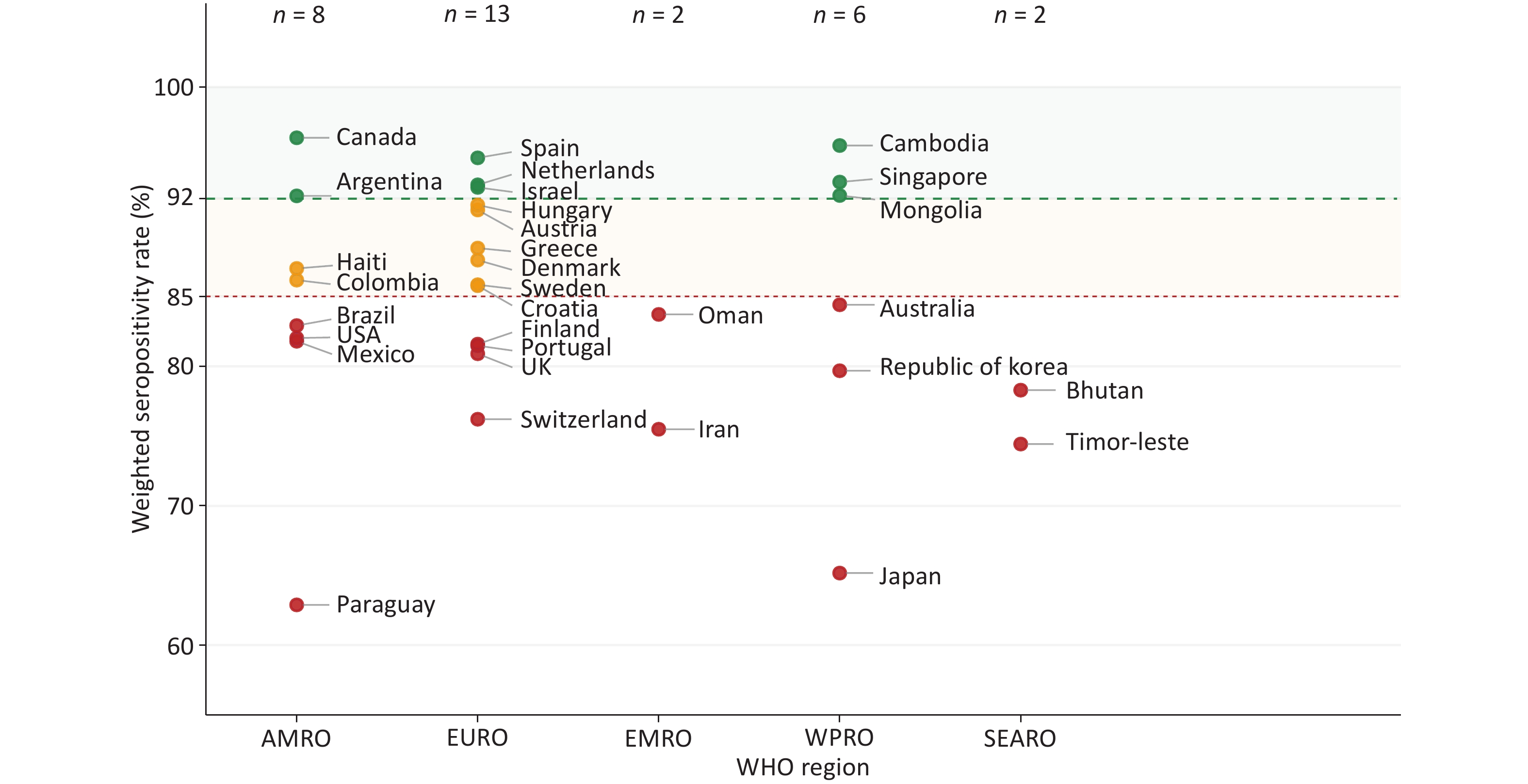
Marked between-country heterogeneity was also observed (Figure 2). Country-specific weighted seroprevalence ranged from 62.9% in Paraguay to 96.4% in Canada, spanning more than 33 percentage points. Eight countries (approximately 26% of the total) achieved a seroprevalence of at least 92% and were classified as low risk. A further nine countries (approximately 29%) exhibited an intermediate seroprevalence of ≥ 85% to < 92%, corresponding to the moderate-risk stratum. Fourteen countries (approximately 45%) recorded a seroprevalence below 85%, indicating substantial transmission risk. Figure 2 presents this distribution, with countries ordered by ascending weighted seroprevalence; the 85% and 92% thresholds are indicated by vertical dashed lines, and background shading distinguishes the three risk tiers (red for high risk, amber for moderate risk, and green for low risk). When countries were aggregated by WHO region (Figure 3), the Americas showed the widest dispersion, encompassing both countries with the highest seroprevalence estimates and several countries in the high-risk category. Similarly, the European Region displayed marked variability, with high-immunity countries coexisting with several high-risk countries. The Western Pacific Region contained countries spanning the full risk spectrum, with Cambodia (95.8%) and Singapore (93.2%) at the upper end and the Republic of Korea (79.7%) and Japan (65.2%) at the lower end. The South-East Asia and Eastern Mediterranean regions, with fewer included countries, were dominated by moderate- to high-risk profiles. These patterns indicate that achieving and maintaining the 92% threshold is not characteristic of any particular WHO region but may instead reflect country-specific factors related to immunization program delivery, surveillance system capacity, demographic structure, and recent disruptive events such as the Coronavirus Disease 2019 (COVID-19) pandemic.
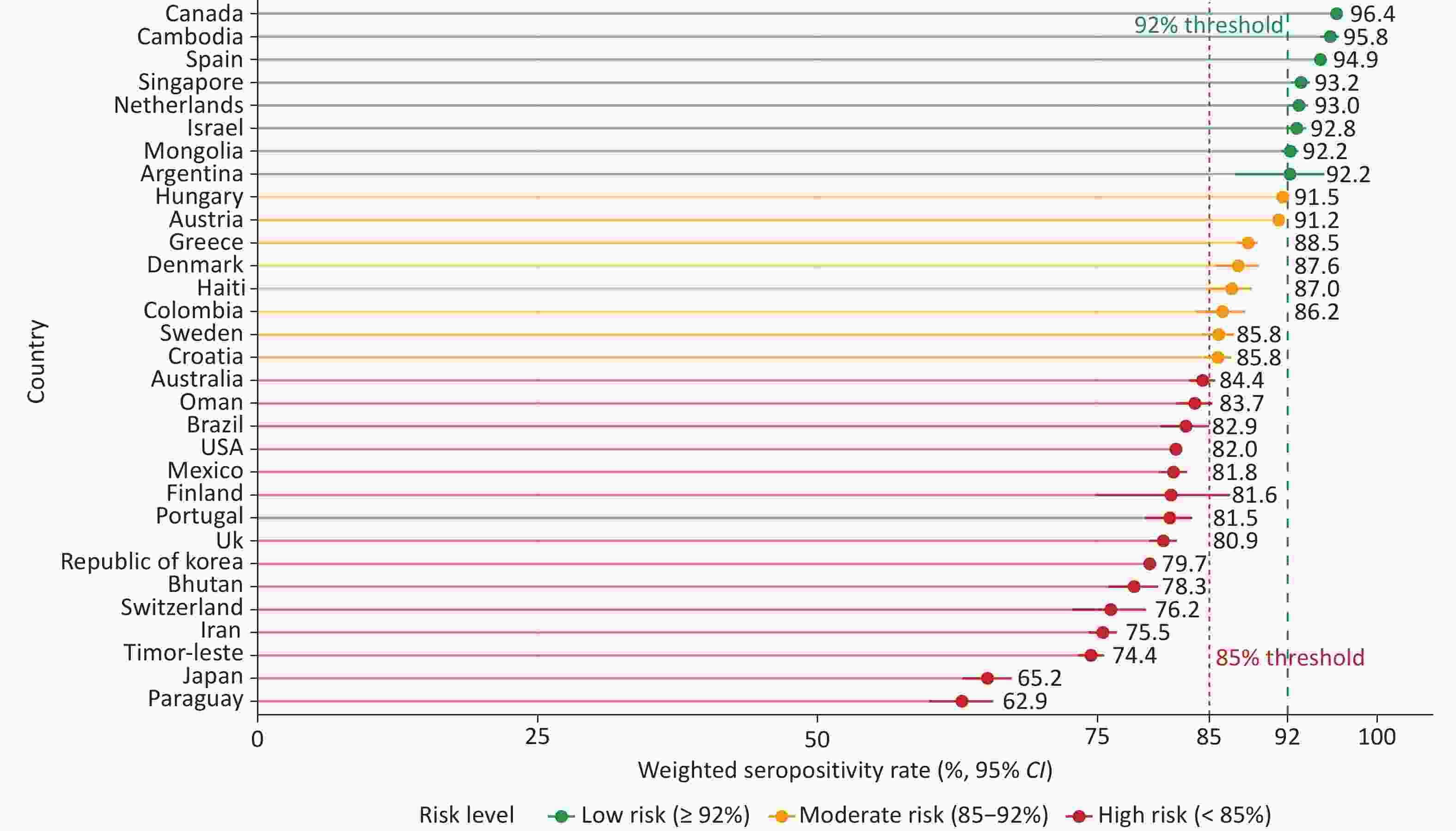
Figure 2. Weighted seroprevalence and risk stratification by country, ranked in ascending order. Points indicate weighted seroprevalence estimates; horizontal lines represent 95% confidence intervals (CIs) calculated using the Wilson score interval method. Background shading and color coding denote three risk tiers: low risk (≥ 92%, green), moderate risk (≥ 85% to < 92%, amber), and high risk (< 85%, red). Vertical dashed lines mark the 85% and 92% thresholds. CI, confidence interval.
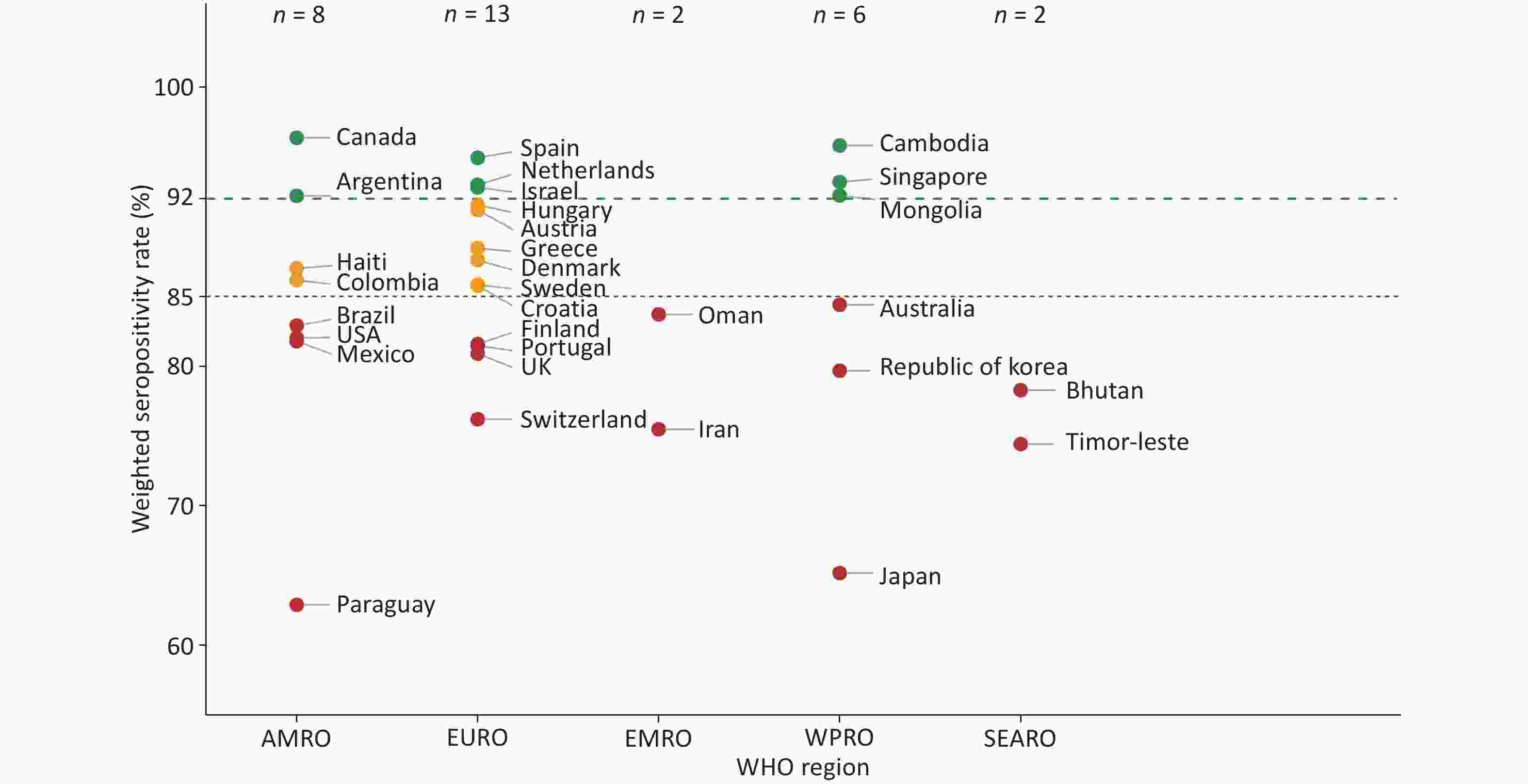
Figure 3. Distribution of country-level measles seroprevalence by World Health Organization (WHO) region. Each point represents one country. Green denotes low transmission risk (seroprevalence ≥ 92%), amber denotes moderate risk (≥ 85% to < 92%), and red denotes high risk (< 85%). Numbers above each region indicate the number of included countries. AMRO, Region of the Americas; EURO, European Region; EMRO, Eastern Mediterranean Region; WPRO, Western Pacific Region; SEARO, South-East Asia Region; AFRO, African Region.
-
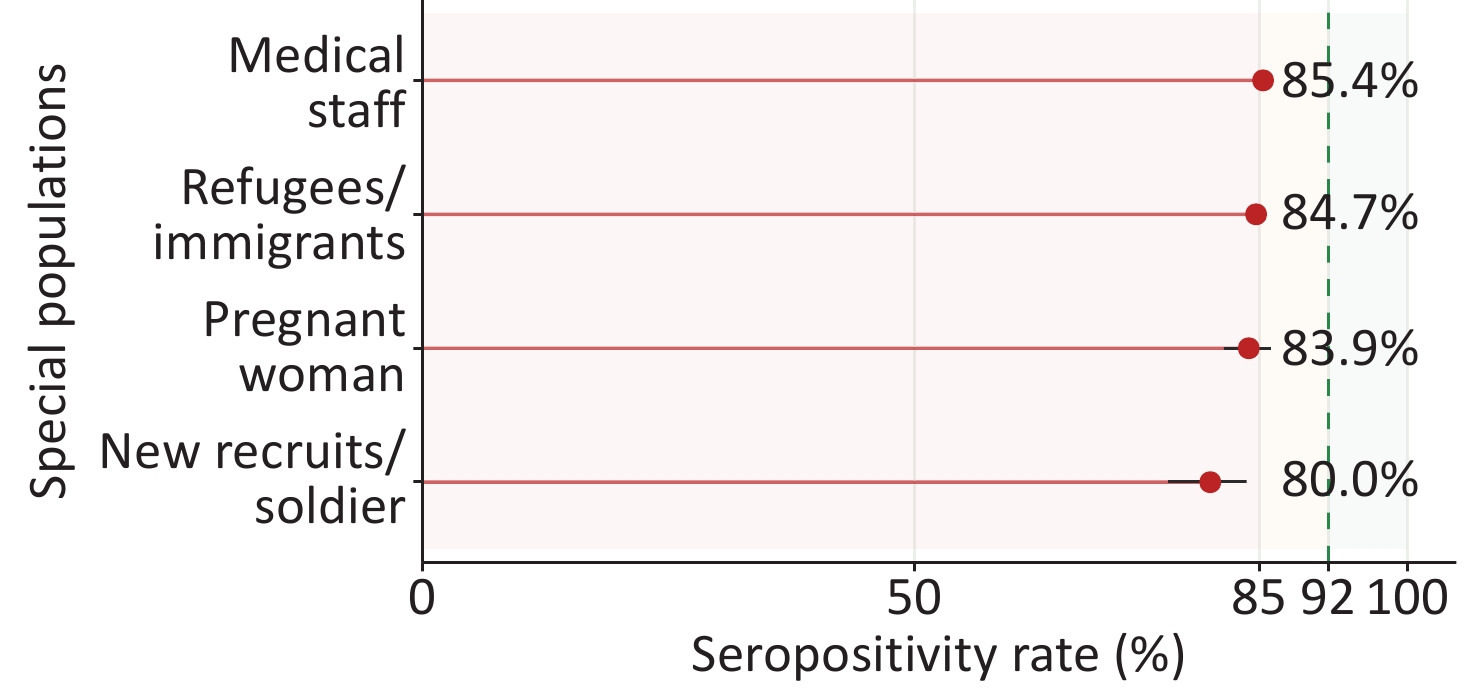
Analysis of the four predefined special populations revealed uniformly suboptimal immunity levels, all below the 92% herd immunity threshold and mostly below the 85% high-risk threshold (Figure 4). Healthcare workers had the highest seroprevalence among the special groups at 85.4% (95% CI: 85.0%–85.7%), based on a relatively large pooled sample of 32,764 participants. This is of particular concern given the role of healthcare workers as potential contributors to nosocomial transmission and frontline responders during outbreaks. Refugees and immigrants showed a comparable seroprevalence of 84.7% (95% CI: 83.7%–85.6%; n = 5,382), which may reflect heterogeneous vaccination histories in their countries of origin and disruptions to routine immunization during displacement.
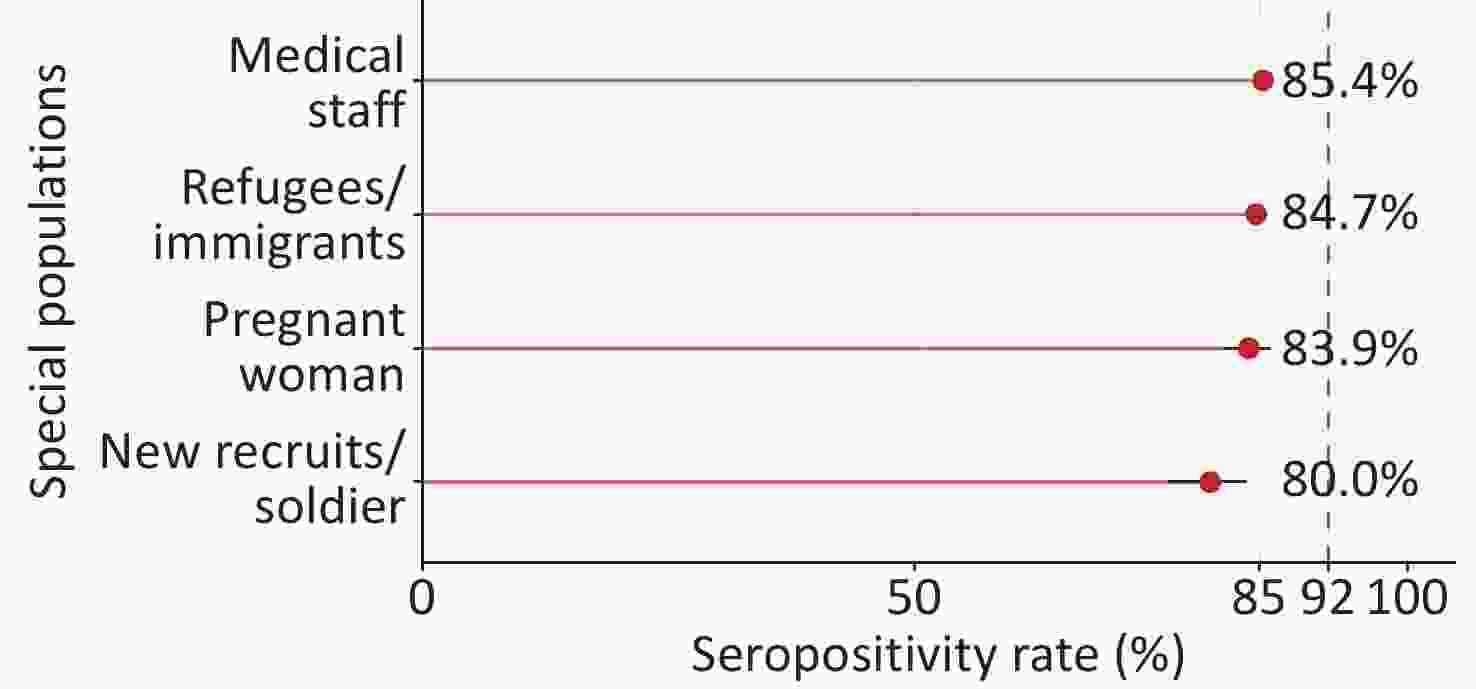
Figure 4. Weighted seroprevalence in four special population subgroups, all falling below the 92% protective threshold
Pregnant women, a population of particular concern due to the risks of measles infection during gestation and the implications for early infant susceptibility through reduced passive antibody protection, showed a seroprevalence of 83.9% (95% CI: 81.5%–86.3%; n = 918). Military recruits exhibited the lowest seroprevalence among the special populations at 80.0% (95% CI: 76.0%–84.0%; n = 385); this estimate was based on a smaller sample but was consistent with previous reports of measles outbreaks in military settings associated with immunity gaps among young adults. Taken together, all four special populations fall within the high-risk category (< 85%) or near its upper boundary, suggesting that vulnerability may not be confined to a single subgroup and that targeted immunity assessment and catch-up vaccination strategies warrant consideration as part of post-elimination consolidation programs.
-
The exploratory pooled comparison showed a lower weighted seroprevalence in the available post-verification surveys than in the pre-verification surveys. In the three years prior to the WHO verification of elimination, the weighted seroprevalence was 94.9% (95% CI: 94.8%–95.0%), which was comfortably above the 92% herd immunity threshold. In the three years following verification, the weighted seroprevalence decreased to 83.5% (95% CI: 83.2%–83.8%), a difference of 11.4 percentage points. The chi-square test confirmed that this difference was highly statistically significant (χ2 = 12,770, P < 0.001).
Critically, the pooled seroprevalence in the post-verification period fell below the 92% herd immunity threshold and was within the high-risk range (< 85%). Although the datasets were derived from unpaired surveys with differing age and population compositions, the observed 11.4-percentage-point difference indicates lower aggregate seroprevalence in the available post-verification surveys. Sampling differences may have contributed to the magnitude of this difference; therefore, it should not be interpreted as a longitudinal decline within countries. Nevertheless, this may signal post-verification immunity gaps and support sustained immunization and periodic serological surveillance.
-
Our study found that the overall weighted seroprevalence in countries with WHO-verified measles elimination was 92.8%; however, substantial heterogeneity persisted across countries and population subgroups. Although approximately 26% of countries maintained seroprevalence at or above 92%, meeting or exceeding the herd immunity threshold, 45% fell below 85%, indicating that confirmed elimination status does not necessarily equate to sustained protection. To our knowledge, this is the first global synthesis to systematically compare measles seroprevalence before and after the WHO verification of elimination, and the documented 11.4-percentage-point difference provides quantitative support for a pattern that we term “post-elimination immunity relaxation.”
Country-level differences also highlight this vulnerability. Canada is, perhaps, the most instructive example. In our dataset, Canada recorded the highest weighted seroprevalence among all included countries (96.4%). Notably, this estimate was derived from surveys conducted within the three years before elimination verification, a period when immunity is expected to peak, and therefore reflects a historical snapshot of immunity rather than sustained protection. Subsequent events demonstrated the importance of this distinction: on November 10, 2025, the Pan American Health Organization revoked Canada’s measles elimination status, which had been maintained since 1998, following more than 12 months of sustained cross-jurisdictional transmission that resulted in more than 5,000 confirmed cases and two infant deaths[14,15]. Multiple factors converged, including pre-outbreak declines in vaccination coverage, disruption of childhood immunization programs during the COVID-19 pandemic, and reduced public health communication capacity[16]. In the most affected provinces, Measles, Mumps, and Rubella (MMR) vaccination coverage among two-year-old children fell from 89.5% in 2019 to 82.5% in 2023, well below the 95% threshold required to prevent outbreaks[17]. Thus, the Canadian case reveals two compounding limitations of overall seroprevalence estimates: a high national median based on pre-verification surveys may overestimate the durability of population immunity in subsequent years, and it may also mask geographically concentrated immunity gaps that are sufficient to sustain transmission during an outbreak. Previous studies have documented similar localized immunity failures driven by vaccine hesitancy and clustered susceptibility in the United Kingdom, Israel, and the Republic of Korea[18-20].
The United States showed a similar pattern, with a seroprevalence of 82.0% in our dataset. In 2025, the United States experienced its largest measles outbreak in more than three decades, with 49 outbreaks and 2,144 confirmed cases; by early 2026, case numbers were approaching this historical high. During the 2019–2020 school year, MMR vaccination coverage among kindergarteners was 95.2%; by the 2024–2025 school year, this had declined to 92.5%, leaving an estimated 286,000 kindergarteners at risk[21]. In January 2026, WHO confirmed that, based on 2024 data, six additional countries (including Austria, Spain, and the United Kingdom) had lost their measles elimination status[3], suggesting that the immunity decline observed in our data reflects a global trend rather than isolated national failures. In contrast, Japan, despite showing only moderate seroprevalence in our dataset (65.2%), has systematically identified and closed immunity gaps through institutionalized high-quality seroepidemiological surveys and has thereby maintained elimination, demonstrating that active surveillance is as important as vaccination coverage in sustaining elimination status[22].
Countries classified as low risk in this study generally combine routine two-dose measles vaccination with catch-up programs, outbreak response immunization, and strengthened surveillance[23]. Specific approaches include earlier second doses in Singapore and Spain, cohort catch-up programs in the Netherlands, nationwide supplementary immunization in Cambodia, and targeted outbreak responses in Mongolia, Israel, Canada, and Argentina. However, because the contributing serosurveys were conducted in different years, seroprevalence estimates of ≥ 92% do not indicate continuously maintained immunity and may mask subnational immunity gaps.
Age-stratified analysis identified infants (0–2 years) as the most vulnerable subgroup, with the lowest seroprevalence of 56.5%. This finding may reflect established mechanisms such as waning of maternal antibodies, programmatic delays in the first dose, and reduced long-term immunogenicity following early vaccination[24]. The supplementary age-specific data further indicate substantial heterogeneity within the broad 0–2-year group. These findings should be interpreted in the context of national vaccination schedules, maternal antibody waning, and local epidemiology[25]. Among special populations, seroprevalence was generally below the protective threshold in military recruits (80.0%), pregnant women (83.9%), migrants/refugees (84.7%), and healthcare workers (85.4%), consistent with earlier evidence linking waning of vaccine-induced antibodies, adult immunity gaps, and vaccine failure in populations without natural immune boosting[26]. Antibody waning may be more evident in low-transmission settings, where the absence of natural re-exposure may contribute to a decline in vaccine-acquired immunity[8].
The significant post-verification difference in seroprevalence—from 94.9% before elimination verification to 83.5% afterward (χ2 = 12,770, P < 0.001)—may indicate a structural phenomenon we term “post-elimination immunity relaxation.” Once elimination is certified, policy attention and supplementary immunization activities often decrease, public risk perceptions weaken, and routine vaccination programs may deprioritize catch-up activities[27,28]. Examples from Canada and the United States illustrate how such relaxation, combined with vaccine hesitancy and pandemic-related disruptions, can weaken herd immunity to the point where a single imported infection can trigger sustained local transmission. In an era of accelerating globalization, national-level elimination is increasingly insufficient to contain outbreaks. The measles virus can readily spread across borders and exploit regional immunity gaps, as demonstrated by the 2025 outbreaks in three North American countries[14].
From the perspective of public health and health strategies, these findings support three interconnected priorities. First, serological indicators should be formally incorporated into the measles elimination verification framework. Current WHO verification criteria rely primarily on epidemiological surveillance and administrative vaccination coverage data[29], both of which can mask substantial population-level immunity gaps; embedding serological evidence into the verification standard would provide a more direct and biologically meaningful measure of whether a country has achieved and is sustaining herd immunity. Second, systematic and periodic serological surveillance of measles should be established as a core component of transmission risk assessment in countries with elimination status. Rather than functioning as ad hoc cross-sectional studies, serosurveys should be institutionalized at defined intervals to quantify population protection, reveal subnational immunity blind spots, and provide early warning of waning immunity before the resurgence of clinical cases[30]; the experience of Japan illustrates how regular, high-quality serosurveys can directly inform programmatic responses and help sustain elimination status[22]. Third, beyond maintaining strong routine childhood immunization, targeted supplementary immunization activities should be differentiated by age group and risk profile[31]. Infants, young children, adolescents, and high-risk special populations, including healthcare workers, refugees and migrants, pregnant women, and military recruits, should be explicitly recognized as priority groups for immunity assessment and appropriate preventive interventions, including vaccination when indicated[32], as our analysis shows that each of these subgroups falls below the herd immunity threshold, even within countries that have achieved certification. Sustaining elimination also requires continued investment in cross-border surveillance, a rapid response to imported cases, and regional coordination. These functions must not be interrupted after elimination has been verified. Together, these priorities form an integrated framework for translating the elimination status from a single regulatory milestone into a durable public health achievement.
This study has several limitations. Its scope was restricted to 31 countries, which may limit its generalizability, particularly because no African countries were included, although measles transmission remains intense in the region and elimination has not yet been achieved. Heterogeneity in laboratory assays may affect the comparability of datasets, although all included assays were validated for the qualitative classification of measles IgG seropositivity. Seroprevalence reflects the presence of antibodies rather than protective neutralizing antibody titers, and the absence of longitudinal data precludes the assessment of the long-term persistence of immunity at the individual level. In addition, as the Canadian case illustrates, high overall national seroprevalence can mask critical subnational immunity gaps that existing aggregated survey data fail to capture. Future studies should incorporate spatially disaggregated seroprevalence estimates and use longitudinal cohort designs to address these limitations.
-
The authors have no acknowledgments to declare.
HTML
Characteristics of Included Studies
Overall Weighted Seroprevalence
Age-stratified Seroprevalence
Country-level Seroprevalence and Risk Stratification
Seroprevalence in Special Populations
Pre- and Post-elimination Comparison
Ethics This study used publicly available data, and ethical review was therefore not required.
Authors’ Contributions Linlin Gong and Guzainuer Abudurusuli collected data and drafted the manuscript. Fan Zheng and Jiayuan Xie critically revised the manuscript. Huaqing Wang conceived the study and reviewed the manuscript. All authors have read and approved the final version of the manuscript.
&These authors contributed equally to this work.
 Quick Links
 DownLoad: