



-
Cryptococcus gattii is a common opportunistic fungal pathogen that disseminates via the respiratory tract and causes pulmonary cryptococcosis. This pathogen spreads hematogenously to the central nervous system, leading to cryptococcal meningitis. In contrast to Cryptococcus neoformans (C. neoformans), which primarily infects immunocompromised hosts, C. gattii can also infect immunocompetent individuals, posing a distinct clinical challenge[1]. Currently, drugs used for the clinical treatment of fungal infections are primarily categorized into three classes. Among these, amphotericin B (AmB) is the only agent with direct fungicidal activity against Cryptococcus spp. It exerts its effect by binding to ergosterol in the fungal cell membrane, inducing a significant increase in intracellular reactive oxygen species (ROS) levels, and causing mitochondrial damage. Consequently, AmB plays a pivotal role in the treatment of refractory Cryptococcus infections[2]. Currently, precise clinical breakpoints for antifungal drugs targeting Cryptococcus spp. are lacking. To address this, Ordaya et al. analyzed temporal trends in minimum inhibitory concentrations (MICs) and proportions of wild-type (WT) isolates of C. neoformans complex processed by their reference laboratory between November 2011 and June 2021. They observed a higher mortality rate in patients infected with an AmB non-WT CNSC isolate[3]. Therefore, the clinical management of systemic cryptococcosis remains challenging.
The widespread use of antifungal drugs has led to the growing problem of fungal drug resistance[4]. Currently, the clinical application of antifungal agents is limited and therapeutic options for cryptococcal infections are particularly scarce. Therefore, screening and development of novel therapeutic targets are of great significance. Lee et al. performed systematic functional profiling of the kinome networks in C. neoformans by constructing a high-quality library of 264 signature-tagged gene-deletion strains via homologous recombination of 129 putative kinases and examining their phenotypic traits in vitro and in vivo. Their study provided insights into the pathobiological signaling circuitry of C. neoformans and identified potential anticryptococcal or antifungal drug targets. The mitogen-activated protein kinase (MAPK) pathway plays a key role in regulating fungal growth, stress response, apoptosis, and differentiation. Among these, the SSK2 gene in C. neoformans serves as a crucial interface that links the two-component system to the PBS2-HOG1-MAPK pathway[5]. Targeted inhibition of SSK2 can markedly enhance the fungicidal activity of AmB, reduce drug dosage and toxicity, and broaden its antifungal spectrum. It is a promising therapeutic target for addressing clinical AmB resistance and its adverse toxic effects.
This study comprehensively analyzed the relationship between drug-susceptibility phenotypes and phylogenetic relationships in 27 clinical C. gattii strains. Combined with in vitro and in vivo experiments, we revealed the molecular mechanism by which the SSK2T265A point mutation regulates AmB resistance in the G4 strains. This discovery not only elucidates a key evolutionary pathway for the emergence of clinical resistance in C. gattii but also provides crucial theoretical foundations and potential targets for developing novel antifungal drugs and synergistic treatment strategies against such resistant strains.
-
This study included 27 clinical isolates of C. gattii, all isolated from different patients and provided by multiple hospitals. The primary sample type was cerebrospinal fluid, with the remainder derived from the bronchoalveolar lavage fluid, sputum, blood, and lung tissues.
-
Raw whole-genome sequencing data for each strain were converted to FASTQ format using fastq-dump (v2.8.2, Bethesda, MD, USA), and quality control was performed using fastp (v0.20.0) to remove adapter sequences and low-quality reads. The filtered reads were aligned to the C. gattii WM276 reference genome (GenBank accession: GCF_000185945.1) using the Burrows-Wheeler Aligner BWA-MEM (v0.7.17). The resulting SAM files were sorted, converted to the BAM format using SAMtools, and then indexed. PCR duplicates were marked and removed using the MarkDuplicates tool in GATK (v4.3.0.0). Variant calling was subsequently performed for each sample using the HaplotypeCaller tool in GATK to generate the initial VCF files. Single-nucleotide polymorphisms (SNPs) were selected using the SelectVariants tool in GATK and filtered through the VariantFiltration tool using the following criteria: QUAL < 30.0 || QD < 2.0 || SOR > 3.0 || MQ < 40.0 || FS > 60.0. This process yielded high-confidence variant calls. Filtered VCF files from all samples were merged and converted to a PHYLIP format sequence alignment matrix using vcf2phylip, which was subsequently converted to the MEGA format using MEGA software (v11). A phylogenetic tree was constructed using the maximum parsimony method and strain molecular types were determined using the CHiPlot online tool.
-
Raw sequencing reads were aligned to the C. gattii VGI reference genome WM276 (GenBank accession: GCF_000185945.1) using BWA-MEM (v0.7.17-r1188) and subsequently converted to the BAM format using SAMtools (v1.6). Initial variant calling was performed using the HaplotypeCaller tool in GATK (v4.2.6.1) to generate VCF files. SNP sites were extracted using the SelectVariants tool in GATK, followed by filtration with the VariantFiltration tool using thresholds (AB < 0.2 || MQ0 > 50) to remove low-quality variants. For subsequent analysis, variant sites were merged across samples using the GATK CombineGVCF tool. Variant sites were annotated and functionally characterized using SnpEff (v5.2) to predict gene effects and functional impacts in the G4 strain, which displays a pronounced resistance phenotype.
To identify candidate variants associated with AmB tolerance, whole-genome variants from strains G4 and G24 were subjected to stepwise filtering and prioritization rather than formal association testing. Variants were retained if they (i) occurred within coding regions, (ii) were predicted by SnpEff to have moderate or high functional impact[6], and (iii) involved genes previously implicated in virulence or antifungal resistance pathways[7,8]. Candidate variants were compared with the remaining clinical isolates to identify strain-specific enrichment patterns.
-
Accurate gene sequences were obtained from the NCBI database. The sequences were imported into Primer Express 3.0 for primer design, guaranteeing the primer length at 18–30 bp, GC content at 40%–60%, and Tm values of the forward and reverse primers ideally differing by no more than 2–5°C. Finally, Primer-BLAST was used to align the primer sequences against corresponding genomic databases to confirm their uniqueness. The primer sequences used in this study are listed in Table 1.
Application name Sequence SSK2 deletion Test-F TGTGTCTTTGCTTGAACAATCGCTG Test-R CCATAAGAGGTTTGAGAGGTTTTGA Left-se CAGGTGGTGCTCTTGTG Left-an CTGGCCGTCGTTTTACTATTCCCGTTCTTCTCC Right-se GTCATAGCTGTTTCCTGAGATGTGCTCAGGGACT Right-an AACAACGCTGCATGTTT U6-R TCTTTGTGCGGTGTGCTTTCAACAGTATACCCTGCCGGTG gRNA-F GAAAGCACACCGCACAAAGAGTTTTAGAGCTAGAAATAGCAAGTT TCO2 deletion Test-L GGTTGAGTGAATGAGTTTATGG Test-R TCAAACTTACTTCGTAATTCTGGTG Left-se TGCGTCACAGACATCTATCG Left-anse CTGGCCGTCGTTTTACTGGAAAGGCTCTGTTTATTG Right-se GTCATAGCTGTTTCCTGTACACAGATGGGCGAAGGTT Right-anse GACCAGGACGCCGCAGAGTTG g-RNA-F ACCGCCTGGGATAGTAAGTTGTTTTAGAGCTAGAAATAGCAAGTT U6-R AACTTACTATCCCAGGCGGTAACAGTATACCCTGCCGGTG Universal primer NAT1 CCGTCTTCACCTGCATCTGATT NAT2 TTGGATGCTGGATGCTGGGT U6 promoter -F CCATCGATTTGCATTAGAACTAAAAACAAAGCA gRNA-R CCGCTCGAGTAAAACAAAAAAGCACCGAC Cas9-F GGTGACGCTGTGAGAGTGG Cas-R GGGCCCCTCTTCACGTGG SSK2 complementation PH3-ssk2-Fse1 AGTACATTTATCACAGGCCGGCCATGTCCAATCCGACGTCCCC PH3-ssk2-Pac1 CTGCTACTGTAACCCTTAATTAATTATTCGAGGGGAGGTGTAATACC PH3-F CCGTAATGCCTATTCTCCGAG Note. F, forward; R, reverse; L, left; R, right; se, sequence; an/anse, anti/antisequence; Fse1, restriction endonuclease FseI; Pac1, restriction endonuclease PacI. Table 1. Primer sequences for gene deletion and gene complementation
-
To validate the functions of SSK2 and TCO2, we constructed gene-knockout mutant strains using the G4 strain as the background. The target gene was knocked out using the CRISPR-Cas9-based TRACE system developed by Lin et al[9]. Single-guide RNAs (sgRNAs) were designed to target the SSK2 genomic locus. A donor DNA fragment containing homology arms and a nourseothricin (NAT) resistance marker was amplified by PCR. The CRISPR-Cas9 construct (containing the sgRNA expression cassette) and donor DNA fragment were co-introduced into C. gattii competent cells via electroporation. The transformed yeast culture was plated onto YPD agar containing 100 μg/mL NAT to select for NAT-resistant transformants. Genomic DNA was extracted from the putative positive clones and initially verified using NotI restriction digestion. PCR amplification and Sanger sequencing were performed to confirm the targeted gene deletion and precise integration of the homologous recombination cassette. The correct transformants were screened and used for subsequent functional studies.
-
The SSK2 complementation gene was cloned into a shuttle vector with a PH3 promoter using standard molecular cloning techniques to generate a recombinant plasmid. The recombinant plasmid was transformed into competent Escherichia coli cells via heat shock and plated onto LB agar plates containing the relevant antibiotic for the selection of positive clones. Single colonies were selected, and successful insertion of the fragment was verified by colony PCR, followed by Sanger sequencing. The verified plasmid was linearized with an appropriate restriction enzyme and introduced into the ssk2Δ-G4 mutant strain via electroporation. Transformants were selected on YPD agar plates containing corresponding antibiotics to identify potential complementation strains. Successful genomic integration of SSK2 was confirmed by diagnostic PCR and sequencing. The SSK2 allele carrying the G4-derived SSK2T265A point mutation was backcrossed into the knockout strain to generate ssk2Δ-G4+SSK2T265A. A strain harboring the WT SSK2 allele was obtained as ssk2Δ-G4+SSK2WT, enabling the specific contribution of this point mutation to AmB resistance to be determined.
-
We determined the drug susceptibility of the strain, its ability to produce core virulence factors (capsule and melanin), and its tolerance to oxidative and osmotic pressure stress.
-
An initial phenotypic verification of the strains was conducted using the spot-test method. Subsequently, the MICs of the strains were determined using clinically standard fungal susceptibility test strips (E-test method) and the dilution method, as described by the Clinical and Laboratory Standards Institute (CLSI). All samples included three biological replicates and the experimental procedure was independently repeated three times.
Spotting Test. Experimental strains were inoculated into YPD liquid medium and incubated at 30 °C with shaking at 220 rpm for 16–18 h. Log-phase cultures were harvested, washed three times with sterile distilled water, resuspended in sterile physiological saline, and adjusted to a concentration of 5 × 10⁷ CFU/mL (OD600 ≈ 0.5). The cell suspension was subjected to serial five-fold dilutions of 5 × 10⁷, 1 × 10⁷, 2 × 10⁶, 4 × 10⁵, 8 × 10⁴, and 1.6 × 10⁴ CFU/mL, and 3-μL aliquots from each dilution were spotted onto YPD agar plates containing varying concentrations of antifungal agents (fluconazole, AmB, or 5-fluorocytosine). All plates were incubated at 30 °C for 48–72 h, with colony growth observed and recorded at regular intervals. Photographs were taken to document the growth phenotypes. Scores ranged from 0 (highly susceptible) to 2 (susceptible), 4 (increased resistance), and 6 (significantly increased resistance). This scoring system was used to quantify resistance based on the number of colonies grown in the drop plate assay.
E-Test. Log-phase cultures (OD600 = 0.18 ± 0.02) were evenly inoculated onto RPMI 1640 agar plates using a sterile cotton swab with a three-way cross-streaking technique. After allowing the agar surface to dry briefly, an E-test strip (AmB concentration range: 0.002–32 μg/mL) was aseptically placed horizontally onto the agar using sterile forceps[10]. The plates were incubated at 35°C for 72 h, after which the MIC was recorded.
MIC-CLSI. C. gattii was inoculated into YPD medium and cultured at 30°C for 15 h. Fungal cells were collected by centrifugation and washing, then diluted to 2.5 × 10³ CFU/mL in RPMI 1640 medium (0.145 mol/L MOPS buffer). Serial two-fold dilutions of the antifungal compounds were prepared in RPMI 1640 medium in a 96-well plate and then mixed with equal volumes of the prepared fungal cell suspension. The 96-well plates were incubated at 30 °C for 48 h. Wells containing only RPMI as a blank were prepared, along with wells containing fungal cell-RPMI mixture as a control within the same plate.
-
A 30-μL aliquot of log-phase culture (4 × 10⁷ CFU/mL) was inoculated into 1 mL of complete DMEM medium and incubated statically at 37 °C under 5% CO2 for 72 h to induce capsule formation. Following incubation, 10 μL of culture was mixed with an equal volume of India ink for slide preparation. The slides were observed and imaged under a light microscope with 100× oil immersion[11].
-
A 3-μL aliquot of log-phase culture (OD600 = 2.0 ± 0.1) was inoculated onto melanin-inducing agar plates containing 1 mmol/L L-DOPA and the following components: 15 mmol/L glucose, 13 mmol/L glycine, 29.4 mmol/L KH2PO4, 10 mmol/L MgSO4·7H2O, and 3 mmol/L thiamine. The plates were incubated in the dark at 30 °C for 48 h after the inoculum was completely absorbed. Colony pigmentation was observed daily, and phenotypic characteristics were recorded[12].
-
The test strain was inoculated into YPD liquid medium and incubated at 30 °C with shaking at 220 rpm for 14 h until the logarithmic growth phase was reached. The concentration of the suspension was adjusted to an OD600 of 0.4. A solution containing 0.015% H2O2 was then added and incubated for 2 h. Then, 1 mL of the suspension was serially diluted, and the dilutions were spread onto YPD plates. After 48 h of incubation, CFU counts were recorded and photographs were used to document strain survival. This experiment included three biological replicates, each performed in triplicate.
-
Eighty 8-week-old female C57BL/6N mice (SPF) were randomly assigned to four groups (n = 20 per group) using a random number table. Following anesthesia by intraperitoneal injection of tribromoethanol (250 mg/kg), mice were intranasally inoculated with 40 μL of a C. gattii suspension (1 × 10⁷ CFU). Beginning on day 1 post-infection (dpi), the mice in the treatment group received daily intraperitoneal injections of AmB [3 mg/(kg∙day)]. In contrast, control mice received an equal volume of phosphate-buffered saline (PBS) for 7 consecutive days. The experimental endpoints were as follows: 5 mice per group were euthanized post-treatment for the collection of lung and brain tissues to quantify the fungal burden. Six mice per group were euthanized on days 7 (early stage) and 30 (late stage) for histopathological analyses. The survival of the remaining 9 mice per group was monitored.
-
Under sterile conditions, lung tissues were dissected and transferred to a sterile tissue homogenizer containing 3 mL ice-cold PBS and 3-mm grinding beads. Homogenization was performed for 2 min. The homogenate was serially diluted 10-fold (10−1 to 10−3) in PBS. A 100-μL aliquot from each dilution was spread plated onto YPD agar plates supplemented with chloramphenicol (50 μg/mL). The plates were incubated at 30 °C for 72 h, and the CFUs were enumerated.
-
On days 7 and 30 post-infection, lung tissues were collected from euthanized mice in each group and fixed for paraffin embedding. Tissue sections (4–5 μm thickness) were prepared and stained using the following protocols for histopathological analysis: hematoxylin and eosin (H&E) staining, periodic acid–Schiff (PAS) staining, and Alcian blue (AB) staining.
-
Mice were group-housed in separate cages (5 mice per cage) in an ABSL-2 facility. Health monitoring was performed twice daily to assess activity level, fur condition, respiratory status, and food and water consumption. The experiment was continued for 80 days or until humane endpoints were met (e.g., > 20% body weight loss, severe respiratory distress, or immobility). Kaplan–Meier survival curves were generated, and between-group differences in survival rates were analyzed using the log-rank test.
-
The biomass from each strain was collected, vacuum-dried, and mechanically disrupted using a tissue homogenizer with ceramic beads (5 cycles of 40 s each). To the homogenized sample, 1 mL of chloroform containing ketoconazole (2.5 μg/mL) as an internal standard was added. The mixture was then incubated at room temperature with shaking for 8 h. After extraction, the solvent was concentrated under vacuum, dried, and reconstituted in methanol/chloroform (10:1, v/v). The solution was vortexed and centrifuged at 12,000 ×g for 5 min. The supernatants were collected for subsequent analysis. The high-performance liquid chromatography (HPLC) conditions were as follows: mobile phase A, 0.01% acetic acid; mobile phase B, acetonitrile; chromatographic column, C18 (2.1 × 50 mm, 1.8 μm); flow rate, 0.4 mL/min; column temperature, 45 °C. The elution program was as follows. Initially, 30% A + 70% B was used. After 1 min, the phase was switched to 100% B for 16 min. At 17 min, the phase was switched back to 30% A + 70% B and the column was equilibrated for 6 min. Mass spectrometry was performed using an Agilent 6520B analyzer (Agilent Technologies, Santa Clara, CA) in Q-TOF MS Ionization mode, APCI positive ion mode, drying gas flow rate of 4 L/min, nebulizer temperature of 350°C, nebulizer pressure of 50 psi, capillary voltage of 3500 V, fragmentation voltage of 130 V, scan range of 80–1000 m/z, and acquisition frequency of 1.03 spectra/s. Ergosterol assays were performed with three independent biological replicates, and each sample was analyzed in triplicate.
-
Tested strains were inoculated into YPD liquid medium and incubated at 30 °C with shaking at 220 rpm for approximately 14 h to reach the logarithmic growth phase. The cells were harvested by centrifugation, washed with fresh YPD medium, and resuspended. The cell suspension was adjusted to a standardized concentration (OD600 = 0.5) and treated with various AmB concentrations. The cultures were incubated with shaking (30°C, 220 rpm) for 1 h. After treatment, cells were collected, washed twice with PBS, and resuspended in 10 μg/mL DCFH-DA, then incubated at 37°C in the dark for 1 h. Fluorescence intensity was measured by flow cytometry for each experimental group. The excitation wavelength was 488 nm and emission was detected at 510–560 nm. ROS assays were performed with three independent biological replicates, and each sample was analyzed in triplicate.
-
RNA-seq was performed on three independent biological replicates per group. The strains (G4 and the ssk2Δ-G4 mutant) were separately inoculated into YPD liquid medium and incubated at 30°C with shaking at 220 rpm for 14–16 h to reach the mid-logarithmic growth phase (OD600 ≈ 0.8). After incubation, 3 mL of culture from each strain was collected and centrifuged, and the cell pellet was washed twice with sterile PBS. The following treatment groups were prepared: Control group: Resuspended in 4 mL of fresh YPD medium (designated G4-YPD and ssk2Δ-G4-YPD); Treatment group: Resuspended in 4 mL of YPD medium containing 0.5 μg/mL AmB (designated G4-AmB and ssk2Δ-G4-AmB). All groups were incubated at 30°C for 3 h with shaking at 220 rpm. After treatment, the cells were harvested, washed with nuclease-free water, and flash-frozen in liquid nitrogen. Frozen pellets were stored at −80 °C until RNA extraction and subsequent transcriptomic sequencing.
Quality control was performed using an Agilent 2100 Bioanalyzer to precisely assess RNA integrity. Leveraging the structural characteristics of the poly(A) tail, mRNA containing poly(A) tails was enriched with oligo(dT) magnetic beads. Following enrichment, library preparation was performed using either the standard NEB method or the strand-specific method[13]. After library construction, preliminary quantification was performed using a Qubit 2.0 fluorometer (Thermo Fisher Scientific, Waltham, MA). The library was diluted to 1.5 ng/μL, and the insert sizes were assessed using an Agilent 2100 Bioanalyzer. Once the insert size met the expectations, we accurately quantified the effective library concentration via qRT-PCR before proceeding with Illumina sequencing. qPCR data are presented as mean ± SD from three biological replicates (n = 3 per group), each performed in technical triplicates.
-
All statistical analyses were performed using GraphPad Prism (version 9.0; GraphPad Software, San Diego, CA). A P value < 0.05 was considered statistically significant. Normality and homogeneity of the variance were tested. Independent-samples t-tests were used for comparisons between two groups of continuous variables that met normality assumptions, while one-way analysis of variance was employed for comparisons among multiple groups. Survival curves were plotted using the Kaplan–Meier method, and intergroup survival rate comparisons were performed using the log-rank test. All statistical analyses were considered significant at P < 0.05, with the results annotated in figures and tables using asterisks (* P < 0.05, ** P < 0.01, and *** P < 0.001).
-
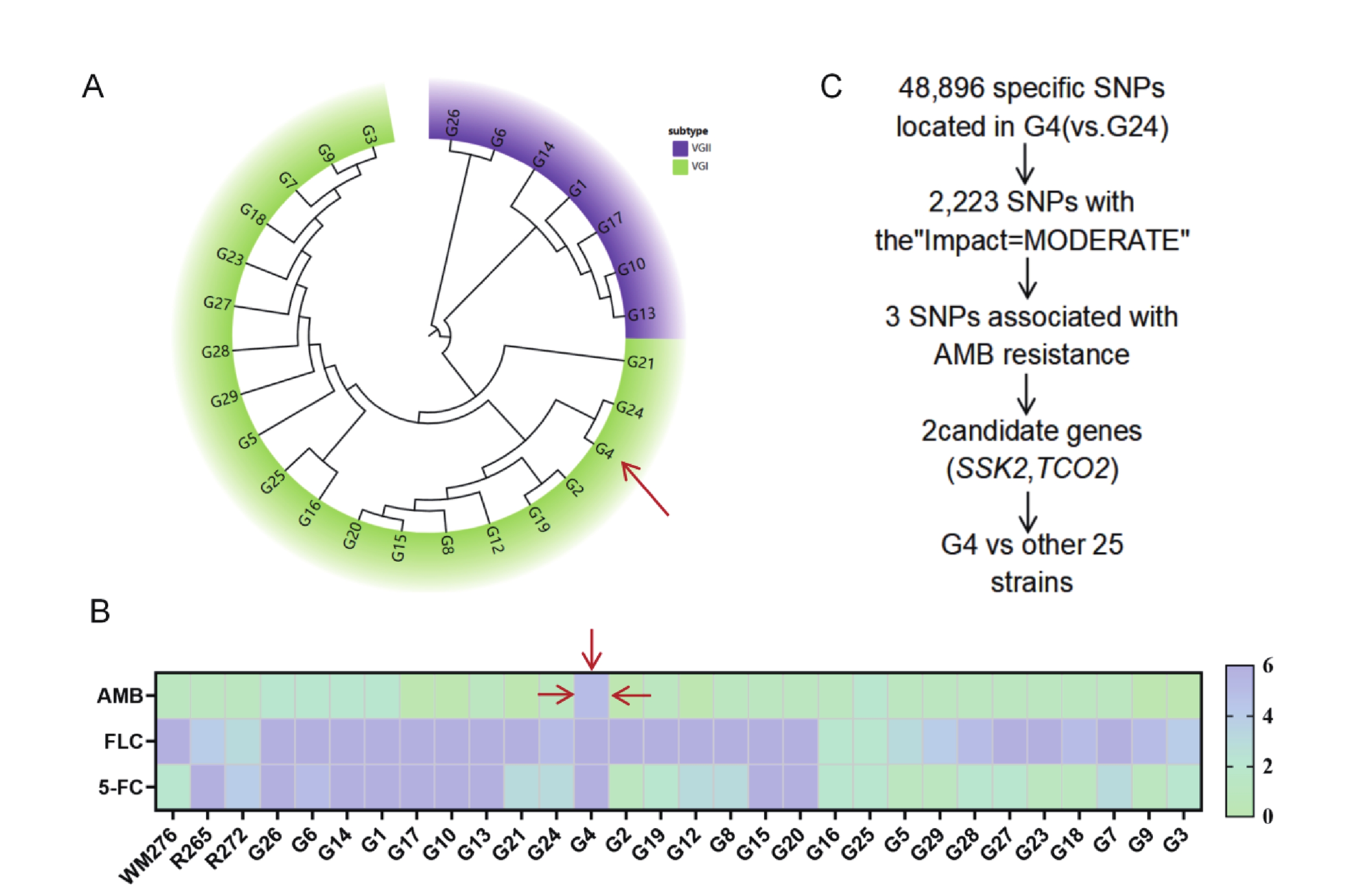
A total of 27 clinical C. gattii isolates derived from clinical samples were included in this study. Multilocus sequence typing analysis classified 20 isolates as VGI and 7 as VGII. Phylogenetic reconstruction indicated that strain G4 had the closest genetic relationship with strain G24 (Figure 1A). Antifungal susceptibility testing demonstrated that G4 exhibited increased resistance to AmB compared with other clinical isolates, including the phylogenetically closest strain, G24 (Figure 1B, Supplementary Figure S1, Supplementary Table S1).
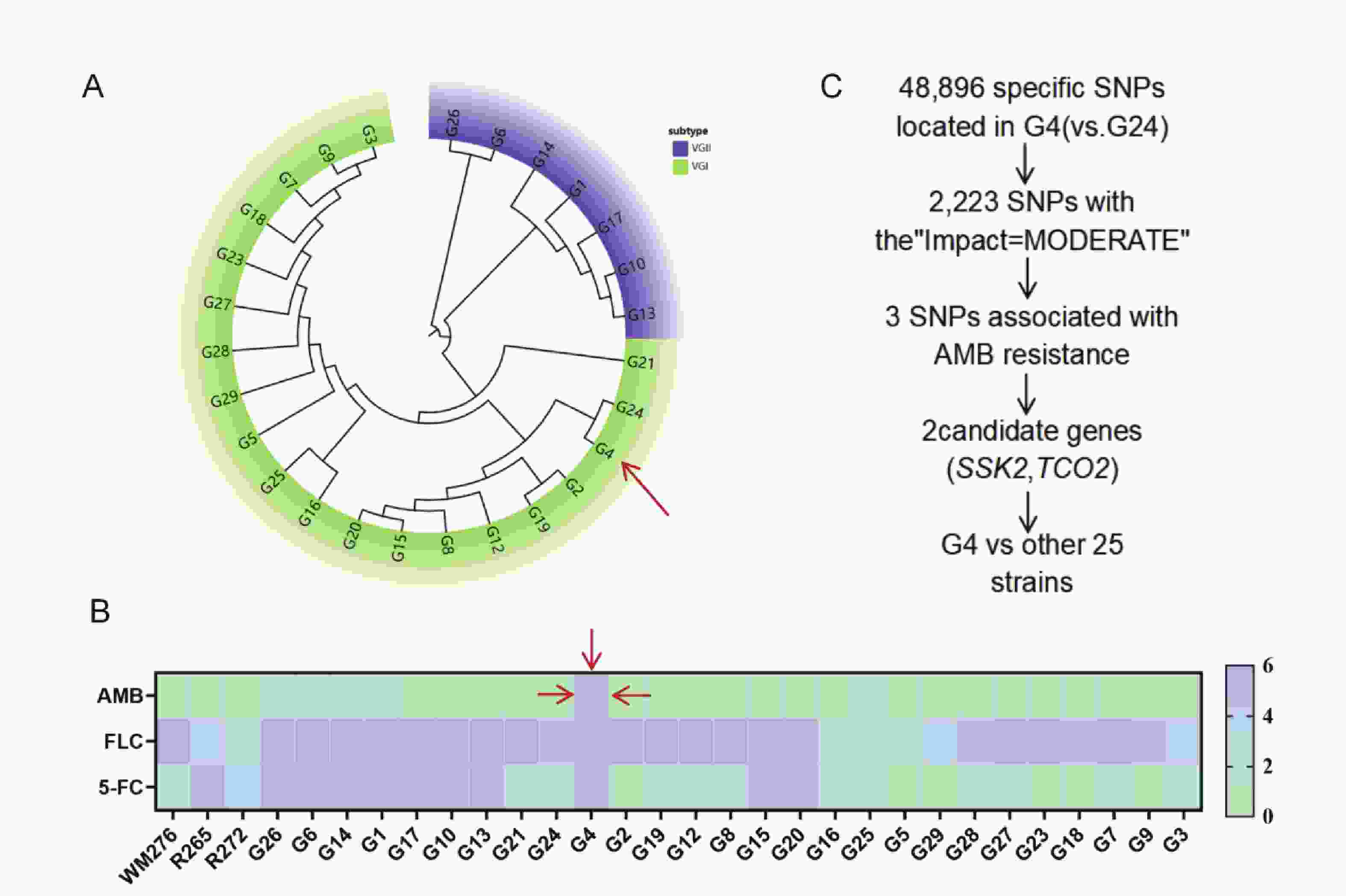
Figure 1. Integrated phenotypic and genomic analyses identify an SSK2 point mutation associated with amphotericin B resistance in Cryptococcus gattii G4. A: Phylogenetic tree analysis of 27 clinical C. gattii isolates. Green indicates VGI genotype; purple indicates VGII genotype. The arrow points to the AmB-resistant G4 strain. B: Analysis of susceptibility to three clinical therapeutic agents—AmB, 5-fluorocytosine, and fluconazole—across various strains. Purple indicates increased resistance, green indicates susceptibility. Scores range from 0 (highly susceptible) to 2 (susceptible), 4 (increased resistance), and 6 (significantly increased resistance). The 0–6 scoring system quantifies resistance based on the number of colonies grown in the drop plate assay. Spot-on-plate results are shown in Supplementary Figure S1. The susceptibility results for drugs across strains correspond to the following fungal suspension concentrations: 5 × 10⁷, 1 × 10⁷, 2 × 10⁶, 4 × 10⁵, 8 × 10⁴, and 1.6 × 10⁴ CFU/mL. In the AmB results, after five successive five-fold serial dilutions, colonies of strain G4 could still grow. In contrast, other strains only survived at the original concentration and exhibited no colony growth at all the diluted concentrations. G4 exhibits significantly greater resistance to AmB than other strains. C: Screening process for genes causing resistance variation in the G4 strain. AmB, amphotericin B; CFU, colony-forming units.
To investigate the genetic basis of AmB tolerance in G4, whole-genome sequencing and comparative analyses were performed between G4 and the closely related AmB-susceptible strain, G24 (Figure 1B). In total, 2,223 unique SNPs were identified in G4. Subsequent comparative variant filtering and candidate prioritization analysis indicated that three SNPs correlated with AmB susceptibility, narrowing the candidate loci to two genes, SSK2 and TCO2. Comparative sequence alignment across the remaining 25 clinical C. gattii isolates revealed that the SSK2T265A variant was uniquely enriched in G4, whereas no lineage-specific enrichment was observed for TCO2 variants (Figure 1C, Supplementary Figure S2, Supplementary Table S2).
-
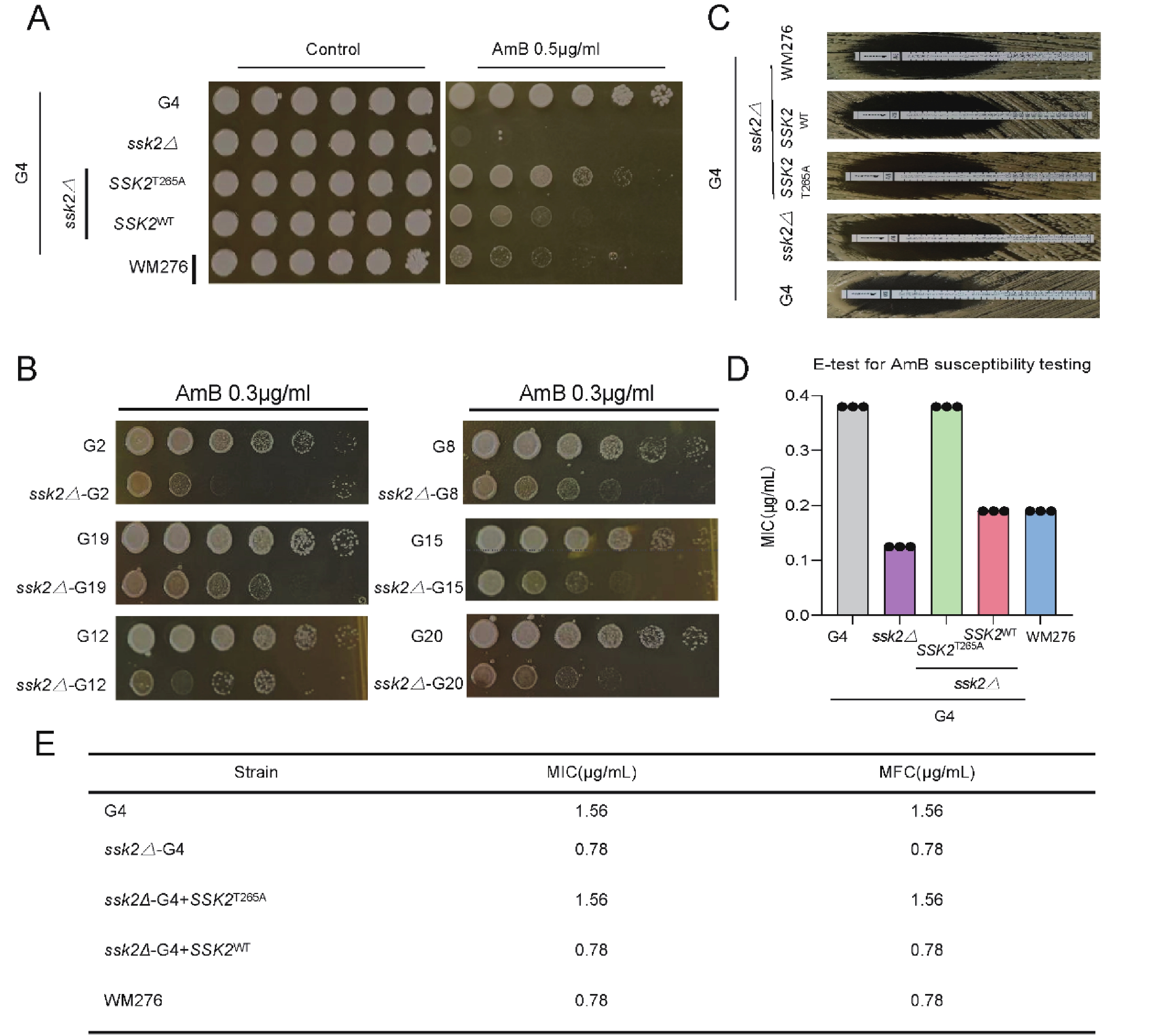
Spot-on-plate assays showed that ssk2Δ-G4 exhibited pronounced growth inhibition on medium containing 0.5 μg/mL AmB compared with parental G4 (Figure 2A). Similarly, SSK2 deletion in six VGIb clinical isolates produced comparable AmB-sensitive phenotypes (Figure 2B). These findings suggest that stress adaptation processes involving Ssk2 are broadly conserved across C. gattii strains.
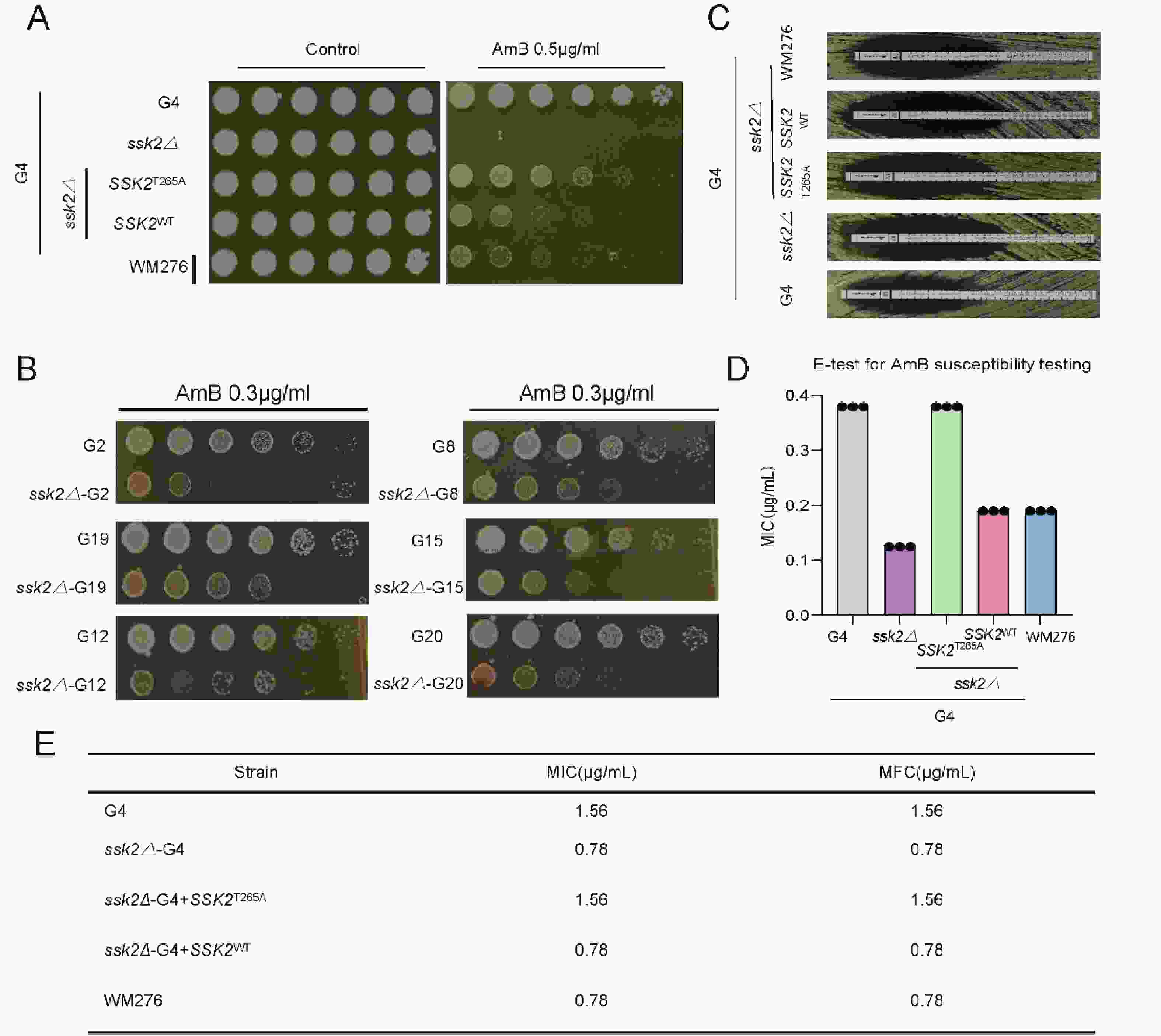
Figure 2. In vitro functional validation of SSK2 CLSI, Clinical and Laboratory Standards Institute; YPD, yeast extract peptone dextrose medium.; MIC, minimal inhibitory concentration. A: Cells cultured overnight were spotted onto YPD medium. SSK2T265A denotes the strain ssk2Δ-G4+SSK2T265A; SSK2WT denotes the strain ssk2Δ-G4+SSK2WT. B: SSK2 knockout in six clinical strains of C. gattii VGI resulted in increased sensitivity to AmB. C: MIC of AmB for each strain was measured using the E-test. D: Quantitative analysis of the results presented in panel C. E: Measurement of the AmB MIC against C. gattii using the CLSI method. Representative results from one of three independent experiments are shown. AmB, amphotericin B; CLSI, Clinical and Laboratory Standards Institute; MIC, minimum inhibitory concentration; WT, wild type; YPD, yeast extract peptone dextrose medium.
Complementation of ssk2Δ-G4 with the mutant allele SSK2T265A largely restored AmB tolerance to parental levels, whereas complementation with the WT allele SSK2WT produced susceptibility similar to the reference sensitive strain WM276. E-test strip assays and the CLSI method corroborated these findings.
Specifically, the E-test strip assay demonstrated that G4 exhibited an MIC of 0.38 μg/mL. The MIC of the ssk2Δ-G4 mutant decreased to 0.125 μg/mL, whereas the SSK2T265A strain restored the MIC comparable to that of the G4 strain. Additionally, the SSK2WT strain displayed an MIC consistent with that of the reference strain WM276 (Figure 2C, D). The results of the CLSI method showed that the MIC for G4 was 1.56 μg/mL, decreased to 0.78 μg/mL in ssk2Δ-G4, and returned to 1.56 μg/mL upon complementation with SSK2T265A (Figure 2E). These findings indicate that the point mutation in SSK2 in strain G4, which causes the SSK2T265A amino acid substitution, is closely associated with the AmB resistance phenotype.
-
The ssk2Δ-G4 mutant exhibited significantly impaired growth compared with the G4 strain, indicating reduced nitrosative stress tolerance (Supplementary Figure S4A). The mutant strain also exhibited heightened sensitivity to high osmolarity and cell wall stress. It displayed markedly suppressed growth in media with elevated NaCl/KCl concentrations and pronounced growth defects on SDS- or Congo red-supplemented plates, suggesting compromised cell wall integrity (Supplementary Figure S4B). Furthermore, SSK2 deletion significantly altered the virulence-associated phenotypes of C. gattii. Compared with the G4 strain, the ssk2Δ-G4 mutant exhibited an enlarged and diffuse capsular structure and increased melanin production, indicating that SSK2 contributes to the regulation of virulence-associated traits (Supplementary Figure S4C). Additionally, melanin production was significantly higher than in the G4 strain (Supplementary Figure S4D). Notably, SSK2 deletion did not impair growth at 37°C (Supplementary Figure S4E). These findings indicate that SSK2 modulates AmB resistance in C. gattii and plays a crucial role in maintaining diverse stress-response capacities and virulence phenotypes.
-
To evaluate the effect of Ssk2 protein function on the efficacy of AmB treatment in C. gattii infection, we established a mouse respiratory tract mucosal infection model to compare the outcomes of different fungal strains under AmB treatment (Figure 3A).
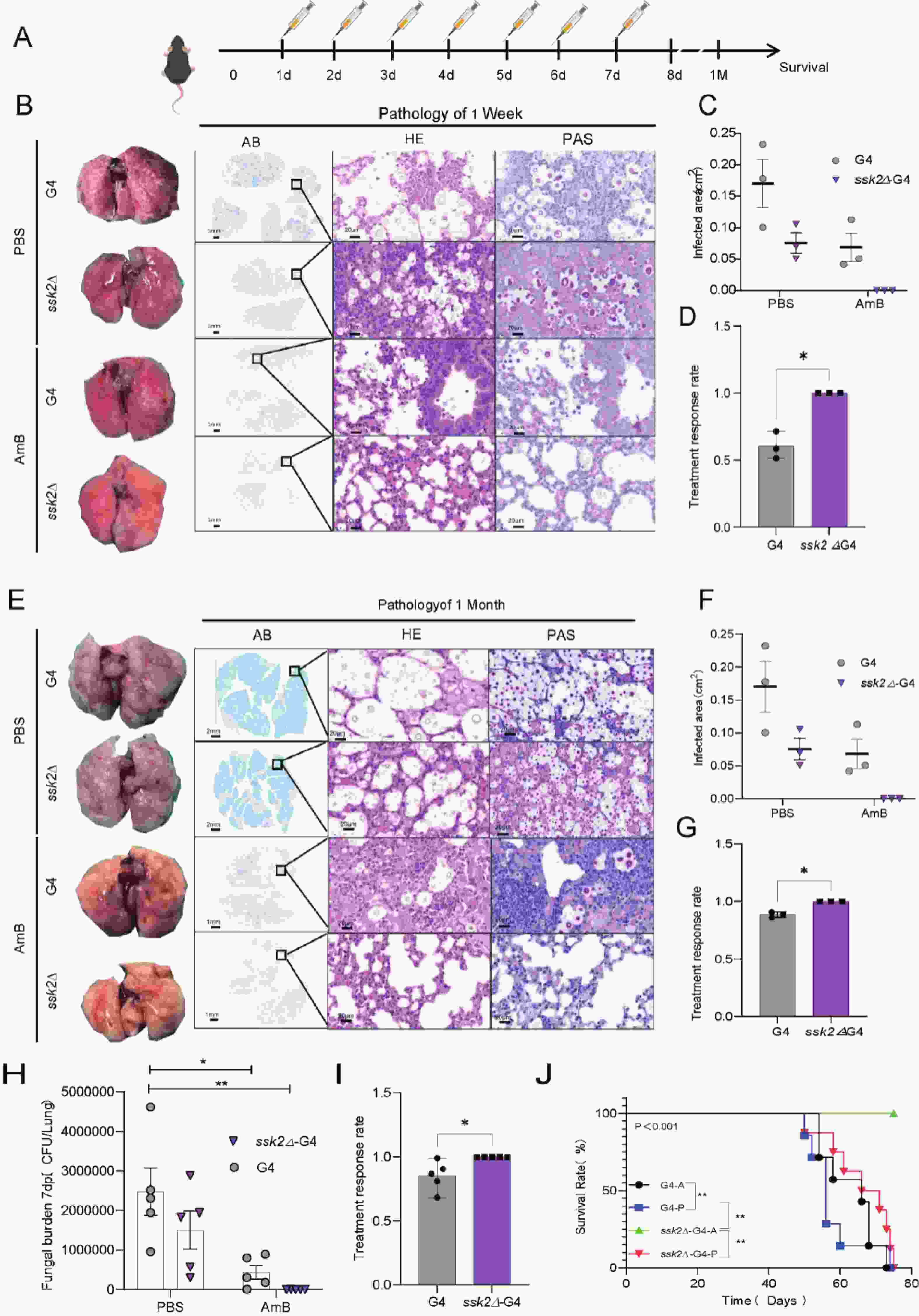
Figure 3. Functional validation of SSK2 in vivo. A: Schematic of the experimental design. B: Histopathological examination of the lungs using H&E, PAS, and AB staining one week post-modeling. Arrows indicate the sites of Cryptococcus gattii infection. C: ImageJ measurement of the infected lung area in mice. D: Compared to G4, ssk2Δ-G4 mice showed significantly greater reduction in lung infection area after drug treatment (P < 0.05). E: Histopathological changes in the lung tissue one month after modeling. F:ImageJ measurement of the infected lung area in mice. G: At 1 month, ssk2Δ-G4 inhalation reduced lung infection area and improved efficacy vs. G4 (P < 0.05). H: Fungal burden of the total lung homogenate after 7-day i.p. AmB (3 mg/kg/day). The ssk2Δ-G4-AmB group showed lower burden (P < 0.05). I: ssk2Δ-G4-infected mice exhibited greater fungal burden reduction and efficacy vs. G4 controls post-treatment (P < 0.05). J: Survival curves were compared using the log-rank (Mantel–Cox) test (P < 0.001). The histopathological experiments were conducted using 3 mice per group. Fungal burden experiments were conducted with 5 mice per group. Survival experiments were conducted with 9 mice per group. Two-tailed paired Student's t-test was used for panels D, F, G, and I. AB, Alcian blue; AmB, amphotericin B; H&E, hematoxylin and eosin; i.p., intraperitoneal; PAS, periodic acid–Schiff; PBS, phosphate-buffered saline.
During the early phase of infection (day 7), the lung tissue of PBS-treated control mice exhibited generalized enlargement, with scattered dark red necrotic foci visible on the surface and localized punctate areas of hyalinization. In contrast, the lung tissue from AmB-treated mice appeared pink and soft, with no significant enlargement or necrotic lesions (Figure 3B). Histopathological damage was reduced (Figure 3C), with markedly decreased inflammatory cell infiltration and necrotic foci (P < 0.05) (Figure 3D).
By the late stage of infection (day 30), the lung tissue volume in control mice increased significantly, with the surface extensively covered by mucous edema, appearing grayish-white and markedly hardened. Although the lung tissue volume of the treated mice did not change significantly, a certain degree of necrosis and consolidation was still observed in the lung lobes of mice infected with the G4 strain and treated with AmB. Notably, mice infected with the SSK2-deficient strain and treated with AmB maintained the soft lung tissue texture without observable pathological changes, including necrosis, hemorrhage, or consolidation (Figure 3E). Histopathological damage was reduced (Figure 3F), with markedly decreased inflammatory cell infiltration and necrotic foci (P < 0.05) (Figure 3G).
The results showed that after AmB treatment, the difference in fungal burden between mice infected with G4 and those infected with the ssk2Δ-G4 mutant strain was statistically significant in both groups. However, the reduction in pulmonary fungal burden was more pronounced in mice infected with the ssk2Δ-G4 mutant strain (P < 0.05) (Figure 3H, 3I). Survival rates were significantly improved in the treated mice (P < 0.001) (Figure 3J).
-
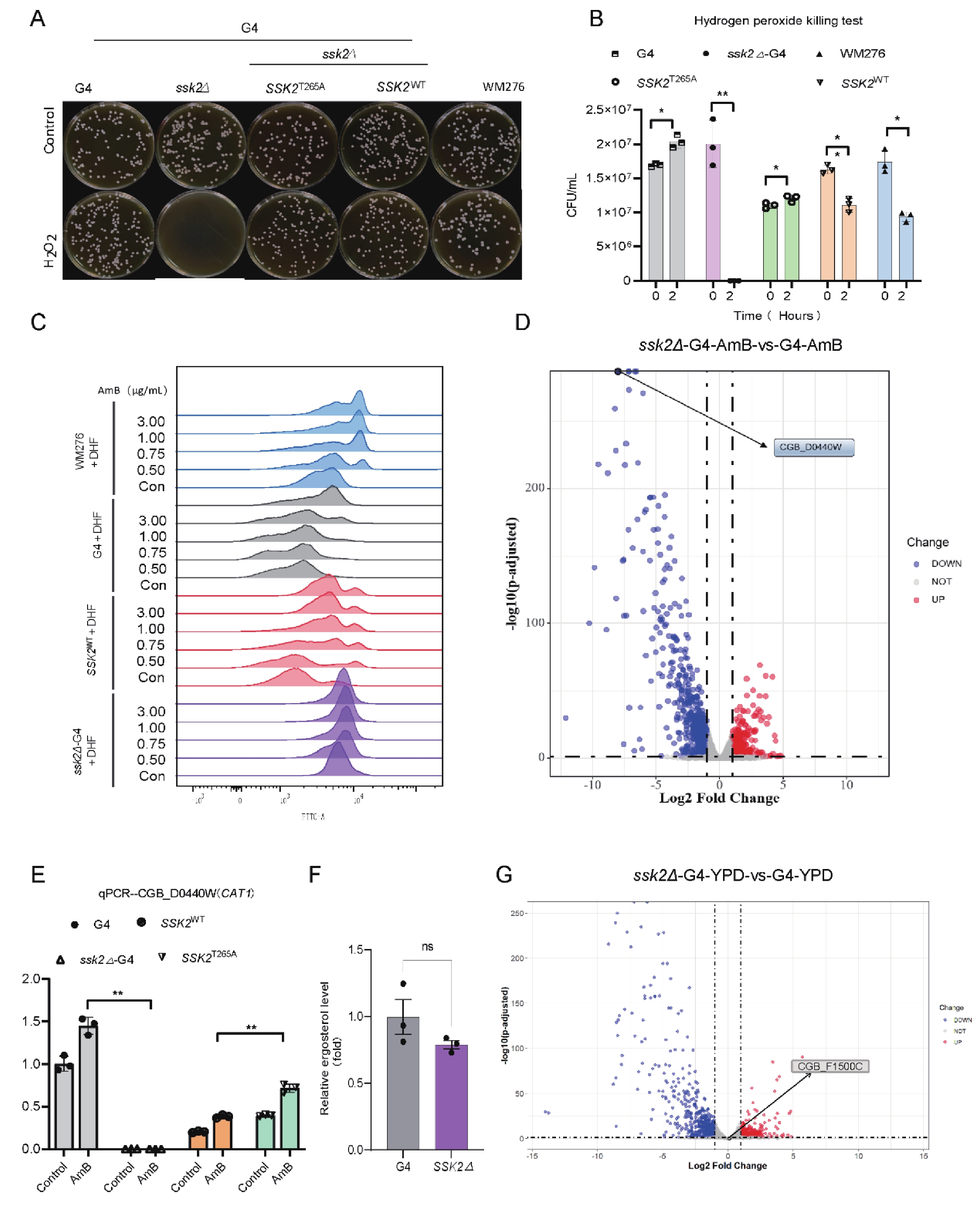
Under hydrogen peroxide (H2O2)-induced oxidative stress, the ssk2Δ-G4 mutant strain exhibited a markedly reduced survival rate and a near-complete loss of viability (Figure 4A). In contrast, the complemented strain ssk2Δ-G4+SSK2T265A retained the ability to form colonies under identical conditions, indicating a restored growth capacity. Both the ssk2Δ-G4+SSK2WT strain and the WM276 reference strain exhibited substantial growth inhibition, with a significantly reduced colony-forming capacity (Figure 4B). These results indicated that the SSK2T265A mutation enhanced fungal tolerance to peroxide-induced oxidative stress.
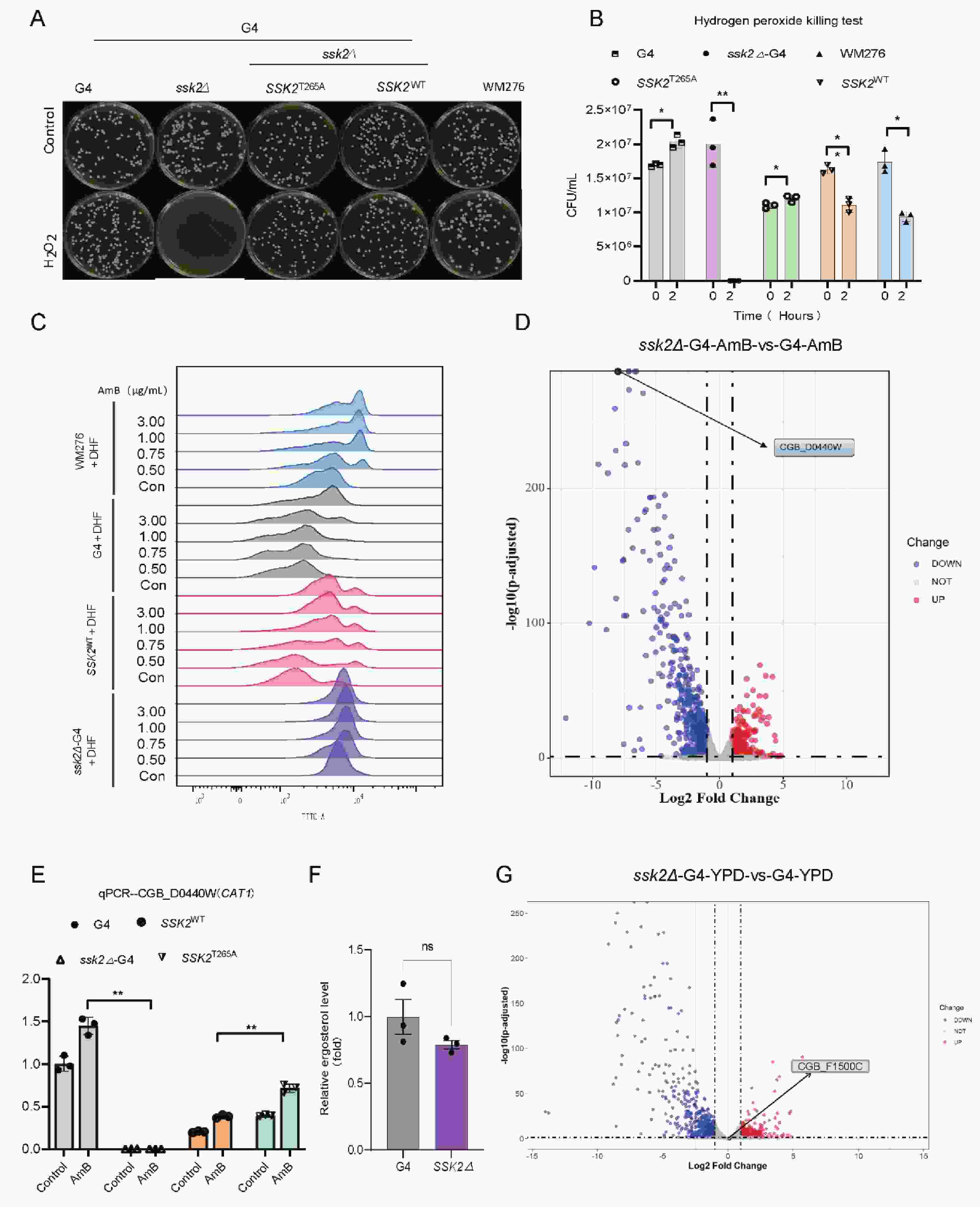
Figure 4. The role of SSK2 in regulating the AmB sensitivity mechanism in Cryptococcus gattii. A: Fungal colony growth results showing surviving colonies of each strain after 2 h of 0.015% H2O2 stress. B: After 2 h of 0.015% H2O2 stress, ssk2Δ-G4 exhibited complete loss of activity. C: DCFH-DA fluorescence assay analysis of ROS production levels in each strain under AmB-induced conditions. D: Under AmB stress, ssk2Δ-G4 markedly downregulated CAT1 (log2FC = −8.02 vs. G4, arrows). E: qPCR validation of CAT1 (CGB_D0440W) showed that CAT1 was reduced in ssk2Δ-G4, while ssk2Δ-G4+SSK2T265A exhibited higher CAT1 levels than ssk2Δ-G4+SSK2WT. The transcripts were normalized to actin and calibrated to G4 in YPD (set to 1.0). Data are mean ± SD (n = 3 biological replicates). F: Under the current experimental conditions, after knocking out SSK2, the ergosterol content of the strain did not change significantly (P > 0.05). G: Under YPD culture conditions, after deletion of SSK2 in the G4 strain, the expression level of the ergosterol biosynthesis-related gene ERG5 (CGB_F1500C) showed no significant change (P > 0.05). Two-tailed paired Student's t-test was used for panels B, E, and F. AmB, amphotericin B; DCFH-DA, 2′,7′-dichlorodihydrofluorescein diacetate; log2FC, log2 fold change; qPCR, quantitative polymerase chain reaction; ROS, reactive oxygen species; SD, standard deviation; YPD, yeast extract peptone dextrose medium.
Further flow cytometric analysis revealed that the G4 strain maintained relatively low basal levels of intracellular ROS following stimulation with AmB and other agents, with a significant increase in ROS accumulation observed only at a high drug concentration (3 μg/mL). In contrast, the ssk2Δ-G4 mutant exhibited markedly increased sensitivity to oxidative stress, demonstrating substantial ROS accumulation even at a sub-inhibitory concentration of 0.5 μg/mL (Figure 4C).
RNA-seq and qPCR analysis revealed that SSK2 deletion downregulated the expression of genes encoding antioxidant enzymes. Compared to the G4 strain, the ssk2Δ-G4 mutant exhibited significant downregulation of 2,070 genes, including the key antioxidant gene CAT1 (CGB_D0440W), which showed markedly reduced expression (log2FC = −8.018, Padj < 0.001; Figure 4D). qPCR confirmed that CAT1 transcription was significantly reduced following SSK2 deletion (Figure 4E). It is worth noting that the quantitative analysis of ergosterol content in the strains showed that there was no significant difference in ergosterol content between the ssk2Δ-G4 mutant and G4 (P > 0.05) (Figure 4F). The transcriptomic data also indicated that after the deletion of SSK2, ERG5 expression (CGB_F1500C), which is involved in ergosterol synthesis, did not show significant changes (Figure 4G). Our findings support a role for SSK2 in the regulation of oxidative stress homeostasis and AmB susceptibility in C. gattii. The higher CAT1 expression observed in the ssk2Δ-G4+SSK2T265A strain compared with the ssk2Δ-G4+SSK2WT strain further suggests that the SSK2T265A allele contributes to enhanced oxidative stress regulation. However, additional allele-specific sterol profiling and downstream functional validation are required to determine whether the SSK2T265A mutation directly regulates CAT1 expression and to fully exclude sterol-associated contributions.
-
To elucidate the molecular network mechanism by which SSK2 regulates AmB drug sensitivity in C. gattii, we performed RNA-seq analysis of the transcriptomes of G4 and the ssk2Δ-G4 mutants under AmB stress. Principal component analysis (PCA) revealed that the two sample groups were clearly distinguishable along the primary component PC1 (contributing 49.1% of the variance) (Supplementary Figure S5A). Differentially expressed genes were screened using the thresholds |log2FC| > 2 and Padj < 0.05. Through Venn diagram intersection analysis, three key gene sets were defined: Set 1, containing 451 genes upregulated explicitly in the G4 strain under AmB stress; Set 2, containing 872 genes not upregulated in the ssk2Δ-G4 strain under AmB stress (compared to G4); and Set 3, containing 2,070 genes significantly downregulated in the ssk2Δ-G4 strain relative to G4 under AmB stress. Re-intersecting these three gene sets yielded 49 core differentially expressed genes (Supplementary Figure S5B). Gene Ontology functional enrichment analysis of these 49 genes revealed that SSK2 deletion primarily disrupted processes related to DNA replication and metabolism, significantly impairing molecular functions such as drug and ATP binding (Supplementary Figure S5C, D). The raw sequencing data from this study are publicly available at the National Microbial Science Data Center (
https://nmdc.cn/ ). -
In the results of measuring the MICs of the strains, the absolute MIC differences between the E-test and CLSI methods may be attributable to methodological variations; nevertheless, both methods consistently show that G4 exhibits increased resistance relative to the ssk2Δ-G4 mutant, and the trends are in agreement. Generally, the CLSI method for determining MIC in the laboratory is the method of choice for monitoring resistance to antifungal drugs. The E-test and CLSI broth microdilution are not directly interchangeable; therefore, we based our primary interpretation on the CLSI reference method. However, owing to the lack of interpretive breakpoints, antifungal resistance in Cryptococcus spp. is difficult to define in the laboratory. Using the epidemiological cutoff values (ECVs) established through global multicenter studies as a benchmark, this study investigated the antifungal susceptibility patterns of Cryptococcus isolates and their association with epidemiological characteristics[14,15]. This study found that strains carrying the SSK2T265A mutation had MIC values measured using the CLSI method that were higher than the ECV threshold, suggesting that this mutation may have led to the strain acquiring low-level resistance. Although this absolute MIC shift may seem small, Bicanic et al. confirmed that Cryptococcus spp. undergo a small but significant drift in AmB MIC during clinical recurrence, which is associated with treatment failure[16]. Therefore, the slow increase in MIC driven by the point mutation revealed in this study represents the functional activation of an early resistance mechanism and has important evolutionary biological significance.
-
In the PBS control group, mice infected with the ssk2Δ-G4 mutant strain exhibited higher lung fungal burden and more severe pulmonary infection than those infected with the G4 strain. SSK2 gene is a key component of the MAPK signaling pathway and serves as the core interface between the two-component system and PBS2-HOG1 pathway. It simultaneously regulates fungal drug susceptibility and the synthesis of virulence factors such as capsules and melanin. Specifically, SSK2 negatively regulates capsular biosynthesis and melanin production. Consequently, infection with the ssk2Δ-G4 mutant strain exacerbates pulmonary tissue damage in mice. However, SSK2 deficiency significantly enhanced susceptibility to AmB in C. gattii. Following AmB treatment, while lung lesions in mice infected with the G4 strain were largely cleared, those infected with the ssk2Δ-G4 mutant exhibited near-complete eradication of C. gattii in lung tissue. Pathological sections showed no significant lesion formation, indicating markedly improved survival outcomes. In summary, although AmB exhibited fungicidal activity against the G4 strain, SSK2 deletion further enhanced its in vivo efficacy.
-
Under the action of AmB, the ergosterol content in the ssk2Δ-G4 mutant strain showed no significant change. Ssk2 is a key upstream kinase of the HOG pathway and belongs to the MAPKKK family. Cryptococcus spp. receive upstream signals and activate downstream Pbs2 (MAPKK) and Hog1 (MAPK) through a phosphorylation cascade, thereby initiating cellular stress responses[5]. The HOG pathway is a fungus-specific signaling network that is extensively involved in the regulation of cellular differentiation and virulence factor expression in Cryptococcus spp. Previous studies have identified SSK2 as one of the two significant quantitative trait loci mediating AmB resistance, and its encoded protein is a core component of the HOG pathway, which plays a central role in coordinating cellular responses to environmental stresses such as osmotic pressure[17]. The HOG pathway negatively regulates ergosterol biosynthesis. When this pathway (or its key components, such as Ssk2) is inhibited or absent, negative regulation is lifted, upregulating ergosterol synthesis-related genes (e.g., ERG11) and increasing ergosterol content in the cell membrane. The absence of ergosterol content changes observed in the ssk2Δ-G4 mutant strain in this study may be attributed to the experimental conditions, which were limited to a single culture medium and thus failed to fully reveal a condition-dependent effect.
The fungicidal mechanism of AmB extends beyond its direct binding to ergosterol in fungal cell membranes to form transmembrane pores, and the oxidative stress it induces also constitutes a key mode of action[18-20]. For example, in Aspergillus spp., elevated endogenous ROS levels increase the susceptibility of AmB-resistant strains to antifungal drugs[21]. In Cryptococcus spp., AmB induces a robust oxidative burst in the host to kill the fungus and can stimulate host immune responses, exerting synergistic antimicrobial effects.
DCFH-DA fluorescence assays revealed that the point-mutant G4 strain exhibited superior resistance to AmB-induced oxidative stress compared to the ssk2Δ-G4+SSK2WT strain, maintaining intracellular ROS homeostasis. By integrating transcriptomic data, we found that the catalase gene CAT1 plays a crucial role in this downstream pathway. Although previous studies indicated that simultaneous deletion of all four catalase genes does not affect C. neoformans pathogenicity, related research on C. gattii yielded contrasting conclusions: its cat2Δ mutant exhibited growth defects under AmB stress, and mice infected with this mutant showed significant differences from controls in survival rate (P < 0.001), pulmonary fungal burden (P < 0.01), and alveolar structural damage[22].
-
In addition to carrying a mutation in SSK2, the G4 strain also exhibited site-specific variations in TCO2. In C. neoformans, Tco2 serves as a key sensor kinase in the two-component regulatory system. This system modulates cellular stress responses, drug sensitivity, sexual reproduction, and virulence via the Pbs2-Hog1 MAPK signaling pathway. A unique fungal two-component system regulates stress responses, drug sensitivity, sexual development, and virulence in C. neoformans[23]. While we attempted to generate a TCO2 deletion mutant, we were unable to recover viable knockout clones, despite multiple independent transformation events (Supplementary Figure S3). Although this observation is consistent with the essential role of TCO2, alternative explanations, including inefficient homologous recombination or positional effects, cannot be excluded. Formal demonstration of essentiality requires conditional knockdown or inducible expression approaches in future studies. Given that SSK2 exhibited a clear single-point mutation, it was selected for in-depth functional analysis.
After complementing the SSK2 allele carrying the SSK2T265A point mutation into the knockout strain, the AmB resistance phenotype of ssk2Δ-G4+SSK2T265A was significantly restored. However, this did not reach the G4 level. This discrepancy likely stems from the different promoters used for complementation, leading to a deviation of gene expression levels from the endogenous state.
In summary, antifungal resistance typically arises from the interaction of multiple coexisting mutations, rather than a single genetic variation. This study confirmed that the SSK2T265A point mutation is closely associated with the resistance phenotype and functionally contributes to it. The MAPK pathway is crucial for fungal pathogenicity, and its regulation of multiple virulence attributes makes it a potential therapeutic target[24]. Given the high cost and significant toxic side effects of AmB, the development of sensitizers targeting SSK2T265A to synergize with AmB against C. gattii infection is promising. This approach may reduce drug dosage and toxicity, while maintaining or enhancing therapeutic efficacy.
-
A major limitation of this study is that the generalizability of our results remains constrained by the small sample size (n = 27) and the restriction of the resistance phenotype to a single clonal background (G4), precluding formal association testing. SSK2T265A thus represents a candidate resistance-associated polymorphism that requires further validation in larger cohorts. Two additional limitations should be noted: first, the PH3 promoter-driven complementation strategy does not fully recapitulate native-locus regulation; second, the in vivo experiments compared a parental strain with an SSK2 deletion mutant rather than isogenic strains differing only at Thr265Ala, so the specific contribution of SSK2T265A to in vivo treatment response awaits further determination.
-
This study suggests that SSK2T265A is a key determinant of AmB resistance in C. gattii, potentially driving the resistance phenotype through enhanced tolerance to oxidative stress. Furthermore, as no homologous gene for SSK2 exists in the human genome, SSK2 may serve as a future research direction in Cryptococcus spp. infection. Approaches, such as high-throughput screening of compound libraries or modification of natural small molecules, could be explored to develop specific SSK2 inhibitors, positioning them as promising candidates for future antifungal drug development.
HTML
Sources of Clinical Strain Samples
Bioinformatics Analysis
Strain Typing and Phylogenetic Analysis.
Variant Calling, Filtering, and Annotation.
Molecular Genetics Experiments
Primer Design.
CRISPR-Cas9-Mediated Gene Knockout.
Gene Complementation
Phenotypic Analysis In Vitro
Antifungal Susceptibility Testing
Assessment of Capsule Formation Capacity
Assessment of Melanin Production Capacity
Hydrogen Peroxide Killing Assay
Phenotypic Analysis In Vivo
Animal Infection Model and Therapeutic Efficacy Evaluation
Quantification of Fungal Burden in Lung Tissue
Histopathological Analysis
Survival Analysis
LC-MS/MS-Based Ergosterol Quantification.
Analysis of AmB-Induced ROS Levels
RNA Extraction and Transcriptome Sequencing Analysis
Statistical Analysis
The G4 Strain Harbors the Key Point Mutation SSK2T265A
SSK2T265A Mutation Affects the Susceptibility of G4 Strain to AmB
Deletion of SSK2 Affects Stress Tolerance and Virulence in C. gattii
SSK2 Deletion Enhances the In Vivo Efficacy of AmB Treatment
SSK2T265A Enhances AmB Resistance through Reinforced ROS Homeostasis
Effects of SSK2 Knockout on Transcriptional Expression of Downstream Genes
SSK2T265A is a Biologically Significant Marker of Drug Resistance Potential
AmB Exhibits Therapeutic Efficacy Against G4 but Demonstrates Even more Pronounced Therapeutic Effects Against ssk2Δ-G4
SSK2T265A Functionally Contributes to the AmB Resistance Phenotype in C. gattii by Affecting CAT1 Expression
SSK2T265A May Serve as a Key Target for the Development of Antimicrobial Drugs for the Adjunctive Treatment of C. gattii Infections
Limitations of the Study
Competing Interests The authors declare no conflict of interest.
Ethics The use of clinical isolates was approved by the Ethics Committee of Beijing Shijitan Hospital (approval no. sjtky11-1x2022(049)). All animal experiments were approved by the Animal Ethics Committee of Beijing Shijitan Hospital (approval no. sjtky11-1x2022(050)). Eight-week-old female C57BL/6N mice were housed in specific pathogen-free (SPF)-grade barrier facilities at the Experimental Animal Center of China Agricultural University. Environmental conditions were maintained at (22 ± 2)°C, (50 ± 10)% relative humidity, with a 12 h/12 h light/dark cycle. Mice had ad libitum access to autoclaved food and water. Animal health was monitored daily, and mice showing signs of distress (e.g., > 20% weight loss, lethargy, or inability to access food or water) were humanely euthanized.
Authors’ Contributions Conceived of the project and supervised the research: Xinying Xue and Liye Zhang; Reviewed the manuscript: Chen Wang, Xuelei Zang, and Hengyu Deng; Performed experiments: Hengyu Deng, Xuefeng Zang, Enqi Zhao, Yemei Huang, and Yangyu Zhou; Analyzed and interpreted data: Jing Liu, Wencong He, Chen Yang, Xiaozhuo Dong, Ziqi Zhao, Yuhan Zhou, and Hui Chen; Drafted the manuscript: Hengyu Deng; Edited the manuscript: Hengyu Deng, Xuefeng Zang, and Enqi Zhao; All authors agree to submit the manuscript.
Data Sharing The raw data of C. gattii isolates produced by Illumina sequencing and Oxford Nanopore were deposited in the Sequence Read Archive under the BioProject accession numbers PRJNA721774 and PRJNA721775, respectively, and in the National Microbial Science Data Center, Biological Project number NMDC10019548. The supplementary materials will be available in www.besjournal.com.
&These authors contributed equally to this work.

 Quick Links

 DownLoad: