



-
Foodborne pathogens continue to pose a significant threat to global food safety and public health, as the consumption of contaminated food can lead to a diverse array of diseases and impose considerable health and socioeconomic burdens[1]. This ongoing threat necessitates robust, continuous monitoring to remove contaminated products from the supply chain. However, conventional food safety surveillance faces two fundamental and interconnected challenges: the lack of discrimination between viable pathogens and non-viable cells[2], and the paucity of practical, multiplexed systems capable of detecting the diverse range of pathogens that threaten the food supply without prior knowledge of the contaminant[3,4]. Culture-based techniques, the historical gold standard, are notoriously slow, requiring lengthy enrichment periods that are incompatible with the rapid distribution of perishable goods like milk[5]. More critically, they fail to detect bacteria in the viable but non-culturable (VBNC) state, a dormant condition induced by food processing stresses, in which the cells remain metabolically active and potentially pathogenic but resist cultivation[6].
While molecular techniques like PCR have revolutionized detection speed, they have introduced a different problem: the inability to differentiate between DNA from live cells and residual genetic material from dead cells, leading to false-positive signals that can trigger economically devastating recalls in the absence of a genuine public health risk. The distinction between these food-born pathogen states—culturable, VBNC, and dead—is therefore paramount for accurate risk assessment[7]. This technological gap has promoted the development of a new generation of detection platforms specifically designed for viability assessment, which can be broadly classified by their underlying mechanistic principles[8]. One prominent approach focuses on nucleic-acid differentiation, employing agents like propidium monoazide (PMA) in conjunction with quantitative PCR (qPCR) or digital droplet PCR (ddPCR) to selectively intercalate with DNA from membrane-compromised dead cells, thereby inhibiting its amplification and enabling the specific quantification of viable pathogens.
Infectivity-based detection provides a fundamentally different strategy; this approach leverages the natural specificity of bacteriophages—viruses that infect and lyse only metabolically active bacterial cells—to provide a direct functional readout of viability[9]. Beyond approaches based on nucleic acids and infectivity, another innovative pathway involves metabolic and volatile profiling. Platforms such as machine learning (ML)-enabled paper chromogenic arrays (PCAs) detect unique volatile organic compounds emitted specifically by viable pathogens, offering a non-destructive, recognition-element-free route to multiplex detection that bypasses the need for predefined molecular targets[10].
The convergence of these biological assays with enabling technologies is defining the future of food-safety diagnostics. Microfluidics facilitates the miniaturization and automation of complex assays, integrating processes like PCR, ELISA, and isothermal amplification into portable "lab-on-a-chip" devices for rapid, on-site analysis[11]. Simultaneously, artificial intelligence (AI) and deep learning are revolutionizing data interpretation, from analyzing colorimetric patterns to automating the microscopic identification of pathogens, thereby enhancing speed, objectivity, and accuracy[12].
This review presents a comprehensive, critical analysis of the emerging technologies for assessing foodborne pathogen viability. We examine their underlying principles, systematically categorize them based on methodology, and assess their respective advantages and limitations within complex food matrices. The transformative potential of integrating biosensors with microfluidics and AI is investigated. Future directions, focusing on the development of intelligent, multiplexed systems designed to provide rapid, precise, and actionable data essential for the proactive protection of the global food supply, are discussed[13].
-
This review employed a structured literature search method, focusing on recent advances in foodborne-pathogen viability-assessment technologies. Relevant articles were retrieved from Scopus, Web of Science, PubMed, ScienceDirect, Wanfang Data, and the China National Knowledge Infrastructure (CNKI). The literature search covered studies published from 2010 to 2026, with particular emphasis on publications from 2020 onward. Search terms included foodborne microbiology, bacterial viability, VBNC, live/dead discrimination, PMA/EMA (referring propidium monoazide and ethidium monoazide), viability PCR, rapid microbial detection, biosensors, CRISPR-Cas, microfluidics, emerging technologies, and AI. Additional studies were identified by manually screening the references of the included articles. Studies were included if they focused on viability assessment, live/dead discrimination, VBNC-state detection, or the rapid monitoring of foodborne pathogens, and reported methods relevant to food safety or food microbiology. Studies were excluded if they were unrelated to foodborne pathogens, lacked sufficient methodological details, were conference abstracts, editorials, or non-peer-reviewed documents, or provided duplicated information with limited relevance to recent technological advances. A critical analysis of selected studies was conducted to evaluate recent advances in emerging detection technologies and AI-assisted methodologies for assessing foodborne microbe viability.
-
The accurate detection of pathogens in samples of foods such as milk, dairy products, raw meat, poultry, seafood, fresh produce, and ready-to-eat foods is complicated by the fact that not all viable cells are capable of proliferating on standard culture media. This arises from the fact that the distinct types of physiological viability—reproductive viability, the ability to form a colony, and metabolic viability, the presence of metabolic activity—do not always coincide[14]. This distinction is critical, as conventional culture methods exclusively detect reproductively viable cells, thereby missing sublethally injured and VBNC cells that remain metabolically active and pose a potential health risk[15]. The primary challenge, therefore, lies in differentiating these states. The VBNC state, a survival strategy induced by stressors such as refrigeration or processing, is exhibited by cells that are metabolically active but non-culturable[16]. Dead cells, in contrast, have lost both culturability and metabolic activity, and cell death is typically indicated by a compromised membrane. This fundamental difference necessitates the use of molecular viability-testing methods that can discriminate between living cells (culturable or not) and dead cells; such methods, including PMA-qPCR, facilitate more accurate safety assessment than culture-based counts[17]. A side-by-side comparison of these key viability states, including their defining characteristics and biomarker profiles, is presented in Table 1. The relationships among these viability states are visually summarized in Figure 1.
Viability state Key features Inducing factors Detection challenges Representative detection methods Reproductively viable cells Actively proliferating;
colony-forming• Optimal nutrients
• Favourable growth conditions• Easily detected, but overestimates dominance when mixed with other states • Culture-based methods
• qPCR (DNA-based)Intact cells Preserved membrane integrity but little/no metabolism • Dormancy
• Reversible non-viability• Not culturable
• May persist in biofilms or milk without growth• Microscopy, viability
• Stains (SYTO 9/PI)
• FTIR/RamanVital cells Metabolically active but sometimes slow-growing; extended lag phase • Mild stress (nutrient shift, osmotic stress, sublethal treatment) • Missed by culture
• May contribute to spoilage despite low culturability• Flow cytometry
• Metabolic stains
• Molecular assaysDead cells Loss of membrane integrity and metabolism • Heat
• Disinfectants
• Strong chemical stress• DNA from dead cells may give false positives in PCR,complicating viability assessments • Propidium iodide staining
• PMA/EMA-qPCRVBNC cells Metabolically active but non-dividing; possible resuscitation • Pasteurisation
• Nutrient limitation
• Oxidative/osmotic stress• Undetected by culture; • may resuscitate underestimation of risk • PMA-qPCR,RT-qPCR
• Flow cytometry
• Predictive AI modelsDormant cells Metabolism shutdown; long-term persistence • Starvation
• Osmotic stress
• Nutrient deprivation• Invisible to culture and many assays, long-term survival in milk/biofilms • Advanced microscopy
• Resuscitation assays
• Omics-based toolsTable 1. Key bacterial viability states relevant to foodborne pathogen detection
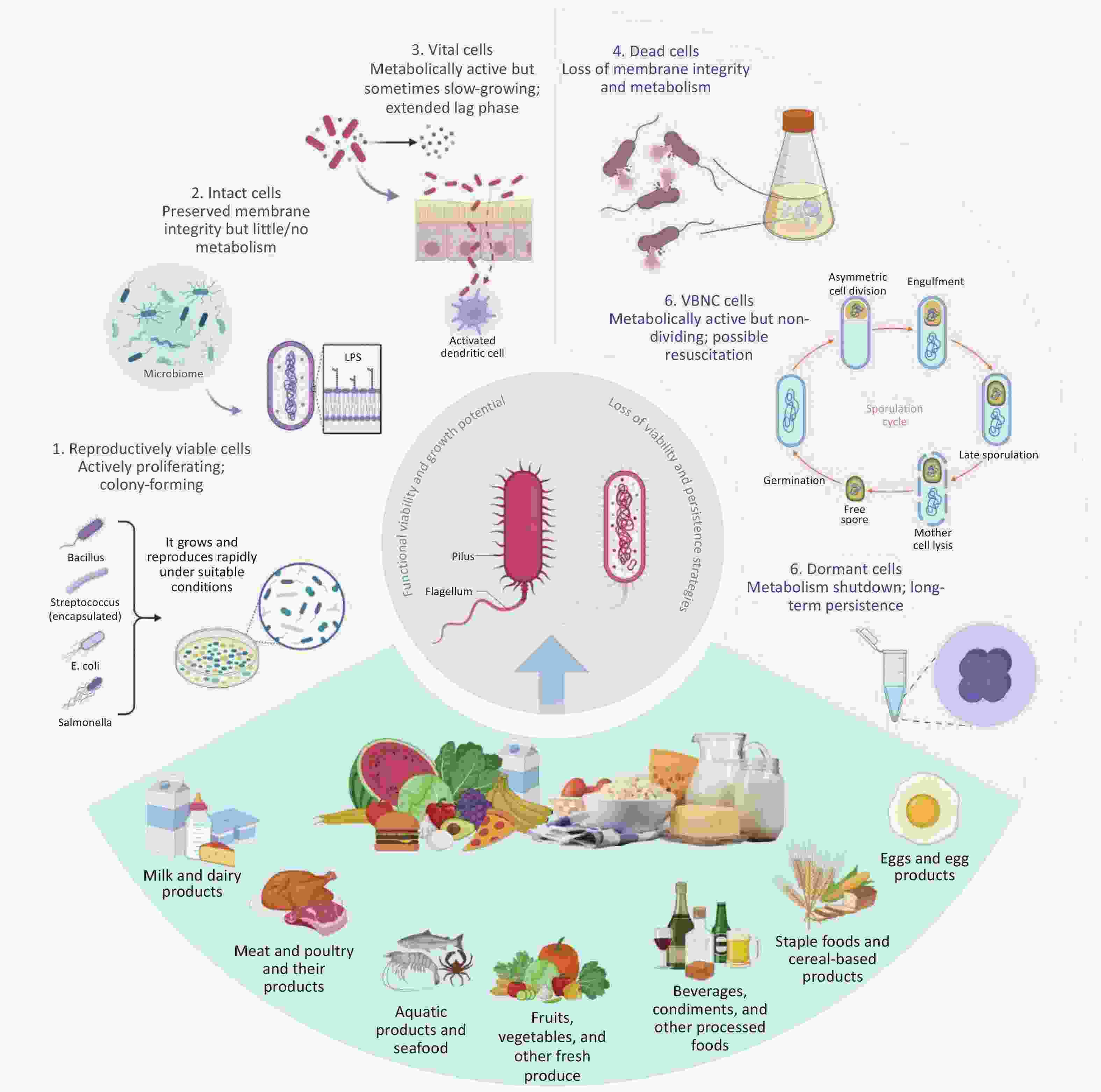
Figure 1. Key bacterial viability states relevant to foodborne microbiology. Illustration of major bacterial viability states, ranging from reproductively viable, intact, and vital cells to dormant, VBNC, and dead cells. The diagram provides a framework for understanding detection targets in food safety applications. Abbreviation: VBNC, viable but non-culturable.
-
The limitations inherent in traditional culture-based methodologies are most prominently highlighted by the VBNC state. This dormant survival strategy, triggered by food-related stresses such as refrigeration, disinfectants, or nutrient deprivation, causes bacterial pathogens like Vibrio vulnificus, Escherichia coli O157: H7, and Listeria monocytogenes ceasing to proliferate on culture media[18]; however, they remain metabolically active, with the potential to resuscitate into culturable, infectious cells[19]. This potential for resuscitation poses a significant challenge to food safety, as it creates a reservoir of "hidden" pathogens that can elude detection during routine monitoring yet cause illness upon consumption. The mechanisms underlying resuscitation are varied and involve environmental cues such as increases in temperature and nutrient availability, the action of chemical agents like surfactants, and notably, passage through a host’s gastrointestinal tract, which can trigger the revival of pathogens such as Campylobacter jejuni and Vibrio cholerae[20]. This capacity to regain cultural viability and virulence upon entering a favorable niche underscores the fact that non-culturability is not synonymous with non-viability.
The physiological characteristics of the VBNC state have important implications for the design of advanced detection technologies. Given that these cells cannot be cultured, it is imperative that methods do not rely on growth as an indicator of viability. Instead, owing to
The metabolic activity of VBNC cells, assays should focus on detecting fundamental indicators of life, such as membrane integrity, the presence of ATP, RNA transcription, and the activity of key enzymes[21]. The identification of conserved biological mechanisms, such as resuscitation-promoting factor (Rpf) proteins in species like Micrococcus luteus and Mycobacterium spp., highlights the fact that resuscitation is an active, regulated process[22]. Consequently, a comprehensive viability assessment must distinguish between dead cells, dormant-but-resuscitable cells, and actively metabolizing cells. This complex diagnostic requirement is the primary impetus for the development of the sophisticated platforms discussed here; such platforms have been developed to address the critical detection gap left by traditional methods and to mitigate the public health risks posed by the presence of resuscitating VBNC pathogens in food[23].
-
The limitations of traditional culture methods have catalyzed the development of sophisticated technological platforms for viability assessment. These approaches move beyond mere detection to provide functional insights into pathogen viability through various mechanistic pathways. This section critically examines these advanced platforms, categorized by their fundamental operating principles and technological maturity. Their key limitations and advantages are summarized in Table 2.
Platform category Specific technology Target viability marker Key advantages Current limitations & challenges Nucleic acid-based platforms Viability Dye-PCR (vPCR; e.g., PMA-qPCR) Membrane integrity • Quantitative
• High throughput
• Compatible with standard lab workflows• Cannot detect VBNC cells with intact membranes
• Matrix interference affects dye penetration
• Requires extensive optimizationCRISPR-Cas detection (e.g., Cas13a) Metabolic activity
(via labile mRNA)• High specificity & programmability
• Excellent sensitivity with signal amplification
• Potential for portable, rapid formats• Primarily proof-of-concept for complex foods
• Risk of false positives from transient RNA
• Requires optimization for food matricesBiosensor platforms Electrochemical biosensors Metabolic activity (e.g., respiration, redox species) • Real-time, label-free monitoring
• High portability for on-site use
• Potential for continuous monitoring• Can lack pathogen specificity without recognition elements
• Sensor fouling in complex matrices
• Signal stability over timeAptamer-based biosensors (Aptasensors) Specific molecular targets (e.g., surface proteins, enzymes) • High affinity and specificity
• Superior thermal stability vs. antibodies
• Tunable and reproducible production• Susceptible to nuclease degradation
• Limited target range for some pathogens
• Complex, costly development processATP bioluminescence Biosensors Metabolic activity (via intracellular ATP) • Extreme rapidity (results in minutes)
• Simple operation and highly portable
• Excellent for hygiene monitoring• Not pathogen-specific (detects all ATP)
• Poor sensitivity for VBNC cells with low metabolic activity
• High background in some food typesBiological recognition platforms Bacteriophage-based assays Infectious Potential / Metabolic Activity • High biological relevance for viability
• Can detect resuscitating VBNC cells
• Exceptional specificity for target bacteria• Narrow host range of phages requires extensive libraries
• Can be multi-step and time-consuming
• Lower throughput than molecular methodsLabel-free analytical platforms Raman spectroscopy Biochemical Composition (Molecular Fingerprint) • Label-free, non-destructive analysis
• Single-cell resolution
• Can differentiate live, dead, and VBNC states• Costly instrumentation
• Inherently weak signal requires enhancement
• Requires sophisticated data analysis (e.g., AI)Advanced microscopy with AI (e.g., AFM) Cell Morphology & Membrane Integrity • Nanoscale resolution of structural changes
• Automated, quantitative classification
• Provides definitive morphological data• Very low throughput
• Expensive instrumentation and expertise required
• Complex sample preparationTable 2. Established technological platforms for viable foodborne pathogen detection
-
Viability dye-coupled PCR overcomes a key limitation of conventional PCR by reducing signals from non-viable cells. In this approach, amplification from dead cells is suppressed by using membrane-impermeant dyes such as PMA and PMAxx to covalently bind DNA in membrane-compromised cells after photoactivation[24]. PMA/PMAxx-based vPCR has been combined with isothermal amplification methods, including cross-primer amplification (CPA) and real-time fluorescent loop-mediated isothermal amplification (LAMP), for selective viable-pathogen detection by suppressing amplification from dead-cell DNA. PMA-CPA has enabled the rapid detection of Salmonella enterica, including VBNC cells, in complex food systems, with detection limits reaching 101 CFU/mL within 2 h.However, vPCR remains limited by its reliance on membrane integrity as a surrogate marker of viability. Dead or irreversibly inactivated cells with intact membranes may be misclassified as viable, resulting in overestimation of viable cell counts[25,26].In complex food matrices, incomplete dye penetration and matrix interference can further
increase false-positive risks[27]. Assay performance depends strongly on optimized dye concentration, incubation, and photoactivation conditions, which may limit routine application.
-
The CRISPR-Cas system has become an important nucleic acid-based platform for foodborne pathogen detection owing to its high sequence specificity, programmability, and compatibility with isothermal amplification[28,29]. In Cas12- and Cas13-based detection systems, crRNA-guided Cas effectors recognize target nucleic acids and activate collateral cleavage of ssDNA or ssRNA reporter molecules, thereby generating amplified fluorescence signals[30]. For viability-associated detection, CRISPR-Cas assays often use mRNA as the target because bacterial mRNA generally has a shorter half-life than DNA and can provide a signal related to recent transcriptional activity[31]. Although this strategy can reduce interference from residual DNA in dead cells, mRNA detection does not directly confirm true cellular viability or infectious potential, as residual RNA may persist transiently after cell death and cause false-positive results[32,33]. RNA stability, reverse-transcription efficiency, amplification bias, and inhibitors in food matrices may also affect assay accuracy[34]. Therefore, mRNA-targeting CRISPR assays should be regarded as indicators of recent biological activity rather than as definitive measures of active viability, and further validation with other physiological indicators is required for practical applications[35]. Current challenges include optimizing the system to prevent false-positive signals from transient RNA molecules and ensuring robust performance in complex food matrices that may contain amplification inhibitors in complex food matrices. Many food-related CRISPR assays remain at the early validation stage, although some platforms have already shown promising performance in real-sample testing.
-
Electrochemical biosensing enables viability-associated pathogen detection by monitoring metabolism-related electrochemical signals, such as respiration activity and redox cycling[36,37]. Modern configurations achieve specificity by employing biological recognition interfaces (antibodies, aptamers, or phage receptors) that isolate target organisms, thereby allowing metabolic signals to be correlated with specific pathogen identities[38,39]. The sensitivity of these platforms is often boosted by nanomaterials like gold nanoparticles and carbon nanotubes, which improve conductivity and increase bioreceptor-loading capacity[40]. Recent innovations have focused on multiplexed arrays for simultaneous detection and microfluidic integration to automate sample processing. Despite these technical strides, challenges persist regarding matrix interference, electrode biofouling, and the need for robust calibration across different food products[41,42]. Ultimately, the capacity for continuous data collection positions electrochemical sensors as a critical tool for real-time safety management in food processing.
-
Aptamer-based biosensors, or aptasensors, represent a notable biological recognition platform that employs synthetic single-stranded DNA or RNA ligands selected via Systematic Evolution of Ligands by EXponential enrichment (SELEX)[43,44]. These recognition elements offer distinct advantages over traditional antibodies, including enhanced thermal stability, ease of synthesis and modification, and reproducible production. In contemporary aptasensor configurations, sophisticated designs are utilized to augment their detection capability. Sandwich-type aptasensors coordinate with metal ions to improve sensitivity toward metabolic indicators such as cyclic AMP (cAMP), facilitating direct assessment of physiological activity[45]. Structure-switching aptamers can convert target-binding events into measurable electrochemical or optical signals, enabling the rapid and label-free detection of foodborne pathogens[46]. However, the practical application of aptasensors remains challenged by aptamer degradation by nucleases, nonspecific adsorption, complex food-matrix interference, and the limited availability of high-affinity aptamers for some pathogens. Ongoing advances in aptamer engineering, modified nucleotides, nanomaterial-assisted signal amplification, and stabilization strategies are expected to improve their robustness for future food safety monitoring[47,48].
-
ATP-based biosensors offer a rapid means of assessing microbial viability by quantifying intracellular adenosine triphosphate (ATP), the universal energy currency of living cells[49]. These platforms typically utilize luciferase-luciferin reactions that produce bioluminescence proportional to the ATP concentration, facilitating detection within minutes rather than hours or days. Recent technological advancements have improved detection sensitivity to ca. 103–104 CFU/mL, rendering these biosensors valuable for hygiene monitoring and rapid screening applications[50,51]. The incorporation of enhanced sample concentration methods and more stable enzyme formulations has broadened their applicability to various food matrices[52]. The primary limitation of ATP-based detection is its lack of pathogen specificity, as it detects ATP from all biological sources, including food cells and background microflora. Although this constrains its utility for detecting specific pathogens in complex food samples, it remains invaluable for general hygiene assessment and process control[53].
-
Bacteriophage-based assays provide a biologically relevant strategy for bacterial viability assessment by exploiting the host specificity of phages and their requirement for physiologically active bacterial hosts[54,55]. Unlike conventional plaque assays that rely on visible plaque formation, recent phage-based platforms often integrate phage amplification or phage-mediated bacterial lysis with qPCR, enzyme-linked immunosorbent assay (ELISA), luminescence, or fluorescence readouts, thereby reducing detection time while maintaining high specificity[55–57]. Because productive phage infection generally requires intact host structures and sufficient metabolic activity, these methods preferentially report viable or infection-competent bacterial cells rather than dead cells. This functional recognition is particularly valuable for detecting metabolically active pathogens and may also support the identification of resuscitating VBNC cells under appropriate conditions[58]. Nevertheless, the practical application of phage-based assays remains limited by the narrow host range of individual phages, strain-level variability in phage susceptibility, and the need to establish well-characterized phage libraries[59].
Despite their high specificity for viable bacterial hosts, phage-based detection systems remain strongly dependent on host physiological activity and environmental conditions, which may significantly affect their analytical performance in complex food systems. Successful phage infection and subsequent signal amplification require metabolically active host cells capable of supporting phage adsorption, replication, and propagation[60]. Consequently, environmental stresses commonly encountered during food processing and storage, including low temperature, high salinity, acidic conditions, oxidative stress, and preservative exposure, may suppress bacterial metabolic activity and reduce phage-amplification efficiency even when viable cells remain present. These limitations may be particularly relevant in refrigerated and cold-chain food environments, where bacterial cells frequently exhibit reduced metabolic rates or transition into stressed physiological states, including sublethal injury and VBNC conditions. Complex food matrices may impair phage-based detection by limiting phage diffusion, promoting surface adsorption, or introducing inhibitory components that reduce phage access to target bacteria. Strain-level variability and phage-host specificity may further affect assay sensitivity and reproducibility. Therefore, although phage-based platforms show strong potential for selective viable pathogen detection, their robustness requires validation under realistic food processing and storage conditions.
-
Raman spectroscopy provides a label-free approach for viability assessment by capturing the molecular fingerprints of individual bacterial cells[61]. Changes in nucleic acids, proteins, lipids, and other biochemical components can be used to distinguish between live, stressed, and dead cells, especially when combined with microfluidic platforms and machine learning-based spectral analysis[62,63]. Unlike conventional viability assays, Raman spectroscopy offers single-cell resolution, and it provides richer physiological information. However, its practical application is still limited by weak Raman signals, relatively complex instrumentation, and high equipment costs[64].
-
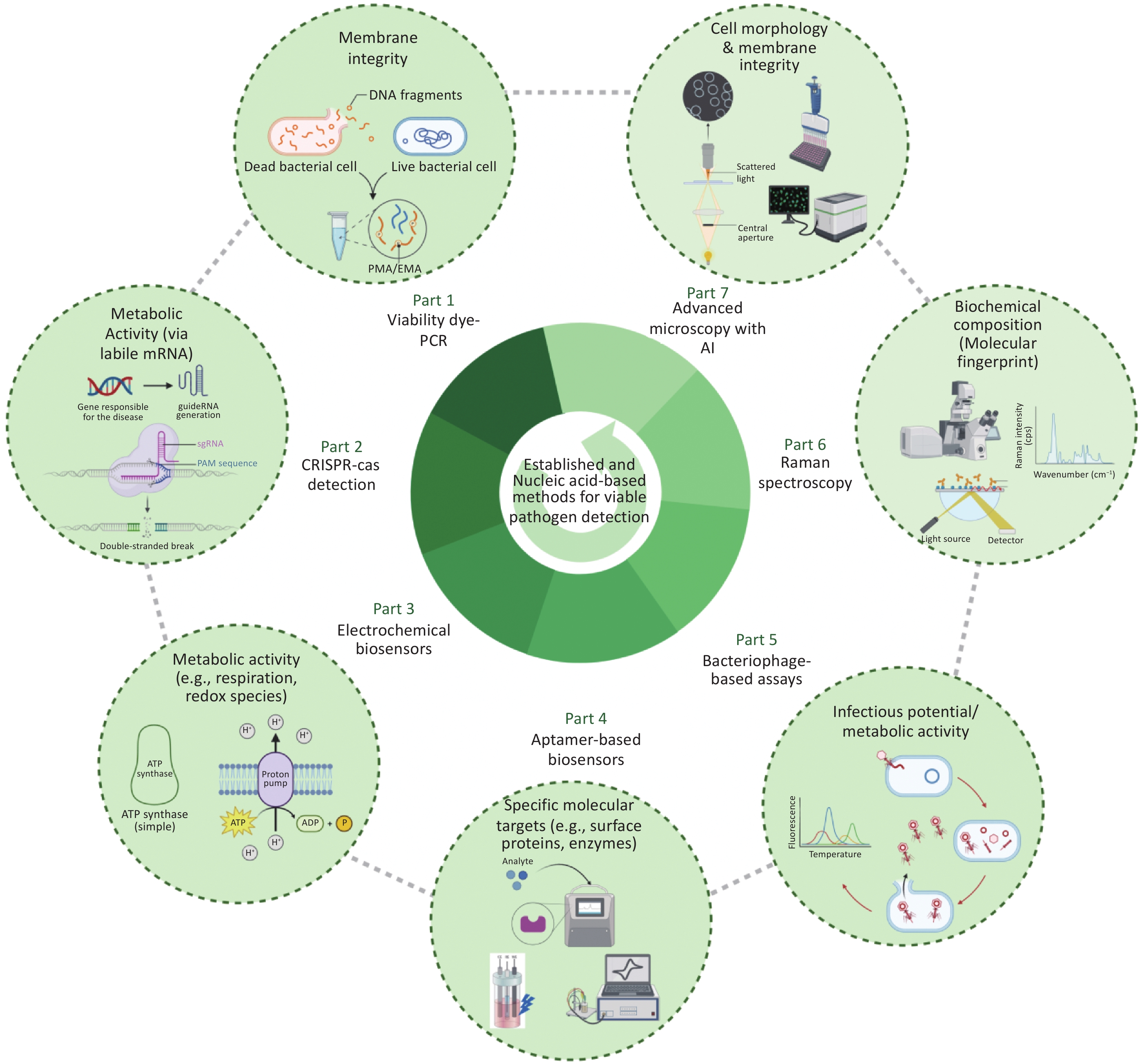
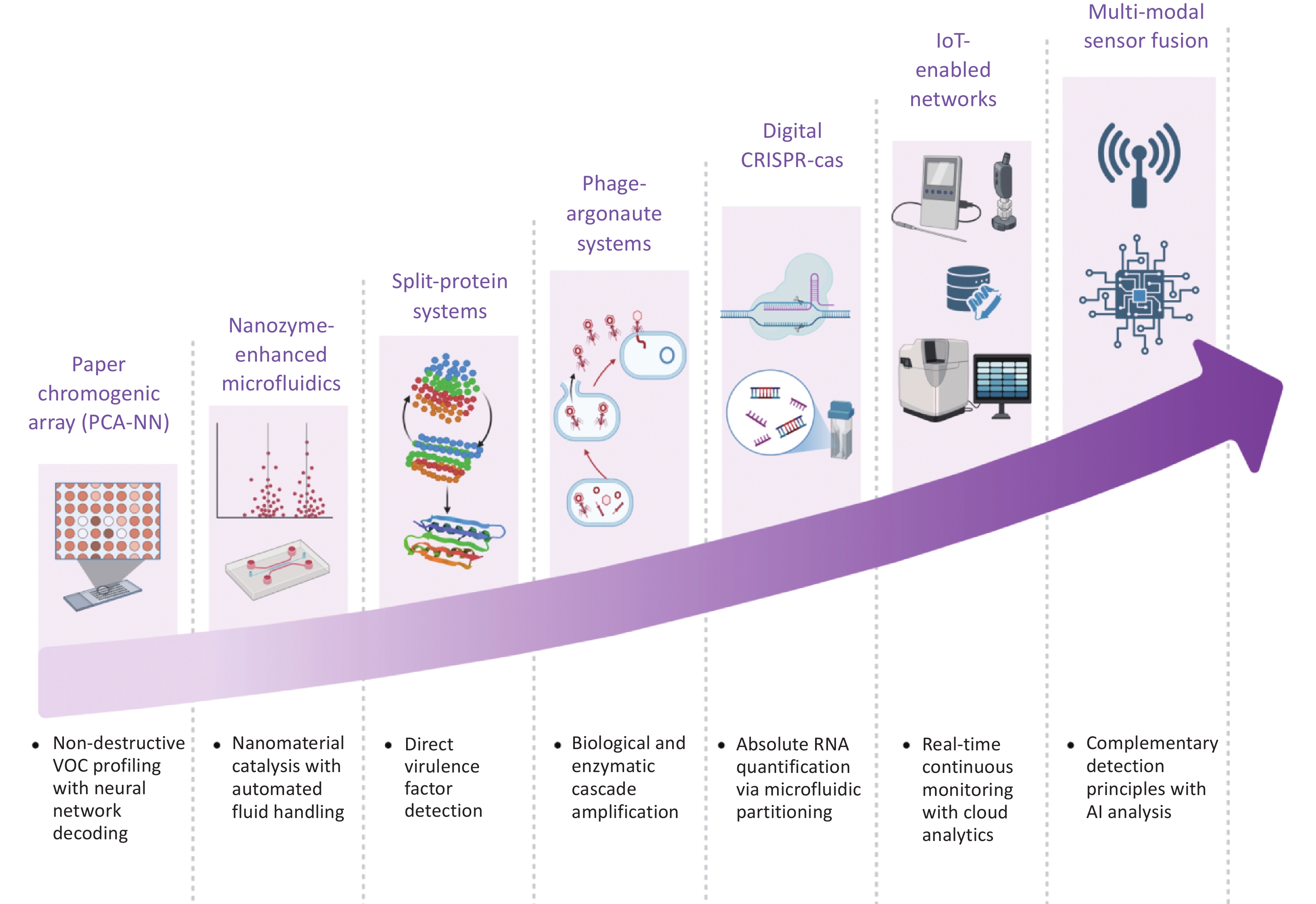
The integration of AI with microscopy and spectroscopic platforms has improved the quantitative interpretation of bacterial viability-related images and signals[65]. High-resolution analytical modalities, including Atomic Force Microscopy (AFM), Cryo-Electron Microscopy (Cryo-EM), fluorescence imaging, and Raman spectroscopy, provide detailed structural and biochemical information associated with cellular viability states. These technologies enable the evaluation of viability-associated characteristics such as membrane integrity, intracellular ultrastructural organization, biochemical composition, and metabolic activity that are not readily distinguishable using conventional optical microscopy alone[66,67]. AI-based image and spectral analysis has increasingly been used to classify viable and non-viable microbes, with early applications mainly based on CNN-derived microscopy features[68,69]. More recent studies have additionally employed computational approaches such as support vector machines (SVMs), random forest classifiers, partial least squares discriminant analysis (PLS-DA), linear discriminant analysis (LDA), and hybrid spectral-feature analysis methods to improve the discrimination of subtle phenotypic and biochemical variations observed in Raman spectroscopy and fluorescence-based datasets[64,70,71]. These approaches improve the recognition of viability-associated phenotypes, particularly when microbial signals are masked by complex food matrix backgrounds. Despite these advances, AI-assisted viability detection remains limited by dataset size, model generalizability, and external validation. Many models are trained on small and highly controlled datasets, increasing the risk of overfitting and reducing robustness across different food matrices, processing conditions, imaging systems, and pathogen strains. Variations in sample preparation, preprocessing procedures, signal quality, and matrix interference may further affect reproducibility. Future studies should prioritize diverse strain- and matrix-level datasets, standardized validation workflows, transparent model reporting, and robustness testing under realistic food processing and storage conditions. Although still constrained by instrumentation cost, computational demand, and limited field validation, these approaches offer considerable potential for high-resolution viability assessment and automated microbial phenotype interpretation[72]. Figures 2 and 3 compare the established and emerging viability detection technologies.
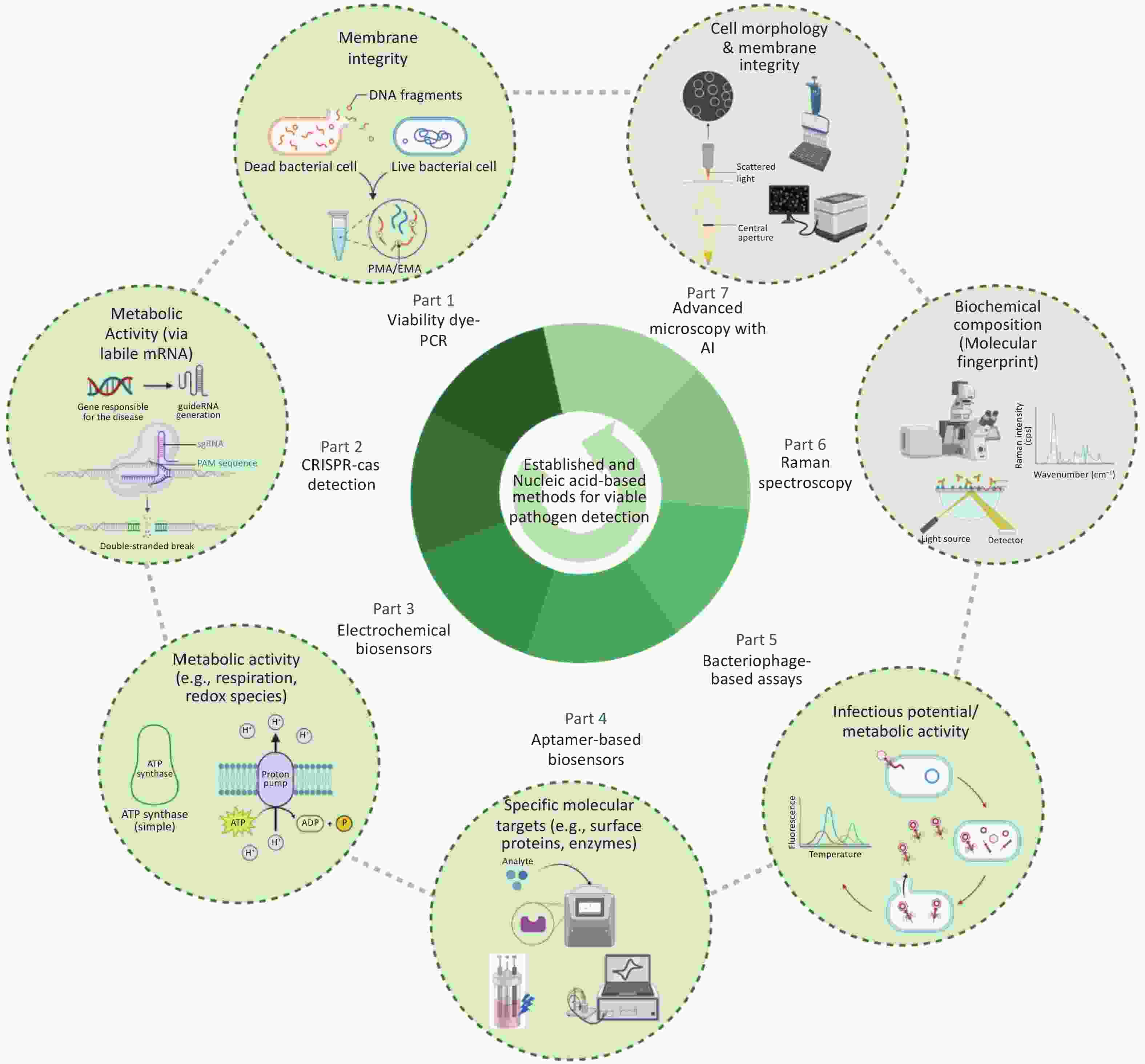
Figure 2. Established and nucleic acid-based methods for viable pathogen detection.Overview of current and advanced methodologies for viability assessment of foodborne pathogens, including Viability Dye-PCR, CRISPR-Cas platform, biosensors, immunological assays, phage-based assays, and Raman spectroscopy integrated with microfluidics.
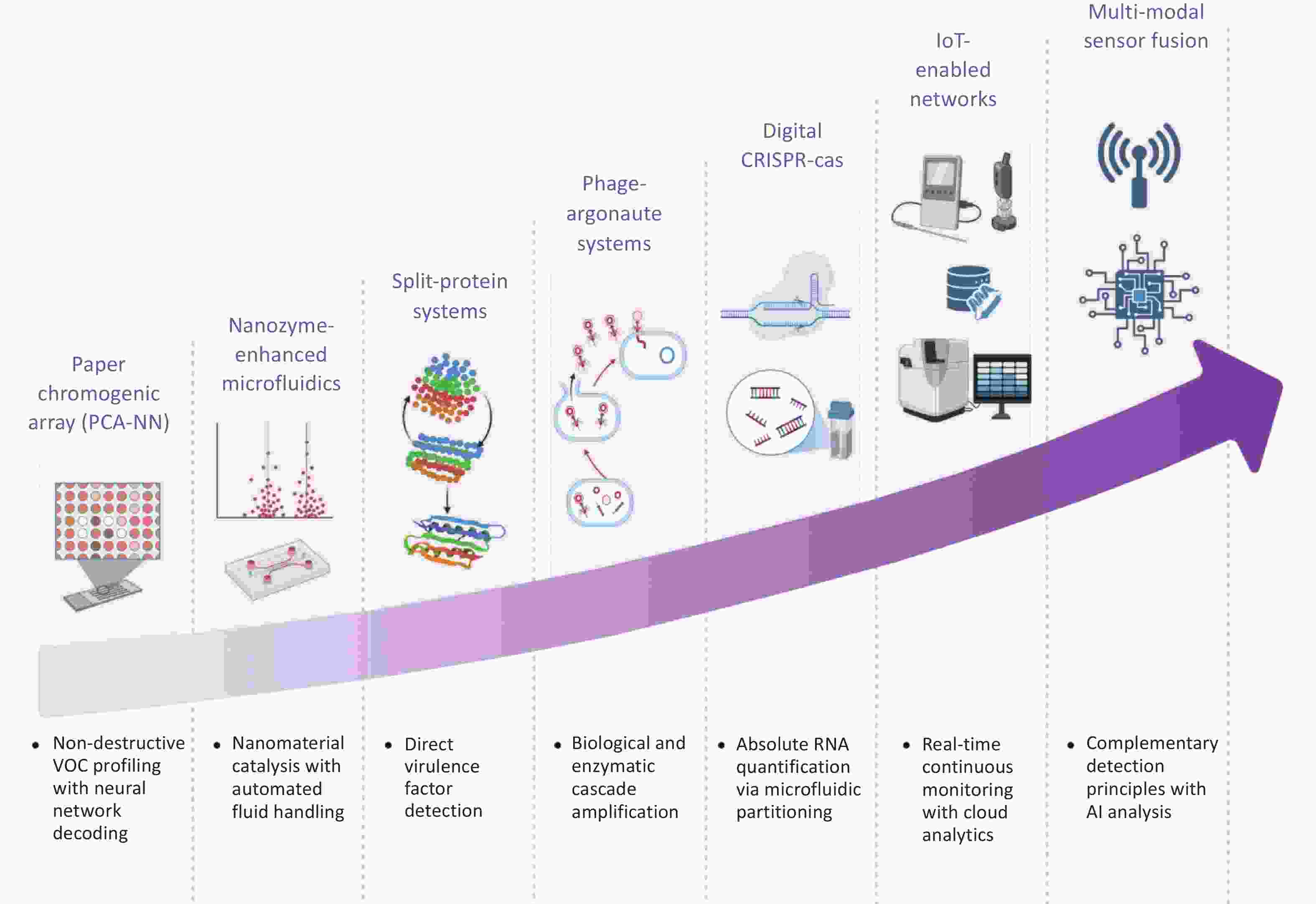
Figure 3. Emerging and advanced methods for viable pathogen detection.Conceptual framework illustrating how novel detection tools can be embedded into food safety management systems to enable proactive, multiplexed, and real-time monitoring of microbial risks across the dairy and food supply chain.
-
Although the established detection platforms are reliable for assessing microbial viability, emerging technologies offer new strategies to overcome the key limitations of the conventional methods, including limited physiological resolution, prolonged analysis time, and poor adaptability to complex food matrices[73]. These platforms integrate advanced-sensing modalities, engineered biomaterials, microfluidic systems, artificial intelligence-assisted analytics, and next-generation nucleic acid technologies to improve the sensitivity, specificity, scalability, and practical applicability of food-safety monitoring. To facilitate comparison among these emerging approaches, the technological-maturity classifications summarized in Table 3 are organized according to adapted Technology Readiness Level (TRL)[74,75] principles and their corresponding validation status. In parallel, Table 4 compares the representative emerging platforms in terms of detection limit, assay time, multiplexing capability, and estimated cost per test, providing a practical framework for evaluating their applicability in foodborne pathogen viability assessment.
Technology category Specific platform Key innovation Technology readiness classification and validation Status Major challenges Metabolomic sensing Paper chromogenic array (PCA-NN) Non-destructive VOC profiling with neural network decoding Laboratory prototype validation (TRL 4–5); limited real food matrix validation • Background VOC interference
• Ttraining data requirementsFunctional biosensing Nanozyme-enhanced microfluidics Nanomaterial catalysis with automated fluid handling Laboratory prototype validation (TRL 4–5); laboratory-scale validation • Channel fouling
• Nanozyme stabilitySplit-protein systems Direct virulence factor detection Early laboratory research (TRL 1–3); controlled laboratory feasibility • Limited pathogen range
• Matrix effectsNucleic
acid platformsPhage-argonaute systems Biological and enzymatic cascade amplification Early laboratory research (TRL 1–3); laboratory proof-of-feasibility • Phage availability
• Reaction optimizationDigital CRISPR-Cas Absolute RNA quantification via microfluidic partitioning Laboratory prototype validation (TRL 4–5); artificial matrix and laboratory validation • Cost
• Sample preparation complexityIntegration systems IoT-enabled networks Real-time continuous monitoring with cloud analytics Early laboratory research (TRL 1–3); pilot-scale feasibility studies • Sensor drift
• Data security
• And power managementMulti-modal sensor fusion Complementary detection principles with AI analysis Early laboratory research (TRL 1–3);
conceptual and laboratory feasibility• System complexity
• Data integration challengesTable 3. Emerging and advanced methods for viable pathogen detection
Emerging technology Limit of detection Assay time Multiplexing capability Cost
per testKey advantages Current limitations Paper chromogenic array with neural networks (PCA-NN) 10-103 CFU/mL[76,77] 1-2 h[76,77] Multi-target recognition based on colorimetric fingerprints and neural-network classification US$0.1
per unit[77]• Non-destructive detection
• No complex sample pretreatment
• Multiplexing capability• Susceptible to interference from food matrices and background microflora Nanozyme-enhanced microfluidic biosensors 10-102 CFU/mL[80,81] 20-25 min[81,82] Multiplexing enabled by chip compartmentalization and nanozyme amplification NA • High integration
• Fast detection speed[82]• Signal cross-talk in multiplex assays Split-protein systems for virulence detection 10 CFU/mL[83,84] 30 min[83,84] Multi-target detection not demonstrated in the current format NA • Virulence activity-based detection
• Higher detection specificity• Multiplexing not yet demonstrated
• Risk of false negatives/positivesPhage-agonoute fluorescence systems 20-50 CFU/mL[89,90] 2.5-3 h[89,90] Promising for multiplex detection of foodborne pathogens NA • Extraction-free and amplification-free • Not suitable for high-throughput detection[2] Digital CRISPR-Cas platforms 1.0 aM-
10 fM[96-98]5-80 min Multiplex detection in a single sample using different CRISPR enzymes NA • Absolute quantification
• Single-molecule sensitivity
• High specificity• Droplet stability issues
• High equipment/chip costsNote. NA, Not Available ; Internet of Things (IoT)-Enabled Sensor Networks and Multi-Modal Sensor Fusion Platforms are not included in this table because they represent system-level integration strategies rather than standalone detection assays. Their detection limits, assay times, and multiplexing capabilities depend on the specific front-end sensors integrated into each system. Table 4. Comparison of key analytical parameters of emerging technological platforms for foodborne pathogen detection
-
The integration of paper-based chromogenic arrays with ML signifies a transformative advancement in non-destructive viability-associated monitoring. In this technology, an array of 23 chromogenic dyes, which selectively react with volatile organic compounds (VOCs) emitted by metabolically active pathogens, is applied to paper substrates. The primary innovation does not reside in the individual dye–pathogen associations, but rather in the utilization of a multi-layer neural network to interpret the comprehensive colorimetric fingerprint produced by the array[75]. The PCA–NN system has exhibited exceptional capabilities in practical applications, achieving 91%–95% accuracy in the strain-specific identification of pathogens such as E. coli O157: H7 and L. monocytogenes on fresh-cut romaine lettuce[76]. The technology functions without the need for enrichment, culturing, or sample preparation, detecting populations as low as 103 CFU/mL within 2 h of exposure[76,77]. The neural network architecture, typically comprising five hidden layers with 256 neurons each, processes the digitized RGB values from the array patterns and correlates them with specific pathogens, population levels, and even growth stages. Current research endeavors aim to broaden this technology’s applicability across various food commodities and pathogen combinations. With an estimated production cost below US$0.10 per unit[77], PCA–NN systems exhibit significant potential for smart packaging applications. Nonetheless, challenges persist in managing background VOC interference from food matrices and establishing comprehensive training datasets for diverse food–pathogen combinations[77].
-
The integration of nanotechnology with microfluidics has enabled miniaturized and portable biosensing platforms with improved sensitivity, reduced sample consumption, and the potential for on-site food-safety monitoring. Nanozymes—nanomaterials with enzyme-like catalytic properties—provide robust signal amplification and achieve greater operational stability than natural enzymes. As these platforms are engineered to detect the metabolic products and redox-active compounds secreted exclusively by viable cells, they extend beyond simple pathogen detection, directly linking the cell’s catalytic signals to their microbial viability[78]. In these systems, nanozymes are commonly coupled with immunorecognition, aptamer recognition, or magnetic enrichment to capture target bacteria, while their peroxidase-like or oxidase-like catalytic activity generates colorimetric, electrochemical, or chemiluminescent signals[79]. Recent studies using Salmonella have demonstrated the analytical potential of this strategy. For example, a finger-actuated microfluidic colorimetric biosensor using Au@PtPd nanocatalysts detected Salmonella at concentrations as low as 45 CFU/mL within 25 min[80], while a nanozyme-catalyzed colorimetric microfluidic immunosensor achieved a limit of detection (LOD) of 9 CFU/mL within 20 min[80,81]. Similarly, a sliding microfluidic chip integrated with MnO2 nanoflowers achieved an LOD of 10 CFU/mL within 20 min[82]. This technology exhibits clear advantages in detection sensitivity, portability, and operational integration. Nevertheless, its practical application in complex food matrices requires further validation, particularly regarding channel fouling, nonspecific adsorption, matrix interference, and the long-term stability of nanozyme activity.
-
Split-protein systems represent an innovative approach for detecting active virulence in pathogenic bacteria, moving beyond general viability assessment. The PoreGlow system exemplifies this advancement by employing liposomes that encapsulate split green fluorescent protein (GFP) fragments. These fragments are released and complemented upon interaction with functional toxins such as listeriolysin O (LLO), which is secreted by viable L. monocytogenes cells[83]. This method enables direct assessment of pathogenic capability rather than mere presence, offering unprecedented specificity for virulent pathogens[84,85]. The PoreGlow assay enables pre-enrichment-free detection within ca. 30 min, with detection limits of 0.17 μg/mL for LLO and 10 CFU/mL for L. monocytogenes[83,86]. Compared with conventional methods requiring bacterial proliferation, this system is faster and more viability-relevant, as only actively virulent strains generate positive signals, thereby minimizing false positives from non-pathogenic relatives or dead cells[87,88]. Although its current limitations include specificity to certain toxin-producing pathogens and matrix-dependent performance, the modular design allows adaptation to other pathogen-toxin systems through appropriate bioreceptor engineering. This innovation paves the way for viability assays that focus on pathogenic potential rather than cell presence alone.
-
By integrating bacteriophage-mediated viable-cell recognition utilizing the argonaute protein from Clostridium butyricum (CbAgo), a phage-assisted nucleic-acid detection platform for viable pathogens has been established[89]. This system combines phage-based enrichment of viable host cells with guide DNA-directed CbAgo cleavage of target bacterial DNA, thereby converting nucleic-acid recognition into an amplified fluorescence signal. The system employs sequential biological and enzymatic amplification: Phage infection ensures specificity for viable cells, while the CbAgo-mediated cleavage of the target DNA amplifies fluorescence. This dual-specificity approach achieves sensitive viable-pathogen detection, with an LOD of ca. 20–50 CFU/mL and a detection time of ca. 2.5–3 h, while preserving the biological relevance of phage-based assays[90]. The incorporation of machine vision for signal detection and ML for pattern recognition further enhances its accuracy and throughput[91]. Current research endeavors are directed towards expanding the phage library to achieve broader pathogen coverage and optimizing the CbAgo reaction conditions to ensure consistent performance in food samples. This technology holds significant promise for confirming infectious potential in conjunction with pathogen identification[92].
-
The advancement of CRISPR-Cas technology into digital detection formats has improved nucleic acid-based pathogen quantification. Digital CRISPR platforms partition samples into numerous femtoliter-to-picoliter microreactors and generate endpoint binary readouts, enabling absolute quantification of target nucleic acids without the need for standard curves[93]. This strategy provides a useful platform for viable-pathogen detection when combined with viability-discriminating approaches such as PMA treatment or viability-associated RNA targets[94,95]. Amplification-free Cas13a-based digital RNA detection systems such as SATORI have achieved RNA detection at ca. 5 fM, while droplet/digital CRISPR formats further support absolute nucleic-acid quantification through reaction partitioning and endpoint readouts[96-98]. When combined with viability-associated RNA markers or PMA-based live-cell discrimination, this digital format provides a promising route for accurate viable-pathogen detection. Portable imaging strategies, including smartphone-based readers, further support field deployment and point-of-care testing. However, the practical application of this approach will depend on simplified sample preparation, lower-cost microfluidic chip fabrication, and robust performance in complex food matrices[97,98].
-
The integration of viability sensors with Internet of Things (IoT) technology facilitates real-time, continuous monitoring throughout the food supply chain[99]. These systems synergistically integrate nanoscale biosensors with wireless communication modules, cloud analytics, and predictive algorithms to establish comprehensive surveillance networks. Sensors are used to perform continuous spatiotemporal surveillance of environmental conditions and pathogen presence, transmitting data to centralized platforms for immediate analysis and action[100]. Recent implementations of this approach have employed low-power wide-area network (LPWAN) and energy-harvesting technologies to enable long-term operation without the need for battery replacement[101]. The machine-learning algorithms embedded within these networks both detect contamination and utilize predictive microbiology models to forecast pathogen proliferation based on environmental fluctuations[102]. Although they are promising, the scalability of these ecosystems faces challenges regarding sensor bio-stability (anti-fouling), data sovereignty, and the standardization of interoperability protocols across heterogeneous platforms[103].
-
The most advanced emerging systems integrate multiple detection principles through sensor fusion approaches, capitalizing on the complementary strengths of nucleic-acid, metabolic, and immunological sensing[104]. By incorporating modalities that specifically respond to metabolic activity, RNA transcripts, or toxin secretion, these platforms facilitate direct and confirmatory assessments of microbial viability rather than merely detecting presence. Typically, these systems consolidate all sensing layers within a single automated platform, enabling orthogonal verification of viability status. Advanced data-fusion algorithms, including deep-learning networks and Bayesian inference models, process the multi-modal data to generate comprehensive viability assessments with confidence scoring. By correlating DNA-, RNA-, and metabolite-based signals, these algorithms can differentiate between living and dead cells and adapt detection strategies based on the viability probability inferred from the preliminary results[102]. This adaptive capability significantly reduces false positives and enhances reliability. Although their complexity and cost currently limit widespread adoption, such platforms provide a roadmap for the next generation of integrated food safety systems—those capable of autonomously detecting, confirming, and quantifying viable pathogens with minimal human intervention. Collectively, these intelligent systems signify the transition from passive detection to active, adaptive, and predictive food-safety monitoring, representing the frontier of viability assessment technology.
-
The primary AI algorighms for distinguishing microbial viability can be categorized into two principal branches: conventional ML and deep learning. Ultimately, the optimal architectural selection is determined by the specific data modality.
-
ML algorithms, such as SVMs and random forests, are primarily utilized for analyzing structured datasets, including spectral signatures and metabolic indices. For instance, by evaluating feature importance, random forest models can pinpoint critical spectral peaks associated with microbial viability, thereby enabling the precise differentiation of physiological states[105].
-
Deep-learning algorithms, particularly convolutional neural networks (CNNs) and recurrent neural networks (RNNs), exhibit exceptional proficiency in interpreting unstructured data modalities, including images and timeseries data. In morphological profiling, CNNs convert complex spatial features like membrane integrity and fluorescence into viability probabilities (live, dead, or VBNC). Enhancing U-Net with a position attention module (PAM) improves the Dice coefficient for segmentation[106], allowing precise cell-membrane delineation and providing a robust computational basis for capturing the cryptic morphological phenotypes of VBNC cells. The Fusion-Net III model, a dual-stream hybrid neural network, exhibited a 100% accuracy rate in determining the viability states of six prevalent foodborne pathogens by concurrently analyzing spectral fingerprints and spatial image features within intricate multi-modal datasets[107]. RNNs and Long Short-Term Memory networks (LSTMs) can be used to effectively interpret changes in microbial growth over time, facilitating the detection of viable cells from time-lapse microscopy images up to 12 h faster than conventional culture techniques[108].
-
The primary challenges in implementing AI models include their inherent "black-box” nature[109] and issues related to data skewness[110]. Tools such as SHapley Additive exPlanations (SHAP) address regulatory challenges by clarifying feature contributions, thereby enhancing transparency[111]. In terms of addressing data skewness, the Synthetic Minority Oversampling Technique (SMOTE) effectively improves the F1 scores of pathogen-detection models from 0.7 to 0.9 by mitigating the majority-class bias caused by sample imbalance, thus improving the detection of foodborne pathogens[112]. Next-generation AI algorithms, exemplified by self-supervised learning (SSL)[113] and edge computing[114], have exhibited significant potential for application. For instance, biological foundation models utilize SSL to mitigate reliance on large labeled datasets, thus enabling autonomous learning from the unannotated raw data. In terms of application, the integration of lightweight AI with edge devices such as smartphone spectrometers effectively reconciles the demands of intensive computational processes with the requirements of point-of-care testing (POCT). AI therefore provides a highly promising technological foundation for the real-time, non-destructive, and precise assessment of pathogen viability within complex food matrices.
-
Foodborne pathogen viability assessment has evolved from conventional culture-dependent analysis toward integrated molecular, metabolic, and functional detection strategies, particularly to address the limitations associated with VBNC cells. This review critically summarizes the major platforms and technologies for viability determination, including viability dye-coupled nucleic acid amplification, CRISPR-assisted systems, biosensors, bacteriophage-based assays, Raman spectroscopy, advanced microscopy, and AI-assisted analytical frameworks. Together, these technologies have shifted foodborne-pathogen detection from simple presence/absence analysis toward more biologically meaningful assessment of membrane integrity, metabolic activity, transcriptional signals, infectivity, and physiological functionality. Future advancements are anticipated to emerge from the convergence of multiple technological domains. The integration of biological recognition elements with nanomaterial-based amplification, microfluidic automation, and AI-driven data analytics represents a transformative pathway toward robust, field-deployable systems. Intelligent algorithms capable of interpreting complex spectroscopic and cytometric data will enable precise differentiation of bacterial viability states. Equally important, the establishment of standardized protocols and certified VBNC reference materials will ensure reproducibility and comparability across laboratories and industrial applications. As the field progresses, the emphasis should shift toward multiplexed, real-time platforms capable of simultaneously identifying pathogens and assessing their viability in situ. Such next-generation systems will not only accelerate response times but also transition food-safety management from reactive detection to proactive prevention. Through interdisciplinary collaboration and continuous innovation, viability-based detection will evolve into a cornerstone of modern food surveillance, safeguarding public health within an increasingly complex global food network.
HTML
Nucleic Acid-Based Molecular Platforms
Viability Dye-Coupled PCR (vPCR)
CRISPR-Cas Enhanced Viability Detection
Biosensor Platforms Electrochemical Biosensors
Aptamer-Based Biosensors
ATP-Based Biosensors
Biological Recognition Platforms
Bacteriophage-Based Assays
Label-Free Analytical Platforms
Raman Spectroscopy-Based Platforms
Advanced Microscopy with AI Integration
Machine Learning-Enabled Metabolomic Sensing
Paper-based Chromogenic Array with Neural Networks (PCA–NN)
Advanced Functional Biosensing Platforms
Nanozyme-Enhanced Microfluidic Biosensors
Split-Protein Systems for Virulence Detection
Next-Generation Nucleic Acid Platforms
Phage-Argonaute Fluorescence Systems
Digital CRISPR-Cas Platforms
Intelligent Integration Systems
Internet of Things (IoT)-Enabled Sensor Networks
Multi-Modal Sensor Fusion Platforms
AI Algorithms for Microbial Viability Decoding
Machine Learning for Structured Data Analysis
Deep Learning for Spatiotemporal and Multi-Modal Data Analysis
Practical Challenges and Next-Generation AI Solutions
Competing Interests The authors declare that there are no conflicts of interest regarding the submission of this manuscript. All of the authors have approved the manuscript for publication.
&These authors contributed equally to this work.

 Quick Links

 DownLoad: