


 下载:
下载:

-
Adolescent smoking constitutes a critical public health challenge as early initiation increases the risk of premature mortality and smoking-related chronic diseases due to longer exposure and higher cumulative tobacco use[1]. Adolescents are especially prone to developing persistent smoking habits, with many adult smokers having started before the age of 18. In China, 16.7% of secondary school students have tried smoking and 4.7% are current smokers, highlighting the critical need for targeted tobacco control interventions among the youth.
Smoking behavior (e.g., current or smoking at least once) is shaped by both individual characteristics and environmental factors, with growing evidence suggesting that beyond demand-reduction strategies targeting individuals, reducing the density of tobacco retail outlets (TROs) can effectively limit adolescents’ access to tobacco products and exposure to tobacco advertising and promotions. International research examining the relationships between tobacco retail density near schools and adolescent smoking behaviors has yielded inconsistent findings: Adams[2] identified no significant association, Henriksen[3] documented positive correlations, and Marsh[4] reported inverse relationships. A systematic review of 18 studies[5], 16 of which were cross-sectional, concluded that the current evidence remains insufficient to confirm a strong association between TRO density near schools and student smoking behaviors, including current and smoking at least once.
In China, studies conducted in Beijing[6], Qingdao[7], and Wuhan[8] examined the distribution of TROs within 100-meter buffers around schools. However, these investigations primarily focused on descriptive analyses of TRO quantities. To address this gap, our study explored the association between school-adjacent TROs and adolescent smoking behavior. We applied both straight-line and walking distance measures to quantify TRO within 100-meter, 200-meter, and 500-meter buffers around schools and subsequently examined their relationships with secondary school student smoking behaviors. Our findings aim to inform evidence-based optimization of TRO management policies and youth tobacco control strategies in Beijing, while providing specific distance recommendations for TRO prohibition zones around schools to enhance youth protection legislation.
Secondary school data for Beijing were obtained from the 2023 China National Youth Tobacco Survey (NYTS). The study included 30 junior high schools, 20 senior high schools, and ten vocational high schools across Beijing, with 60 schools distributed across ten districts. The detailed sampling methodology is described in Zeng's study[9]. Within each selected school, the researchers randomly chose one class containing more than 40 students from each grade level to participate in the survey.
Data on TRO distribution around schools were collected through comprehensive on-site investigations conducted by trained field investigators from August to September, 2024. We used the online mapping software BLUEPRINT (https://www.ldmap.net/) to visualize the collected data and calculate the number of TRO surrounding each school. This analysis included TRO counts within 100-meter, 200-meter, and 500-meter buffers using both straight-line distance and walking distance measurements.
TRO categories included tobacco specialty stores, tobacco and alcohol specialty stores, grocery stores, convenience stores, shopping malls, supermarkets, and other retail outlets (including restaurants, eateries, food stores, mobile vendors, and newsstands). In this study, ‘tobacco retailer’ broadly refers to outlets licensed to sell cigarettes, as regulated by Beijing’s retail management system.
We selected three buffer distances around the schools based on policy and research relevance. The 100-meter buffer reflects Beijing’s current regulations prohibiting cigarette sales near schools, The 200-meter buffer is based on Beijing’s 2019 regulation prohibiting certain entertainment venues within 200 meters of schools, and the 500-meter buffer serves as the upper threshold commonly used in international studies. Given China’s higher population and retail densities, adopting 500 meters as the maximum distance provides a contextually appropriate adaptation to local conditions.
For each buffer zone, two distance measures were applied between the TRO and the main school entrances. The straight-line (Euclidean) distance represents a direct path between two locations. Walking distance was obtained from the Amap (Gaode) navigation system, which integrates Beidou and GPS monitoring. Unlike conventional two-dimensional road network analyses, Amap accounts for actual pedestrian routes, including overpasses, underpasses, and elevation changes and provides a more accurate estimate of students’ walking distances to nearby outlets.
TRO density refers to the number of retailers within a specified distance buffer (e.g., 100, 200, or 500 meters) from each school. Smoking behavior was operationally defined as tobacco use encompassing cigarettes, cigars, pipes, and other tobacco products, while explicitly excluding electronic cigarettes and smokeless tobacco products. Ever-cigarette smokers were defined as students who had experimented with cigarette smoking at least once, including those who had consumed only one or two puffs. Current cigarette smokers were defined as those who had smoked cigarettes in the past 30 days.
Parental and peer smoking was assessed by asking whether the respondent’s parents or close friends smoked. Notice of smoking in school was measured by asking if, during the past 30 days, the respondent had seen anyone smoking inside or outside school buildings. Exposure to tobacco advertising or promotions was assessed based on whether the students had seen tobacco-related advertisements or promotions at cigarette retail outlets in the past 30 days. The perceived difficulty of quitting and perceived harm of secondhand smoke were evaluated through agreement with statements about the difficulty of quitting once started and the harmfulness of secondhand smoke. The receipt of tobacco-related health education was assessed based on whether, during the past 12 months, participants had been taught in class about the health consequences of tobacco use (e.g., smoking causing disease, yellow teeth, wrinkles, or unpleasant odors). All items used binary response options ( “Yes” or “No ”).
Strong correlations between the TRO counts across distance buffers, including all distances in a single model, can cause multicollinearity. Therefore, we conducted separate logistic regression analyses for each distance range, treating each distance as a continuous variable within its respective model. This analytical approach yielded 12 distinct logistic regression models: six examining associations between TRO density and ever-smoking behavior, and six assessing relationships with current smoking behavior.
We controlled for several covariates, including sex, school type, and tobacco-related behavioral and perceptual factors. Complex sampling logistic regression was employed to examine the relationship between TRO density around schools and smoking behavior among secondary school students. All statistical analyses were performed using SAS version 9.4 (SAS Institute Inc., Cary, NC, USA).
Table 1 presents the baseline characteristics of the participants. The sex distribution was nearly balanced, with 48.48% female and 51.52% male students. Most participants attended junior high schools (58.11%), followed by senior high schools (33.61%) and vocational high schools (8.28%). Regarding parental smoking behavior, 47.17% reported having parents who smoke. Additionally, 19.76% had friends who smoked, whereas 24.67% had smoked in their school environment.
Table 1. Baseline characteristics of secondary school students in Beijing, 2023
Characteristic n N (%) All pupils 7,841 632,457 (100.00) Gender Female 3,933 306,630 (48.48) Male 3,908 325,827 (51.52) School type Junior high school 3,954 367,493 (58.11) Senior high school 2,579 212,590 (33.61) Vocational high school 1,308 52,374 (8.28) Parents smoke No 3,962 334,091 (52.83) Yes 3,878 298,302 (47.17) Friend(s) smoke No 5,973 507,471 (80.24) Yes 1,867 124,960 (19.76) Notice smoking in school No 5,784 476,313 (75.33) Yes 2,054 155,964(24.67) Exposure to tobacco advertising or promotion at TRO No 7,104 572,572(90.55) Yes 735 59,723 (9.45) Quitting smoking is difficult Yes 2,919 241,140 (38.15) No 4,918 390,910 (61.85) Second hand smoke is harmful Yes 7,545 611,656 (96.74) No 295 20,611 (3.26) Received tobacco hazard education Yes 3,216 246,573(39.01) No 4,621 385,487(60.99) The comprehensive survey identified 723 TRO in Beijing. These retail establishments comprised of 408 supermarkets, 293 tobacco and liquor specialty stores, 17 small stalls (including eateries, food stores, mobile vendors, and news stands), and five other venues (including two lottery stores, a wedding introduction agency, a second-hand housing exchange, and a computer store).
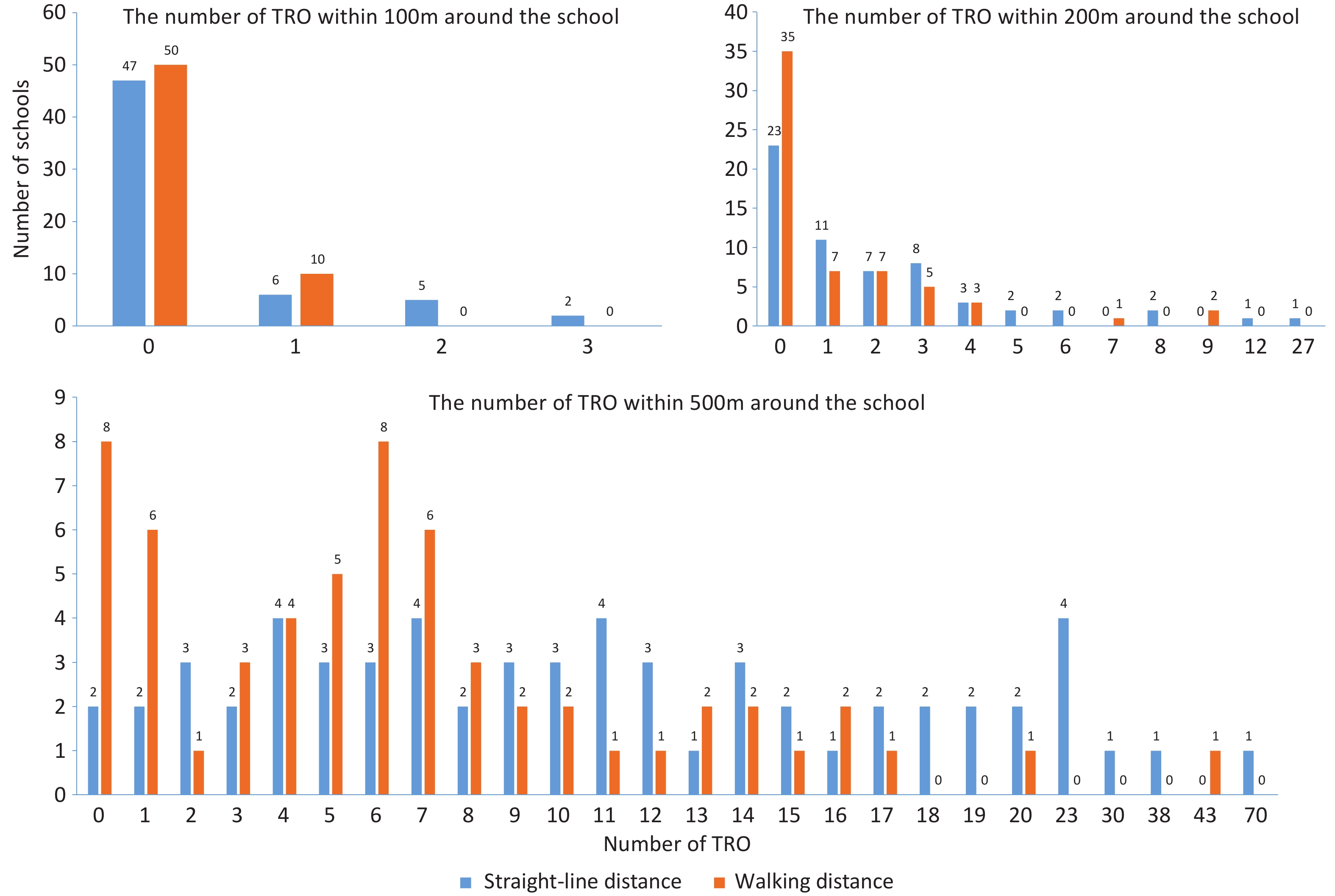
For straight-line distance measurements, 21.7%, 61.7%, and 96.7% of schools had TRO within 100, 200, and 500 meters, respectively. The proportions of walking distance were 16.7%, 41.7%, and 86.7%, respectively (Figure 1). The proportion of schools with TROs within 100 meters (21.7%) has decreased from 31.0% in 2021 to 35.6% in 2016 and 66.7% in 2013. Although TROs remain near some schools, their density and proximity have declined substantially over time, reflecting the effectiveness of Beijing’s tobacco control efforts over the past decade.
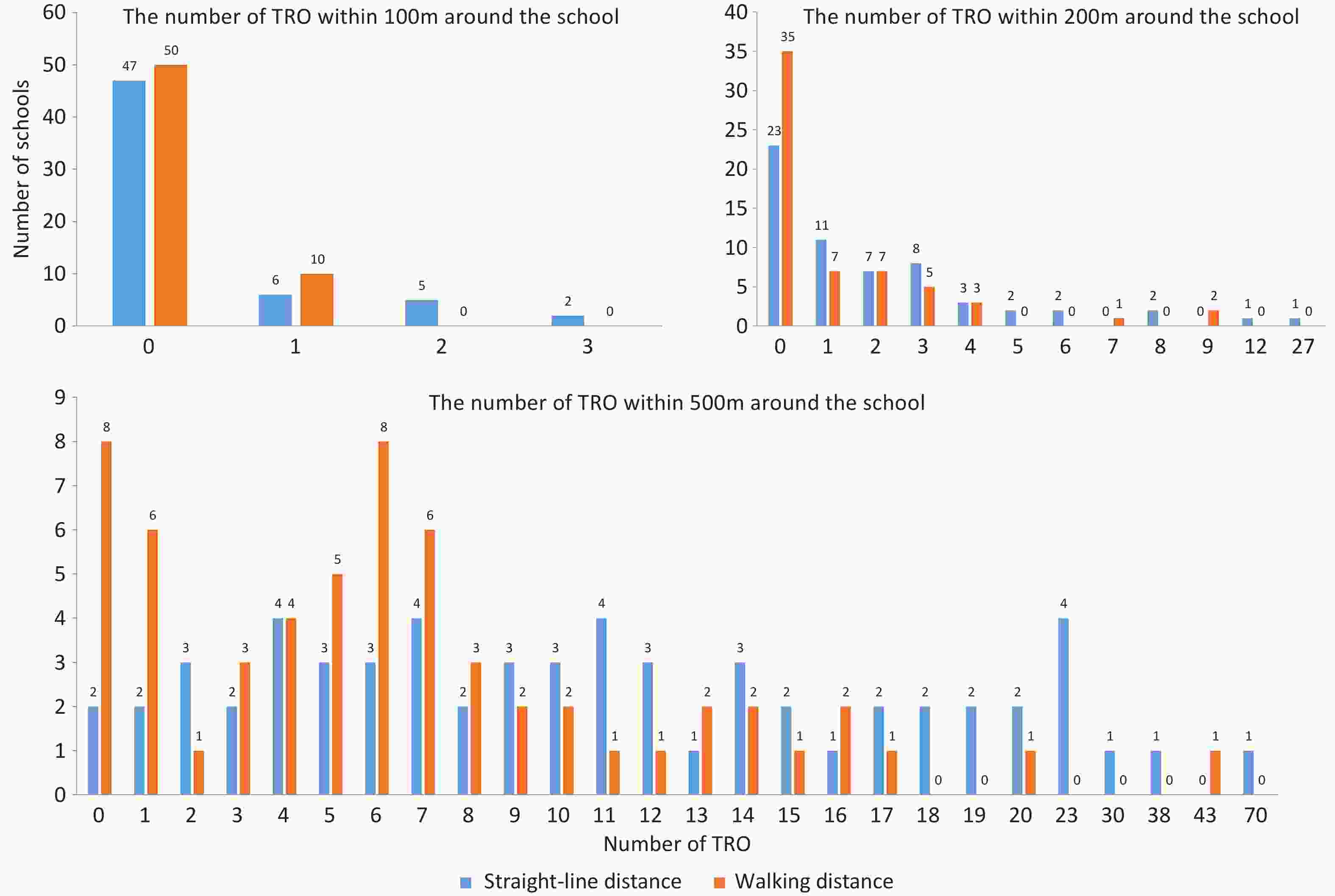
Figure 1. Number of TRO within 100, 200, and 500 meters around schools in Beijing, 2024.
However, within a 500-meter radius, schools in Beijing are still surrounded by an average of 12.05 TROs (SD = 10.83) (Supplementary Table S1), with the highest concentration reaching 70 outlets near a single school. This far exceeds international benchmarks, as schools in Illinois, USA, have an average of only 2.76 outlets (SD = 2.45) within 600 meters[2], and those in Victoria, Australia, average 2.37 outlets (SD = 1.65) within 500 meters[10]. High retail density not only increases tobacco accessibility, but may also normalize smoking in the social environment, acting as a barrier to cessation and heightening adolescents’ susceptibility to future smoking, thus highlighting the need for stricter regulation and oversight.
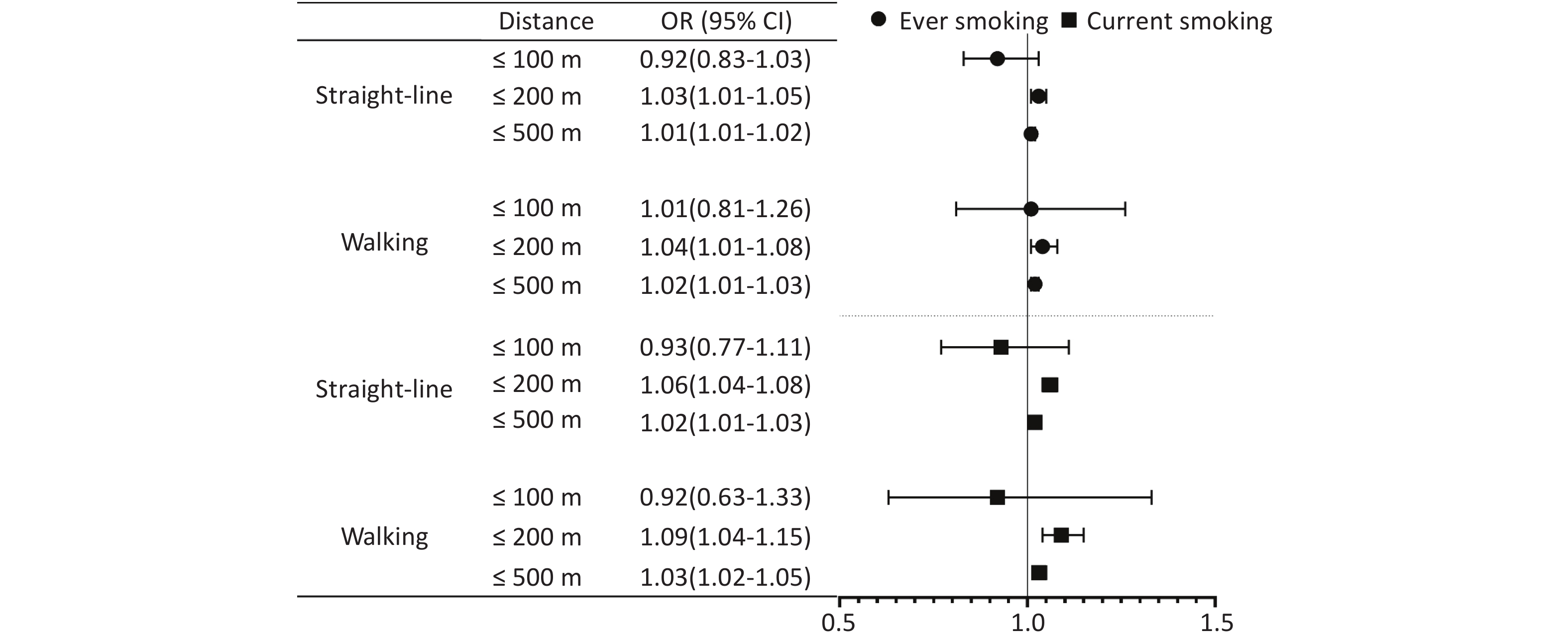
Regression analysis further demonstrated that TRO density within 200-meter and 500-meter distance buffer around schools was significantly associated with both ever- and current smoking among students (Figure 2). For straight-line distance measurements, the odds ratios (ORs) at the 200-meter buffer were 1.03 (95% CI = 1.01–1.05) for ever-smoking and 1.06 (95% CI = 1.04–1.08) for current smoking, while for walking distance measurements they were 1.04 (95% CI = 1.01–1.08) and 1.09 (95% CI = 1.04–1.15), respectively. These findings indicate that higher TRO density near schools may increases students’ smoking risk, particularly within a 200-meter buffer, underscoring the critical role of proximity in adolescent tobacco exposure. As straight-line distance encompasses more outlets than walking distance, policymakers should consider extending the current 100-meter ban to 200 meters using straight-line measurements. Strengthened enforcement, reduced retail density, and complementary measuressuch as family and peer support, health education, and behavioral interventions are essential to limit youth tobacco access and enhance prevention effectiveness.
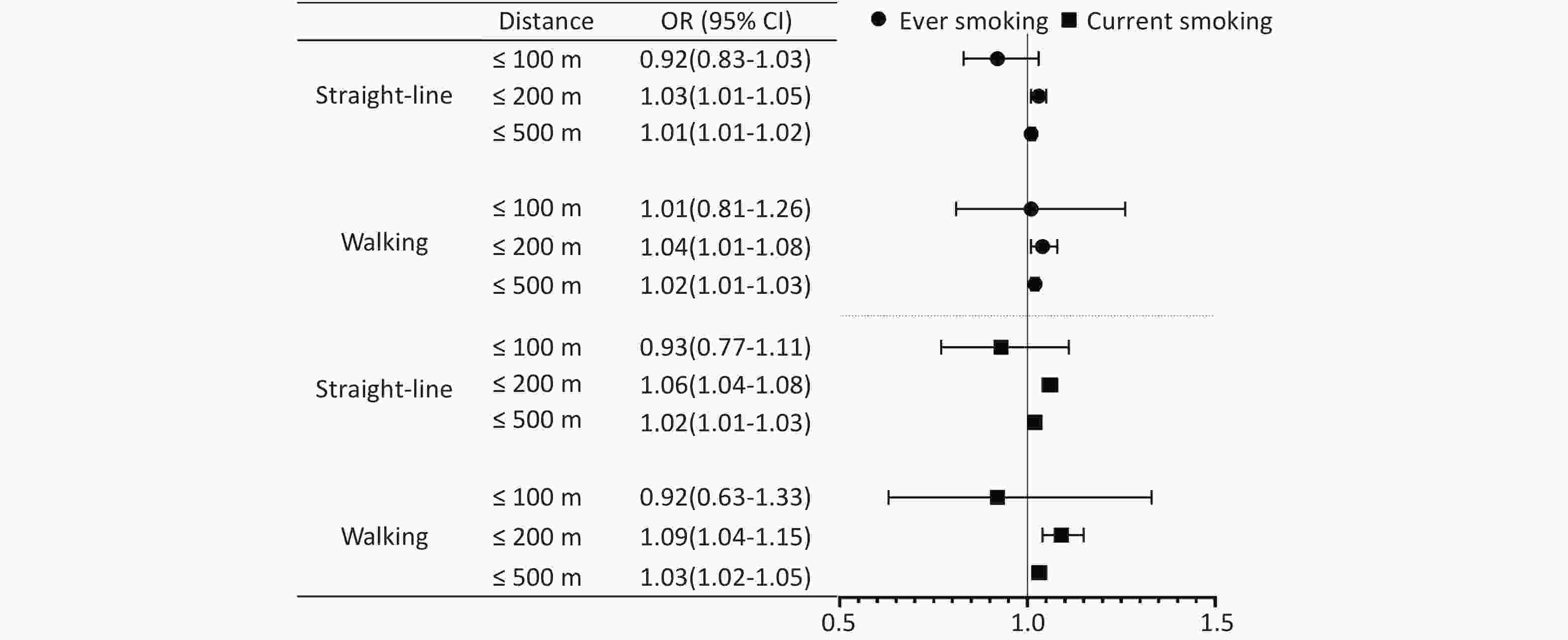
Figure 2. Logistic regression analysis on the number of TRO around schools and smoking behavior of students in Beijing, 2024.
Previous studies have suggested that factors such as cigarette pricing, point-of-sale promotions, and prevailing social norms may influence adolescent smoking behavior. These mechanisms may help explain the potential pathways through which the density affects youth smoking initiation and continuation. Nevertheless, our study specifically focused on examining the spatial association between TRO distribution and student smoking behavior, providing empirical evidence of the influence of retail availability around schools. To prevent adolescent smoking effectively, early interventions should focus on delaying initiation, limiting access, and reducing the social acceptability of tobacco use. Based on our findings, we recommend establishing a nationwide ban on TRO within 200 meters of schools and incorporating this regulation into the Law on the Protection of Minors. These results offer critical insights for optimizing retail layout policies in Beijing and guiding youth tobacco control strategies at both national and international levels.
Due to the cross-sectional design, our study could identify associations between TRO density and students’ tobacco use but could not infer causal relationships. A time gap of several months exists between the TRO survey and the 2023 NYTS in China. Due to the strict regulation of TRO numbers under China’s national tobacco monopoly system, the number of TROs around schools was relatively stable, likely minimizing any impact on the results. In addition, students’ tobacco use was self-reported, which may have introduced reporting bias.
doi: 10.3967/bes2026.003
Distribution of Tobacco Retail Outlets Around Secondary Schools and Association with Students’ Smoking Behavior in Beijing, 2024
-
QM was responsible for data cleaning, data analysis, and manuscript writing; JX was responsible for data collection and organization; LR and SY were responsible for collecting and reporting data; XL was responsible for designing and modifying research plans and providing guidance for data analysis and manuscript writing.
The authors have no conflicts of interest to report.
The study was approved by the Ethical Review Committee of the Chinese Center for Disease Control and Prevention. (Approval No. 202301).
The supplementary materials will be available in www.besjournal.com.
注释:1) Authors’ Contributions: 2) Competing Interests: 3) Ethical: 4) Data Sharing: -
Figure 1. Number of TRO within 100, 200, and 500 meters around schools in Beijing, 2024.
Figure 2. Logistic regression analysis on the number of TRO around schools and smoking behavior of students in Beijing, 2024.
Table 1. Baseline characteristics of secondary school students in Beijing, 2023
Characteristic n N (%) All pupils 7,841 632,457 (100.00) Gender Female 3,933 306,630 (48.48) Male 3,908 325,827 (51.52) School type Junior high school 3,954 367,493 (58.11) Senior high school 2,579 212,590 (33.61) Vocational high school 1,308 52,374 (8.28) Parents smoke No 3,962 334,091 (52.83) Yes 3,878 298,302 (47.17) Friend(s) smoke No 5,973 507,471 (80.24) Yes 1,867 124,960 (19.76) Notice smoking in school No 5,784 476,313 (75.33) Yes 2,054 155,964(24.67) Exposure to tobacco advertising or promotion at TRO No 7,104 572,572(90.55) Yes 735 59,723 (9.45) Quitting smoking is difficult Yes 2,919 241,140 (38.15) No 4,918 390,910 (61.85) Second hand smoke is harmful Yes 7,545 611,656 (96.74) No 295 20,611 (3.26) Received tobacco hazard education Yes 3,216 246,573(39.01) No 4,621 385,487(60.99)  下载: 导出CSV
-
[1] Chan KH, Wright N, Xiao D, et al. Tobacco smoking and risks of more than 470 diseases in China: a prospective cohort study. Lancet Public Health, 2022; 7, e1014−26. doi: 10.1016/S2468-2667(22)00227-4 [2] Adams ML, Jason LA, Pokorny S, et al. Exploration of the link between tobacco retailers in school neighborhoods and student smoking. J School Health, 2013; 83, 112−8. doi: 10.1111/josh.12006 [3] Henriksen L, Feighery EC, Schleicher NC, et al. Is adolescent smoking related to the density and proximity of tobacco outlets and retail cigarette advertising near schools?. Prev Med, 2008; 47, 210−4. doi: 10.1016/j.ypmed.2008.04.008 [4] Marsh L, Ajmal A, McGee R, et al. Tobacco retail outlet density and risk of youth smoking in New Zealand. Tob Control, 2016; 25, e71−4. doi: 10.1136/tobaccocontrol-2015-052512 [5] Marsh L, Vaneckova P, Robertson L, et al. Association between density and proximity of tobacco retail outlets with smoking: a systematic review of youth studies. Health Place, 2021; 67, 102275. doi: 10.1016/j.healthplace.2019.102275 [6] Zuo YT, Di XB, Xu QQ, et al. Investigation on tobacco sale stores nearby middle schools in 4 districts of Beijing, 2021. Chin J Health Education, 2022; 38, 208−10,216. (In Chinese) [7] Tian XC, Pang ZC, Lü J, et al. Density of tobacco retail outlets and tobacco control-related information environment in public places in Qingdao city, China. Chin J Public Health, 2015; 31, 1248−50. (In Chinese) [8] Yan ZW, Yao G, Pei HB, et al. Tobacco retailer outside middle schools in Wuhan City and its impact on smoking behavior among students. Chin J School Health, 2024; 45, 218−22. (In Chinese) [9] Zeng XY, Liu SW, Xiao L. Preplanned Studies: cigarette use and secondhand smoke exposure among secondary school students — China, 2023. China CDC Wkly, 2024; 6, 509−15. doi: 10.46234/ccdcw2024.098 [10] Scully M, McCarthy M, Zacher M, et al. Density of tobacco retail outlets near schools and smoking behaviour among secondary school students. Aust N Z J Public Health, 2013; 37, 574−8. doi: 10.1111/1753-6405.12147 -

 点击查看大图
图(2) / 表ll (1)
计量
- 文章访问数: 28
- HTML全文浏览量: 8
- PDF下载量: 0
- 被引次数: 0
 Quick Links